

 i_need_contribute

For generations, traditional medicine has been woven into the fabric of healthcare across Nigeria. Long before hospitals became commonplace, communities relied on herbal remedies, bonesetters, traditional birth attendants and indigenous healers to treat illnesses, preserve health and pass medical knowledge from one generation to another.
Today, despite advances in modern medicine, millions of Nigerians still depend on traditional medicine as their first point of care because it is affordable, culturally familiar and often the only healthcare option available in many rural communities.
Yet the sector has remained largely informal, with concerns over dosage, quality control, scientific validation and regulation limiting its integration into Nigeria’s formal healthcare system.
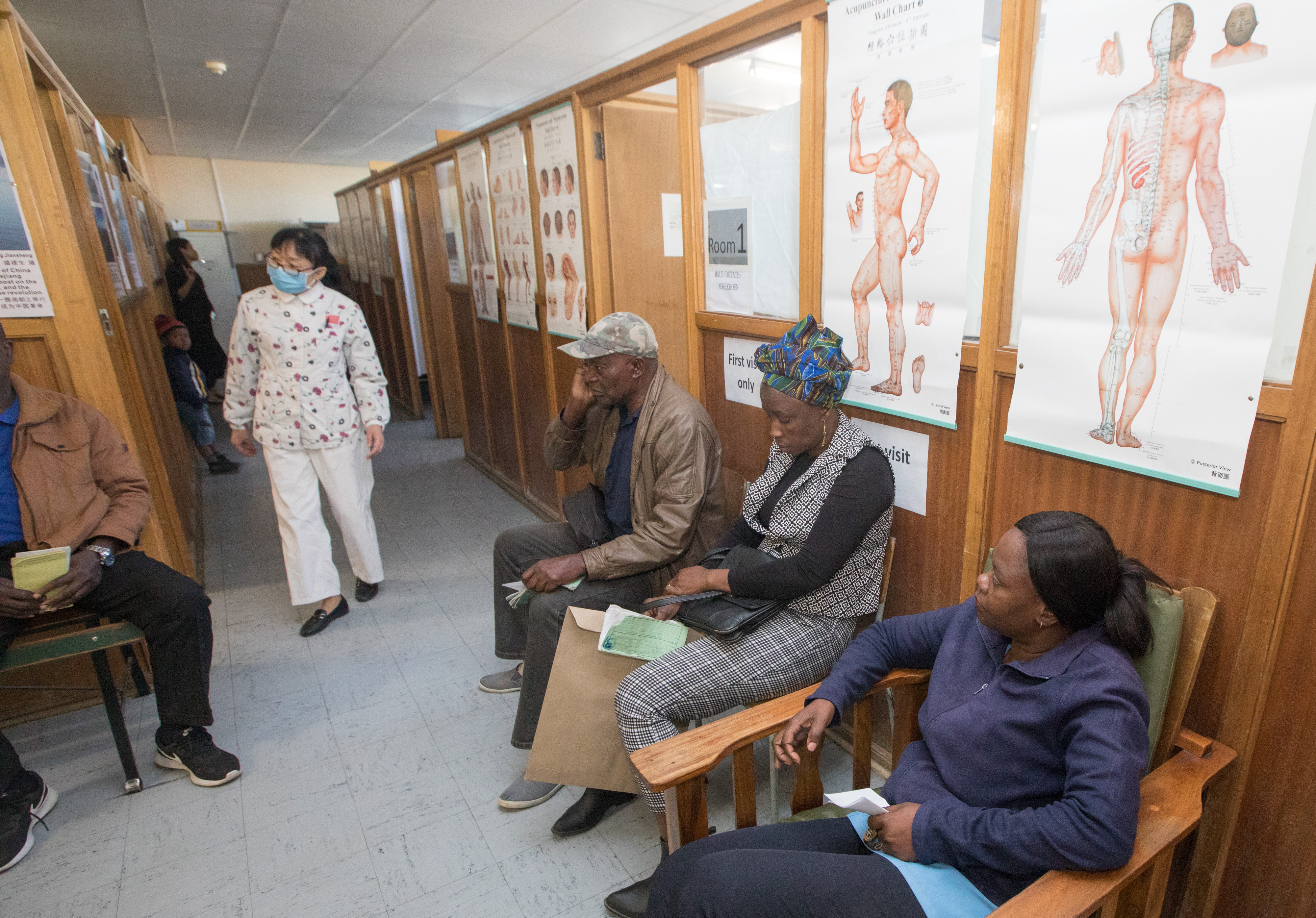
Now, a new strategic partnership between Nigeria and China aims to change that narrative. Rather than focusing on the trade of herbal products, the collaboration is designed to build Nigeria’s scientific and institutional capacity to research, standardise and commercialise traditional medicine using lessons from China’s globally recognised Traditional Chinese Medicine (TCM) system.
The initiative signals a shift in government policy, from viewing traditional medicine primarily as cultural heritage to positioning it as a strategic health, research and economic development sector.
The partnership gained further momentum on Saturday when the Federal Ministry of Health and Social Welfare announced that a 25-member Nigerian delegation comprising scientists, researchers, policymakers, entrepreneurs and traditional medicine specialists would depart for the Beijing Research Institute of Traditional Chinese Medicine and Medicinal Materials on June 29 for a two-week intensive capacity-building programme. The announcement was contained in a statement issued by Ado Bako, Assistant Director of Information and Public Relations at the Ministry.
Ahead of their departure, the Minister of State for Health and Social Welfare, Dr. Iziaq Adekunle Salako, urged members of the delegation to serve as worthy ambassadors of Nigeria by demonstrating diligence, integrity and professionalism throughout the programme.
Unlike previous exchanges centred largely on diplomatic goodwill, this programme has clearly defined technical objectives. Participants will receive practical training in research management, international production standards, commercialization strategies, diagnostic techniques and treatment approaches covering dermatology, paediatrics, gynaecology, internal medicine and related fields.
The delegation will also study how China integrates traditional medicine into mainstream healthcare while maintaining scientific research, product regulation and industrial development. The programme forms part of Nigeria’s broader efforts to strengthen phytomedicine development and build local capacity for producing safe, effective and evidence-based traditional medicines.
For decades, traditional medicine has operated largely outside Nigeria’s formal health system. Although millions use herbal remedies daily, many products have lacked standardised dosages, scientific testing and regulatory oversight. Health experts argue that this has limited public confidence and prevented Nigerian herbal products from competing in international markets.
The Nigeria-China collaboration seeks to bridge that gap. Rather than replacing indigenous knowledge, the partnership focuses on validating it through research, improving quality assurance and transforming local medicinal plants into standardised phytomedicine products.
This represents a significant evolution in government thinking. Instead of treating traditional and modern medicine as competing systems, policymakers increasingly see them as complementary approaches capable of expanding healthcare access when supported by sound science and effective regulation.
Nigeria possesses one of Africa’s richest biodiversity, with thousands of medicinal plant species used across different communities. However, much of this natural wealth remains underutilised commercially.
Recognising this opportunity, the Federal Government earlier inaugurated the National Committee on Phytomedicines Development and Commercialization to coordinate efforts aimed at building a sustainable phytomedicine industry.
The China study programme is one of the committee’s major capacity-building initiatives. Its goal extends beyond improving healthcare.
Government officials believe a stronger phytomedicine industry could stimulate agriculture, manufacturing, pharmaceutical production, scientific research and export earnings while creating employment opportunities across the value chain.
If properly developed, medicinal plant cultivation, harvesting, processing, packaging and manufacturing could generate thousands of skilled and semi-skilled jobs. The initiative also supports Nigeria’s broader medicines security agenda by reducing dependence on imported pharmaceutical products and encouraging local innovation.
China’s traditional medicine system represents one of the world’s most advanced examples of integrating indigenous medical knowledge with modern scientific research.
Over several decades, China has established specialised hospitals, universities, research institutes, regulatory systems and manufacturing industries dedicated to traditional medicine.
Its products are now exported worldwide, supported by quality standards, clinical research and government regulation. Nigeria hopes to adapt relevant aspects of that experience to its own healthcare realities.
The bilateral engagement also encourages collaboration between hospitals, research institutions and scientists from both countries, allowing knowledge, expertise and research findings to flow in both directions.
For Nigerian researchers, the exposure offers opportunities to understand how traditional remedies can be scientifically evaluated, standardised and developed into commercially viable medicines.
According to the Principal Investigator of the grant and Chairman of the Ministerial Committee on Phytomedicines Development and Commercialisation, Dr. Obi Adigwe, the partnership represents an important milestone in Nigeria’s drive to build indigenous capacity in phytomedicine research.
He believes Nigerian scientists will acquire practical knowledge capable of accelerating innovation, strengthening local pharmaceutical manufacturing and improving access to affordable medicines.
Adigwe also says the collaboration aligns with the Federal Government’s vision of positioning Nigeria as a leading centre for phytomedicine research and development in Africa. That ambition, he notes, builds upon the scientific capacity already existing at the National Institute for Pharmaceutical Research and Development (NIPRD).
If sustained, the partnership could strengthen research networks between Nigerian universities, teaching hospitals and pharmaceutical institutions while encouraging greater investment in medicinal plant research.
The push for standardisation has become central to Nigeria’s traditional medicine agenda. The Nigeria Natural Medicine Development Agency (NNMDA) is working to document practitioners, medicinal formulations and indigenous knowledge while promoting the development of standardised herbal extracts, nutraceuticals, dietary supplements and other plant-based health products.
The agency believes moving remedies from informal preparation to scientifically documented products will strengthen public confidence and create opportunities for research and commercialisation.
Regulatory oversight is expected to complement that effort. While NNMDA focuses on research and product development, the National Agency for Food and Drug Administration and Control (NAFDAC) is responsible for ensuring that herbal medicines entering the market meet acceptable safety and quality standards.
The agency maintains that “natural” does not automatically mean safe and insists that herbal products must undergo toxicology assessments, quality evaluation and, ultimately, clinical trials before receiving full approval. Industry experts say the collaboration between both agencies could provide the scientific foundation needed for Nigeria’s emerging phytomedicine industry.
Public acceptance suggests that traditional medicine already occupies a significant place in Nigeria’s healthcare landscape, as studies conducted in Port Harcourt and rural Lagos found widespread use of herbal medicine, with many respondents citing affordability, accessibility and perceived effectiveness as the main reasons for choosing herbal remedies.
At the same time, the surveys revealed strong public support for greater regulation, formal training for practitioners and stronger institutional oversight, indicating that Nigerians want safer and better-regulated traditional medicine rather than its abandonment.
While acknowledging the cultural importance and widespread use of herbal medicine, clinicians continue to warn against self-medication, inconsistent dosage, contamination and possible interactions between herbal remedies and conventional drugs. They argue that integration into the formal health system should be guided by scientific evidence, quality assurance and patient safety.
The conversation also extends beyond healthcare into environmental sustainability. Some traditional medicine practitioners have warned that medicinal plants used in preparing herbal remedies are becoming increasingly scarce because of deforestation and environmental degradation. They argue that preserving Nigeria’s biodiversity is essential not only for environmental protection but also for safeguarding the country’s indigenous medical heritage and ensuring a sustainable supply of medicinal plants for future research and production.
For Prof. Martins Emeje, Director-General of the Nigeria Natural Medicine Development Agency (NNMDA), the long-term vision is to move traditional medicine from the margins to the mainstream. Speaking in an interview with New National Star, he argued that traditional medicine is not truly “alternative” for millions of Nigerians who rely on it as their primary source of healthcare.
According to him, stronger research, professional training, documentation and regulation are essential if indigenous knowledge is to become a credible contributor to universal health coverage, pharmaceutical innovation and economic development.
Across Africa, traditional medicine is increasingly being recognised not merely as a cultural practice but as an important component of public health, scientific research and economic development. The Nigeria-China partnership reflects that changing perspective.
By combining Nigeria’s vast medicinal plant resources with China’s institutional experience in traditional medicine research, both countries hope to build a more structured, evidence-based and commercially sustainable phytomedicine sector.
If successfully implemented, the collaboration could improve healthcare access, strengthen scientific research, create employment, encourage local pharmaceutical manufacturing and elevate Nigeria’s position in Africa’s growing traditional medicine landscape.
Ultimately, the initiative is about far more than herbal remedies. It is about transforming centuries of indigenous knowledge into a modern, research-driven industry capable of improving lives while contributing to national development.
For Nigeria, that journey may have begun with a delegation to Beijing, but its long-term destination lies in building a healthcare system where traditional knowledge and modern science work together to deliver safer, more affordable and locally developed medicines for generations to come.



 Medicine