

 i_need_contribute
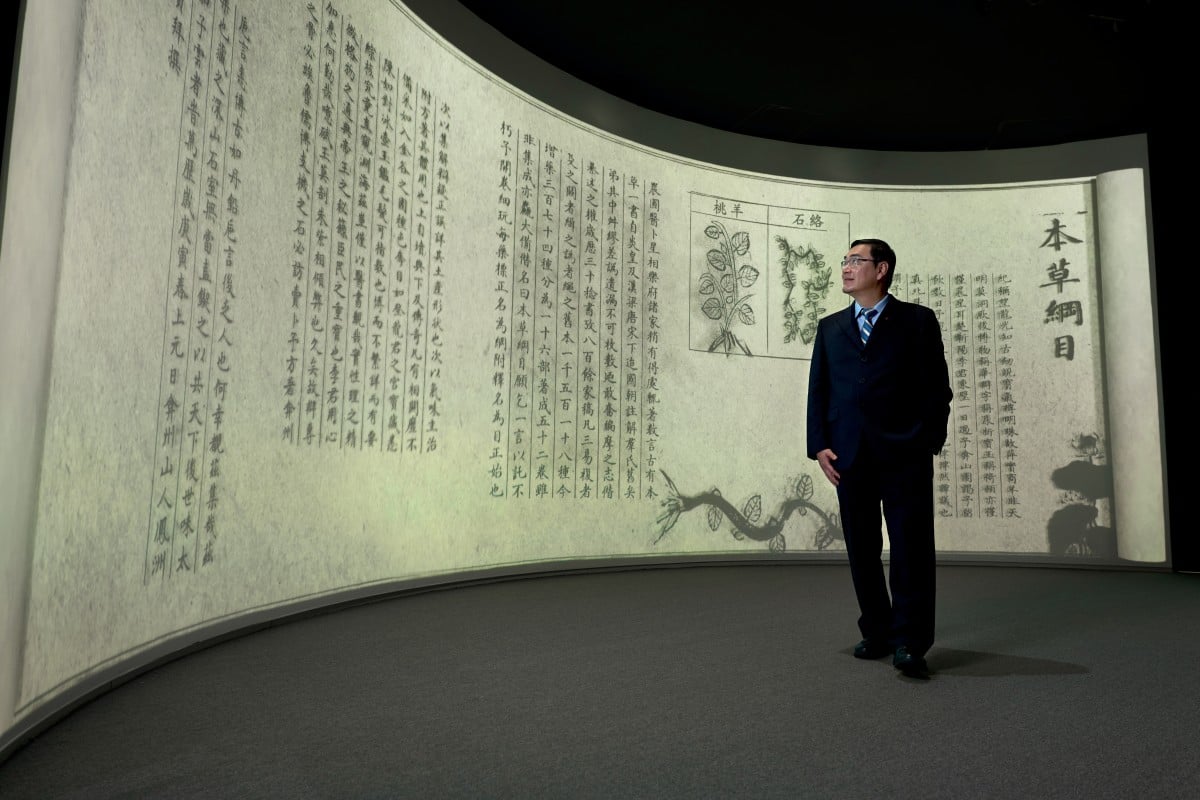
Research institutions and members of the public can learn more about hundreds of specimensthrough the digital herbarium.
As people around the world look for more proactive ways to improve their well-being, Chinese medicine, as a holistic system, is gaining renewed attention for its emphasis on prevention and long-term health maintenance. In Hong Kong, that shift is being matched by a serious push to establish a strong foundation in scientific inquiry and stringent regulatory standards for Chinese medicines.
This push is guided by the Health Bureau’s Chinese Medicine Development Blueprint developed by the Chinese Medicine Unit and headed by Dr Vincent Chung Chi-ho, commissioner for Chinese Medicine Development. At the centre of this drive is the Government Chinese Medicines Testing Institute (GCMTI), under the Department of Health, established in 2017 to develop internationally recognised reference standards and testing methods that meet the needs of manufacturers, traders and researchers. By translating traditional authentication techniques into a modern scientific framework, the institute helps ensure accurate identification while safeguarding the safety and commercial quality of Chinese medicines.
One of the institute’s groundbreaking innovations is the Digital Herbarium for Chinese Medicines, launched in 2024 as the first global platform to provide comprehensive knowledge about hundreds of Chinese medicinal materials.
The digital herbarium creates a complete data set for commonly used Chinese medicines – integrating their macroscopic and microscopic characteristics, chemical profiles and DNA sequencing – that links every material specimen back to its source. It is also the world’s first online herbarium to use photogrammetry to produce three-dimensional, high-resolution images of traceable specimens of Chinese medicines, reconstructing their structure and shape for precise visual reference.
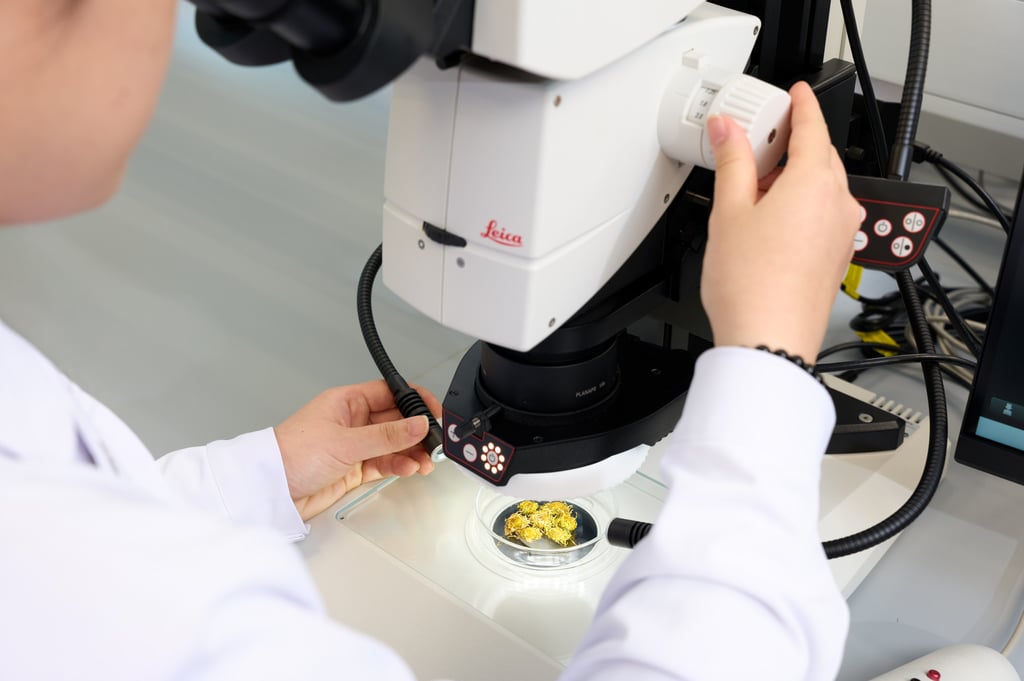 A Chinese medicinal plant undergoing identification at the testing institute.
“We can trace whether the species of the medicinal material is correct or identify any variations using this data set as a reliable reference,” says Dr Wong Lai-lai, a scientific officer at the GCMTI, noting the online resource also serves as a practical point of information for industry professionals as well as the general public.
The herbarium combines centuries of knowledge with state-of-the-art technology to identify and categorise the use of herbs. This is backed by a multidisciplinary team comprising a plant taxonomist, toxicologist and pharmacognosist, as well as Chinese medicine specialists, chemists and DNA analysts.
“Macroscopic identification is the traditional method in the authentication of Chinese medicines,” Wong explains. “This first-line approach helps us confirm whether the species of the medicinal material is correct.”
The digital herbarium and the GCMTI’s scientific work support Hong Kong’s goal to become a global leader in quality assurance of Chinese medicines, underpinned by the city’s established and comprehensive regulatory framework for Chinese herbal medicines and proprietary Chinese medicines – the ready-to-use products consumers can buy. This is enforced by the Chinese Medicine Regulatory Office (CMRO) of the Department of Health.
“Hong Kong has a robust regulatory system for Chinese medicine, which can safeguard citizens’ safety and the quality of medical care when they consult a Chinese medicine practitioner,” says Robert Law Kwok-wai, chief pharmacist of the CMRO. “In terms of Chinese medicines – including Chinese herbal medicines and proprietary Chinese medicines – we can basically achieve this checkpoint for safety and quality, thereby safeguarding citizens’ health and medication safety.”
Given the wide range of Chinese herbal medicines and the need for regulatory control, 605 types are regulated in Hong Kong, classified by toxicity and popularity. At the same time, the city has about 8,300 registered proprietary Chinese medicines; consumers can identify these by the “HKC” number printed on the product label.
The regulation of proprietary Chinese medicines rests on a comprehensive system designed to ensure safety, quality and efficacy. Products must undergo mandatory registration before they can be sold, while continuing market surveillance monitors them for risks such as adulteration, the presence of heavy metals, toxic elements, pesticide residues or microbial contamination. Import and export controls provide an additional layer of oversight. Manufacturers of proprietary Chinese medicines are also encouraged to adopt “good manufacturing practice”, a voluntary quality-management certification that helps strengthen production standards.
The registration framework also recognises the distinctive characteristics of Chinese medicines. “The difference between us and Western medicine is that we emphasise Chinese medicine theory as an anchor for the registration of proprietary Chinese medicines,” Law says.
While the CMRO is responsible for regulation, the testing institute’s role is primarily to support the development of the Chinese medicine sector by using advanced technology to establish reference standards and develop innovative testing methods.
“We have an internationally recognised laboratory capable of carrying out hi-tech research and formulating testing methods,” Law says. “These are not just for our own use; we transfer them to the Chinese medicine industry and the testing sector to help them upgrade product quality and quality control capabilities. It is best for the industry to monitor the quality of every batch of medicine by testing.”
The GCMTI’s advisory committee is ideally suited to respond to real-world challenges encountered by the industry. “We listen to their opinions, and they proactively raise difficulties that the industry is currently encountering and what scientific research carried out at our testing institute can help them,” Law says, citing the example of aflatoxins produced when herbal medicines go mouldy.
“Currently, the testing method for this is relatively complicated; you have to take a sample back to the laboratory and perform a round of work before you can get a result,” he says. The industry has asked whether an easier solution could be developed – similar to a Covid self-test kit – that would allow a powdered sample to be checked quickly for mould toxins. “We have commenced initial research, and we hope to gradually develop a rapid test,” Law says.
Building on the GCMTI’s scientific innovation, the digital herbarium’s capabilities and Hong Kong’s contribution to international standards for Chinese medicines, the Greater Bay Area International Clinical Trial Institute in Hong Kong is expected to extend the research network for proprietary Chinese medicines. Working with its Shenzhen counterpart, the Greater Bay Area International Clinical Trial Center, the institute will coordinate multicentre clinical trials that meet both national and international standards, accelerating the development and clinical evaluation of Chinese medicines.
Looking ahead, Hong Kong hopes to engage with international regulatory bodies on herbal medicines.
The initiatives are expected to mark significant steps towards Hong Kong’s wider policy direction, laid out in the Chinese Medicine Development Blueprint and Hong Kong’s first five-year plan. These advances align with China’s 15th five-year plan to support its broader advancement on the global stage.
Against this backdrop, Hong Kong is well placed to serve as a bridge for global expansion of Chinese medicines. “The GCMTI can do a good job in telling a good story,” Law says. “We hope to contribute our part to push forward the development of Chinese medicine.”



 Medicine