

 i_need_contribute
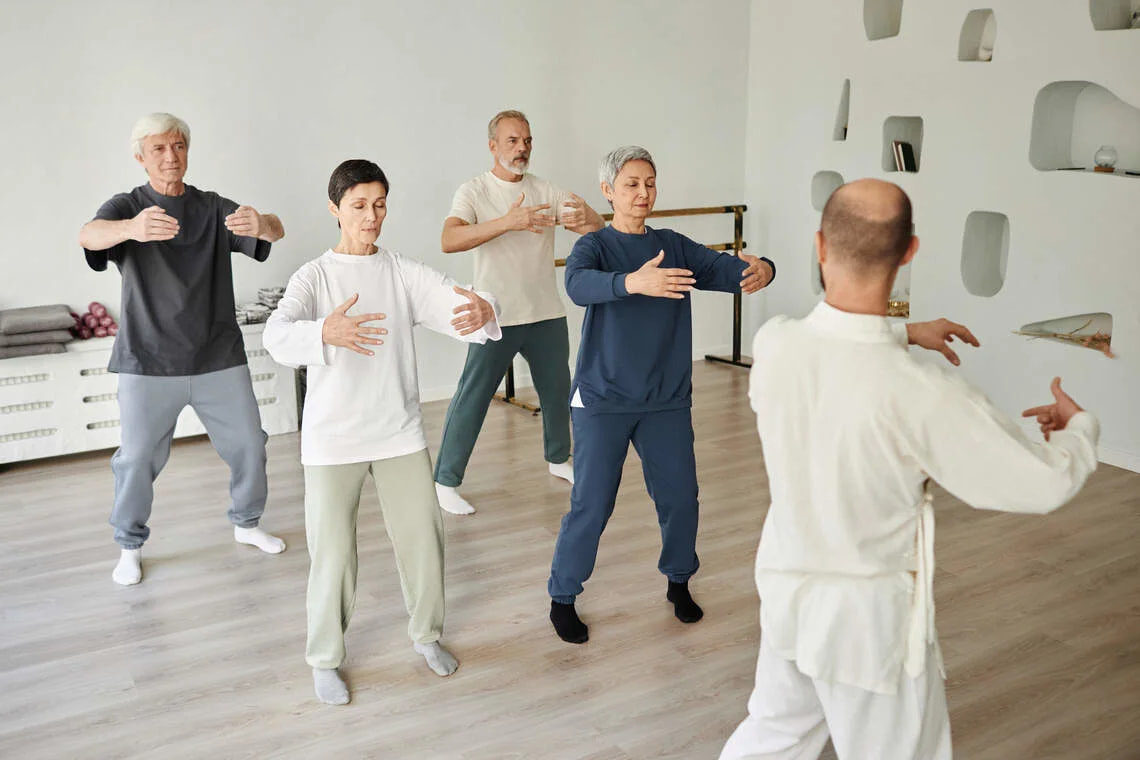
Qigong needs no equipment takes 10 minutes and physicians say the benefits for stress mood and focus are real.
Qigong is a mind-body practice rooted in traditional Chinese medicine that uses slow movements, postures and breathwork to improve the flow of energy through the body, mind and spirit. It is one of four branches of traditional Chinese medicine, alongside acupuncture, Chinese massage and Chinese herbology.
Brian Huff, regional director for Atlanta at Body & Brain (the largest qigong and tai chi company in the country), told Atlanta Magazine the practice focuses on holistic wellness. "Qigong is a mind-body wellness practice that focuses on holistic wellness. It's about cultivating your energy or your inner scape, and bringing your body, breath, and focus into alignment."
Gary Soffer, MD, director of the integrative medicine program at Smilow Cancer Hospital, told VeryWell Mind that "the words 'qi' and 'gong' translate into 'life force' and 'cultivation' respectively, and the practice is intended to improve health and well-being by way of cultivating one's life force or energy."
Preliminary research suggests qigong may help improve mood, cognitive functioning, immunity and pain, with potential benefits for heart health and overall quality of life, according to VeryWell Mind.
Dr. Michelle Loy, MD, integrative health practitioner at New York-Presbyterian, told VeryWell Mind that qigong was developed thousands of years ago and uses exercises to improve the flow of energy within the body, mind and spirit. Studies summarized by the site point to possible effects on depression, anxiety and stress, as well as attention and memory. Other areas researched include inflammation, headaches, lung function, arthritis, bone density, blood pressure and substance use. Huff told Atlanta Magazine the physical practice can also promote better circulation, balance and emotional regulation.
Morning is widely considered the best time for qigong, and 10 minutes a day is enough to start building a routine, according to White Tiger Qigong.
"Morning qigong gives you energy without wearing you out. Most morning workouts train only your muscles or your heart. Qigong also works with your breath, your focus and the flow of qi, your life energy, through your meridians," White Tiger Qigong writes. The site says consistency matters more than duration and that practitioners can work up to 1 to 2 hours a day, though even 1-minute breaks between tasks help keep energy flowing.
Qigong's slow rhythmic movements, deep breathing and gentle torso rotations are thought to support lymphatic circulation, though specific evidence for lymphatic effects remains limited.
Ada Ooi, TCM specialist, integrative medicine practitioner and founder of London's 001 London Longevity Clinic, told Vogue that qigong "brings together all the elements that promote lymphatic circulation," pointing to slow rhythmic limb movements, coordinated breathing, gentle spine and torso rotations and repeated arm movements above the heart. Ooi added that quality matters more than speed. "Two or three movements performed slowly for ten minutes will be far more beneficial to you than a 20 minute sequence done at full speed."
A beginner routine can include four simple movements of about 1 minute each, designed to wake up the body and get energy flowing.
.Toe tapping. Lie on your back with heels together and tap toes in a gentle rhythmic motion to stimulate the kidney meridian and awaken energy in the lower body.
.Full body shaking. Stand with feet shoulder-width apart and bounce gently up and down, letting the vibration move from the head through the jaw, neck, chest, shoulders, abdomen, hips, knees, calves and feet.
.Neck and shoulder rolls. Slowly roll the neck in each direction, then place fingers on the center of the chest and make circular motions with the elbows to open the chest and shoulders.
.Arm swings. Twist the body and swing the arms across the hips, up to chest height, then overhead to loosen the spine and activate energy through the main energy centers.



 Medicine