

 i_need_contribute
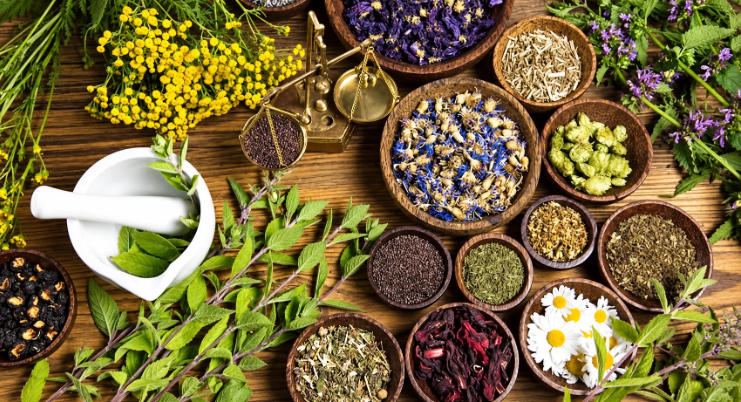
Instead of focusing solely on expanding planting areas and supplying raw materials, the new direction aims to build a complete value chain from seeds, raw material areas, cultivation, harvesting, preliminary processing, preservation to deep processing, production and consumption.
The Hanoi Department of Health has requested local authorities in communes and wards to inspect compliance with legal regulations on the wholesale and retail sale of traditional medicines, focusing on products at risk of counterfeiting, especially An Cung Niu Huang Wan.
Cases involving the sale of drugs with unclear origin or provenance, suspected counterfeiting, or violations of pharmaceutical business regulations must be detected and handled within the scope of authority or referred to relevant agencies for resolution.
Along with inspections at business establishments, localities are required to coordinate with the police, market management forces, and relevant units to trace the supply source, prevent the circulation of counterfeit drugs, and strengthen the prevention and fight against smuggling and commercial fraud in the pharmaceutical sector.
Notably, the advertising, promotion, and sale of traditional medicines on social media platforms are also subject to monitoring. The Department of Health requires the timely detection and handling of organizations and individuals who advertise falsely, exaggerate the effects of An Cung Niu Huang Wan as a "miracle cure for stroke prevention," or engage in other violations.
The health sector advises people to only use An Gong Niu Huang Wan (a traditional Chinese medicine) as prescribed by a doctor and not to self-medicate for stroke prevention or treatment. People should choose licensed pharmacies, check invoices, receipts, and information about the product's origin. Using medicine of unknown origin or believing unsubstantiated advertisements can endanger health and delay access to appropriate treatment.
According to the plan, the Health Sector Inspection Department will coordinate with specialized departments of the Hanoi Department of Health and relevant agencies to strengthen inspections and checks on the business, circulation, and advertising of traditional medicines. The Hanoi Center for Testing Drugs, Cosmetics, and Food will increase sampling and testing of the quality of drugs in circulation, promptly reporting and proposing solutions for cases that do not meet standards.
The strengthening of market control over traditional medicine is taking place in the context of the Ministry of Health developing and finalizing the Draft National Strategy for the Development of Vietnamese Traditional Medicine until 2030, with a vision to 2045. One of the notable orientations is to develop traditional medicine and pharmaceuticals not only to serve medical treatment but also to become a high value-added economic sector, gradually building a national brand and expanding into international markets.
According to Professor Trinh Thi Dieu Thuong, Director of the Department of Traditional Medicine Management, the new development orientation places traditional medicine within the overall national health system, linking it with comprehensive health care throughout the life cycle, from prevention and health promotion to diagnosis and treatment, rehabilitation, and elderly care.
The draft strategy aims to achieve the following targets by 2030: all geriatric hospitals and geriatric departments will integrate traditional medicine into the care and rehabilitation of the elderly; 100% of commune-level health stations will have the capacity to provide traditional medicine services. Approximately 90% of traditional medicine hospitals in provinces and cities will strive to have a minimum of 300 beds, and each socio -economic region will have at least one specialized traditional medicine hospital.
The target for the proportion of medical examinations and treatments using traditional medicine and a combination of traditional and modern medicine is 15% at the specialized level, 25% at the basic level, and 40% at the initial level. The target for health insurance coverage of traditional medicine technical services, herbal medicines, and traditional medicines is to at least double compared to the period before 2025.
Along with expanding its applications in healthcare, the development of the medicinal plant industry has been identified as a crucial pillar. Instead of focusing solely on expanding cultivation areas and supplying raw materials, the new direction aims to build a complete value chain from seeds, raw material sources, cultivation, harvesting, preliminary processing, preservation to deep processing, production, and consumption.
According to the draft, by 2030, Vietnam aims to achieve at least 20% self-sufficiency in domestic medicinal herbs, gradually reducing dependence on imports. The value of industrial production of medicinal herbs, traditional medicines, and herbal medicines is targeted to increase by at least 10% annually; and the export value of these products is expected to increase by at least 10% per year on average.
To realize this goal, special attention is paid to developing standardized raw material areas, investing in advanced processing technology, and forming sustainable linkages between medicinal herb growers, businesses, research institutions, and healthcare facilities. Projects for extraction, refining, formulation, and drug manufacturing plants that meet international quality standards are also encouraged, aiming to form clusters and centers of medicinal herb industry.
However, developing production and expanding markets must go hand in hand with quality control. The reality of counterfeit traditional medicines and medicines of unknown origin shows that product traceability needs to be implemented throughout the supply chain, from medicinal herb growing areas to production facilities, distribution centers, and end users.
According to strategic direction, the system of standards and technical regulations for medicinal herbs, traditional medicines, and herbal medicines will continue to be improved. The development of product identification codes and the connection of information from raw material sources to the traceability system are expected to increase transparency, facilitate inspection by management agencies, and support businesses in developing products with consistent quality.
By 2030, the draft aims to build national brands for 30 products derived from medicinal herbs and traditional medicines, and 10 medical examination and treatment services. This is a direction to enhance the commercial value of Vietnamese traditional medicine and pharmaceutical products, while also creating a foundation for gradually expanding export markets.
Science and technology are also identified as important drivers in the modernization process of this field. Technologies such as biotechnology, genetic engineering, nanotechnology, and modern extraction technology are being applied in the research of active ingredients, the development of medicinal plant varieties, component analysis, formulation, and production of high-quality products.
Simultaneously, digital transformation, artificial intelligence, and big data will be applied in the management, research, and development of traditional medicine. The draft aims to digitize at least 70% of Vietnamese traditional medicine knowledge by 2030, and to research, standardize, and apply at least 30 traditional remedies, treatment methods, or knowledge to healthcare and product development.
In terms of human resources, Vietnam aims to have 3 traditional medicine doctors per 10,000 people by 2030, with at least 30% holding postgraduate degrees. All commune-level health stations are targeted to have at least one staff member trained in traditional medicine, and 65% of stations will have a traditional medicine doctor or medical practitioner.
Beyond the field of medical treatment, the strategy also aims to develop traditional medicine in conjunction with the health economy and medical tourism. By 2030, Vietnam aims to establish five product and service lines for healthcare using traditional medicine and pharmaceuticals to serve tourists, while simultaneously promoting traditional cultural values and local knowledge.
The vision for 2045 is to form a traditional medicine ecosystem based on science and technology, digital transformation, and high-quality human resources, in which the medicinal plant industry becomes an economic sector with high added value and international competitiveness.



 Medicine