

 i_need_contribute
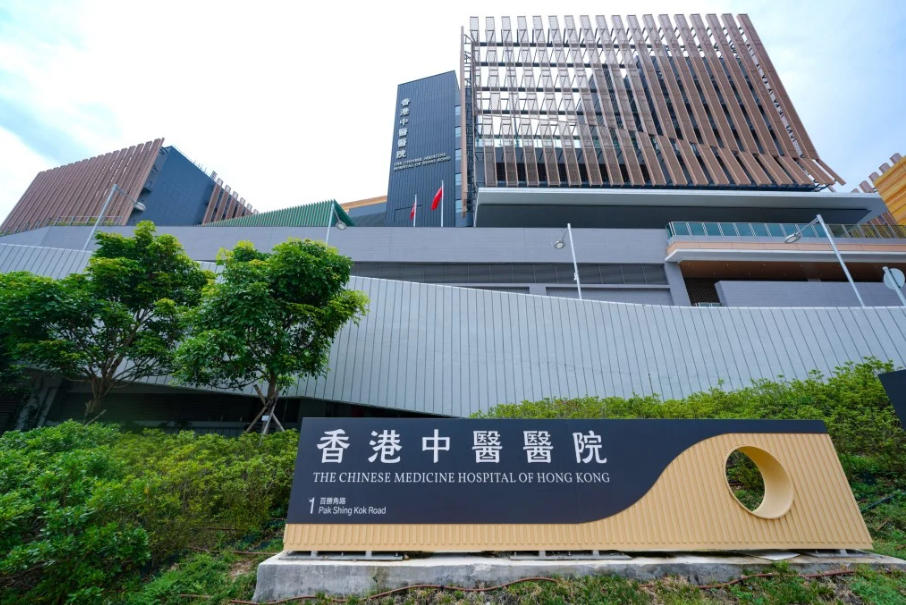
The Chinese Medicine Hospital of Hong Kong will launch 24-hour inpatient services in December – a first for the city – and charge patients HK$980 (US$125) per day for subsidised care, more than three times the fee at public hospitals.
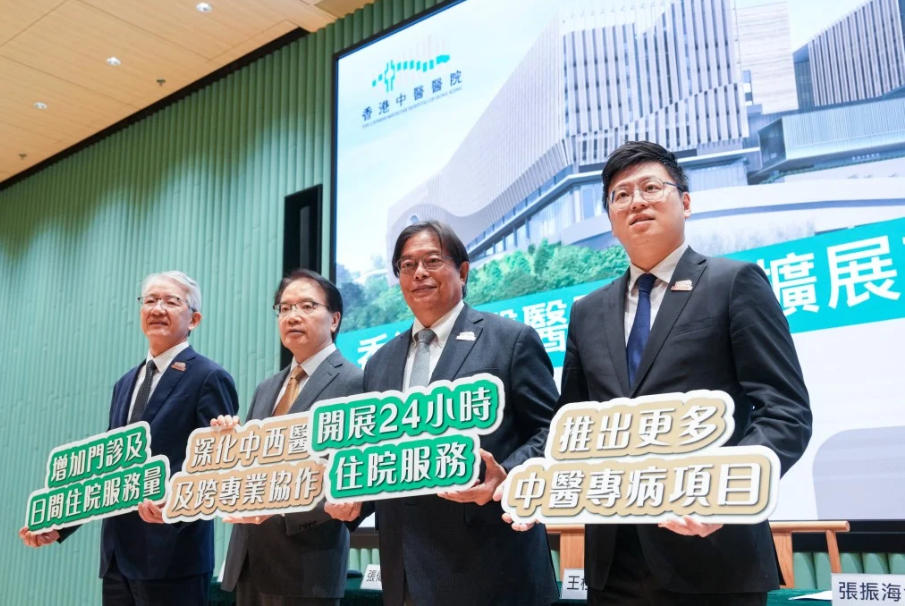
The city’s first dedicated traditional Chinese medicine hospital will also launch 10 additional special disease programmes within this year to help treat conditions such as eczema and Parkinson’s disease.
The hospital, which opened last December in Tseung Kwan O, aims to provide services for more complex cases under a model that features Chinese medicine as the primary approach, integrated with Western medicine.
The expansion of services, announced on Tuesday, includes the provision of 24-hour inpatient care from December 11.
The hospital will provide 93 inpatient beds – consisting of 60 government-subsidised and 33 non-subsidised ones – as well as 20 beds under its clinical trial and research centre and two high-dependency beds in the first phase. The number of beds is expected to reach 400 by the end of 2030.
The subsidised inpatient option will cost HK$980 a day – a fixed, overall package price that covers all treatment-related services, such as room fee, visits by registered practitioners, Chinese medicine interventions, tests and medication.
Public hospital inpatient charges in Hong Kong are HK$300 per day for acute general beds, and HK$200 per day for convalescent, rehabilitation, infirmary and psychiatric beds for eligible people.
Dr Cheung Wai-lun, project director of the Health Bureau’s Chinese Medicine Hospital Project Office, defended the higher charges compared with public hospitals, describing the fees as affordable.
“A sizeable Chinese medicine clinic typically charges HK$980 or more per outpatient consultation, which reflects the current market rate,” he said.
“However, when comparing our inpatient model with their outpatient model, the service we provide is far more comprehensive in terms of frequency, scope and Chinese-Western medicine collaboration.”
For the hospital’s non-subsidised inpatient services, daily room fees will range from HK$810 to HK$3,100, depending on the type of room. Visits by registered practitioners will cost HK$560 or more per visit.
A non-subsidised inpatient package for special diseases will cost between HK$5,520 and HK$14,890 a day.
Professor Bian Zhaoxiang, the hospital’s chief executive, said inpatient services would target patients with complex conditions requiring systematic diagnosis and treatment, in addition to unstable cases in need of 24-hour clinical monitoring.
They would also cater to those who had temporarily lost self-care ability, and patients with severe symptoms and in need of intensive care, he said.
Inpatients can be referred by the hospital’s outpatient services or by other medical institutions.
The hospital will offer a medical fee waiver mechanism to support patients with financial difficulties.
The hospital will also introduce 10 additional special disease programmes later this year.
Five programmes, covering functional gastrointestinal diseases, sub-health conditioning, facial palsy care, menopausal syndrome and skin eczema, will be rolled out in September.
Another five, for integrated cancer care, seasonal influenza, prostatic syndrome, Parkinson’s disease and paediatric developmental delay, will be launched in November.
The hospital’s annual outpatient attendance is expected to increase from 140,000 in its first year to more than 260,000 in its second year of operation, while the number of day-patient beds will rise from 25 to 35.
Tim Pang Hung-cheong, a patients’ rights advocate with the Society for Community Organisation, said the daily fee of HK$980 for subsidised inpatient care at the hospital was appealing, given that it was the first service of its kind in Hong Kong. He noted that patients facing financial difficulties could apply for fee waivers.
But he urged the hospital to be more transparent about whether there would be a quota for fee waivers to address public concerns.
He also suggested that prices should be adjusted later if the occupancy rate proved unsatisfactory.
Lawmaker Chan Wing-kwong, a Chinese medicine practitioner, said the hospital’s inpatient care prices were reasonable, taking into account market rates, residents’ affordability and service costs. He added that the daily fee of HK$980 for subsidised care was comparable to outpatient charges at private clinics.
He said it was inappropriate to compare charges at the Chinese Medicine Hospital with those at public hospitals.
“The positioning, mission and operating model of the Chinese Medicine Hospital of Hong Kong differ from those of public hospitals – public hospitals receive substantial government subsidies, providing a healthcare safety net for residents, while the Chinese Medicine Hospital of Hong Kong operates under a public-private partnership model,” he said.
He called on the hospital to ensure it had sufficient manpower as it expanded its services.




 Medicine