

 i_need_contribute
As China enters the peak of summer heat, an increasing number of youth believe they have found a solution to fatigue, oily skin, and low energy: qushi, or eliminating dampness from the body.
Rooted in traditional Chinese medicine (TCM), the centuries-old concept of “dampness” dates back about 2,000 years to the Huangdi Neijing, one of the earliest foundational texts of Chinese medicine.
Recently, it has evolved into a viral wellness trend, inspiring remedies ranging from cupping and herbal foot baths to back sunbathing and sand therapy.
In TCM theory, dampness refers to an imbalance in the body’s fluid regulation, attributed to factors such as humidity, poor diet, insufficient sleep, and excessive air conditioning.
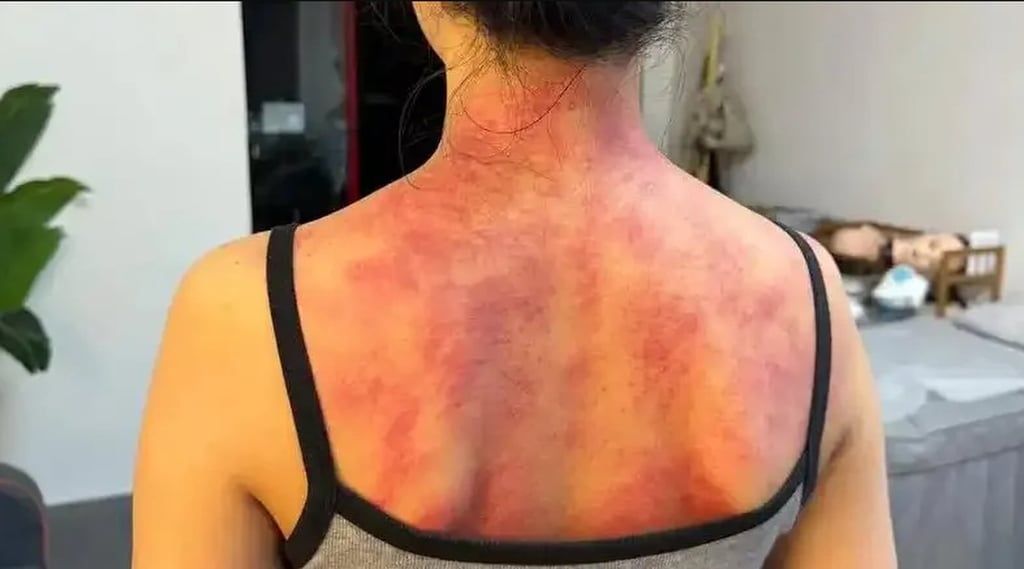
In traditional Chinese medicine, “damp-heat” is one of the most common internal imbalances identified as the cause of sudden or persistent red, itchy patches on the skin, especially on the back. Photo: QQ.com
Traditionally associated with fatigue and digestive issues, “excess dampness” has become a catch-all explanation among many young Chinese for oily hair, acne, and low energy.
According to multiple mainland reports, dampness removal has evolved from a health practice into a lifestyle trend among younger generations, blending self-care with entertainment and social sharing, similar to how hiking and camping have become social pursuits.
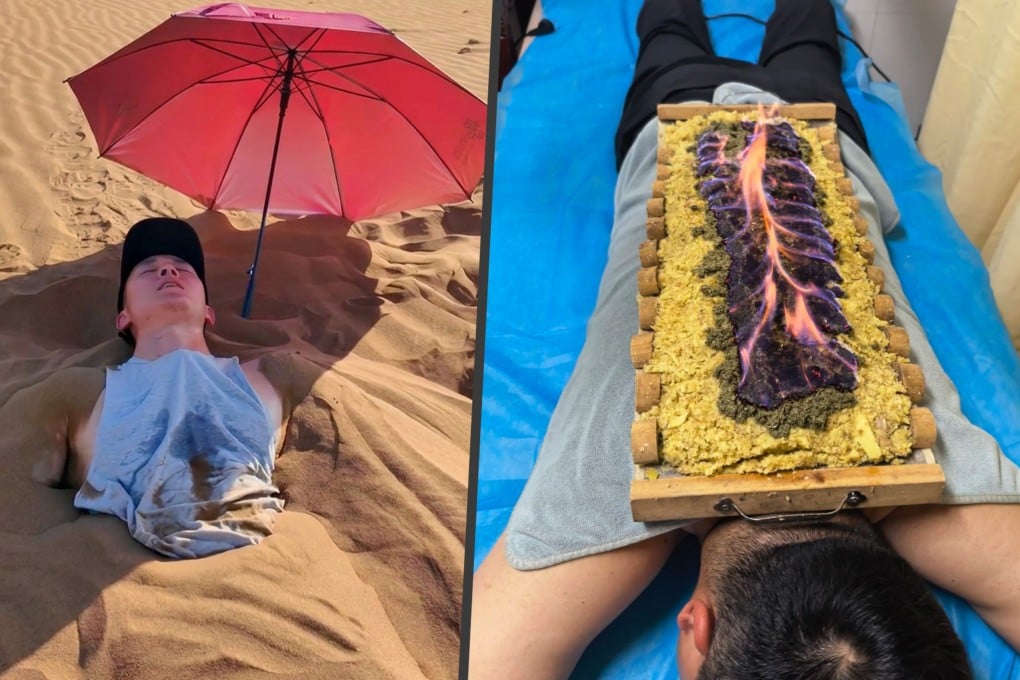
One of the more unusual damp-removal practices is desert sand therapy.
A Guangdong resident from southern China, who goes by the online name “Apo,” compared the experience to making a “human version of salt-baked chicken.”
In videos shared online, she highlighted the wet, cold, and clumped sand covering her legs after the session, asserting it showed the treatment had drawn dampness from her body.
She contrasted this with the sand around her stomach, which she noted had only absorbed sweat and remained loose and warm.
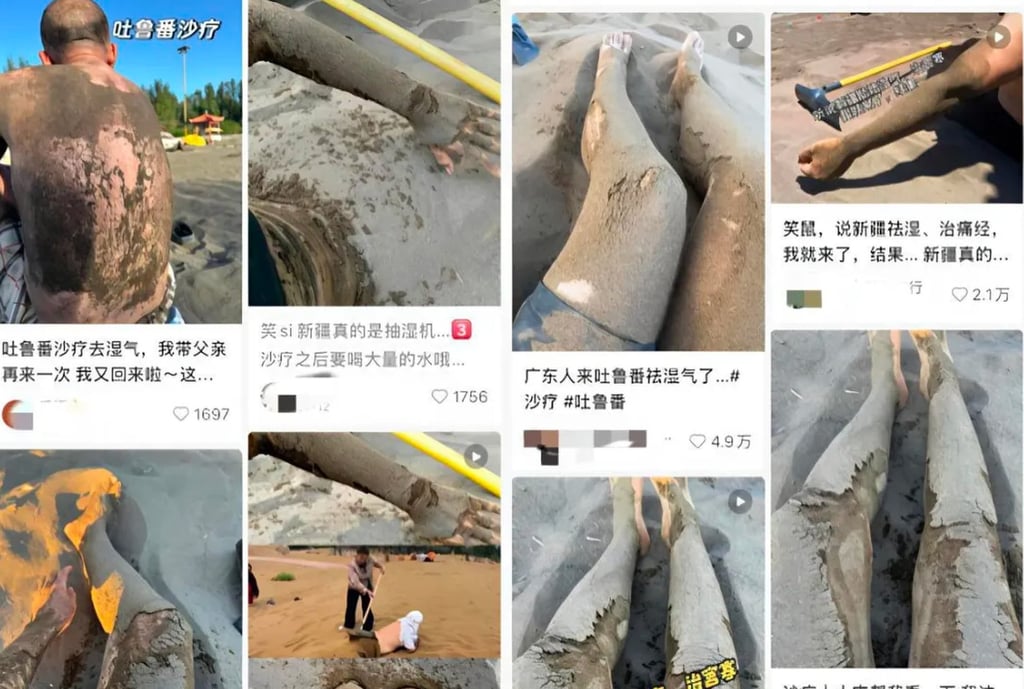
One viral wellness influencer shared clips using sand therapy, burying her body in hot sand to draw out internal moisture. Photo: QQ.com
The trend has also given rise to more controversial practices, including “crying therapy.”
Some wellness accounts describe tears as a natural “fire extinguisher” that helps release emotions and clear dampness linked to “heart fire,” a TCM concept associated with restlessness and irritability.
An online user with the handle @vvvvhuhu reported developing hives due to excess dampness. After crying throughout the night following her grandmother’s death, she claimed the condition subsided.
Medical experts, however, state that while crying may provide emotional relief, it cannot be proven to remove dampness or treat skin problems.
Another viral practice is back sunbathing, known as shai bei in Chinese.
Some individuals expose their backs to sunlight, believing the heat can drive out internal coldness and dampness, as well as strengthen immunity.
Doctors advise limiting sessions to no more than 20 minutes and avoiding intense sun exposure due to the risks of heatstroke and skin damage.
Long-standing TCM practices such as moxibustion and cupping have also experienced renewed popularity among young wellness enthusiasts.
Time-honoured TCM practices like moxibustion and cupping are experiencing a massive resurgence among young wellness enthusiasts. Photo: Getty Images
Moxibustion involves burning dried mugwort to warm acupuncture points, while cupping uses suction cups placed on the skin, leaving distinctive circular marks that many young users share online as perceived signs of the treatment’s effects.
Practitioners believe these therapies can help eliminate dampness, improve circulation, and relieve joint discomfort.
The “damp-removal” craze has gained particular traction among young women in China.
Mainland magazine Shidian Figure reported that related content has surpassed 800 million views on mainland social media, with women aged 18 to 34 driving much of the conversation.
The trend has also fuelled a growing wellness market, with damp-related products reportedly approaching 68 billion yuan (US$10 billion) in value.
From foot patches and herbal teas made with red beans and coix seeds to ginger and mugwort foot baths, these products have transitioned from traditional medicine shops to e-commerce platforms.
At the same time, TCM’s idea of “preventing illness before it happens” resonates with young consumers who often feel tired or unwell despite normal medical check-ups, reflecting growing concerns over sub-healthy conditions.



 Medicine