

 i_need_contribute
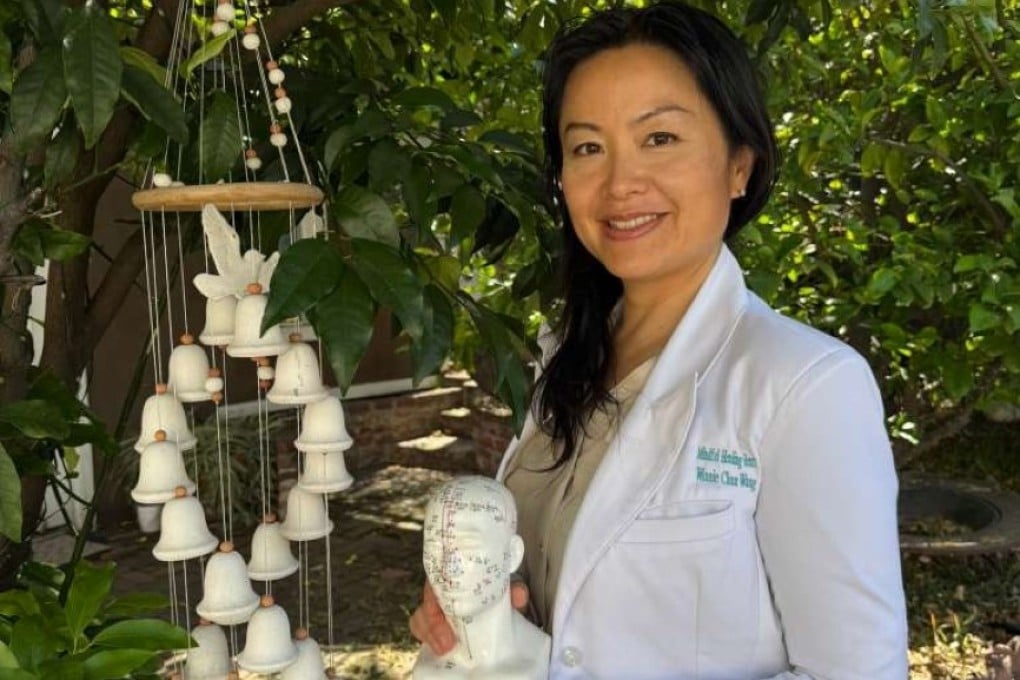
Trading a career on Wall Street for acupuncture needles and Chinese herbs is a move few would have expected from the daughter of one of Hong Kong’s best-known surgeons – least of all Winnie Chan Wang herself.
For Wang, who grew up in Hong Kong, medicine centred on operating theatres, scalpels and science. Her father, Dr Patrick Chan Ki-wing, now in his early 80s, is still practising as an honorary consultant and specialist in general surgery at the Hong Kong Sanatorium and Hospital.
“I grew up on antibiotics, vaccines and Western medicine,” Wang says. “I have a really positive relationship with it. If my [TCM] patients are nervous about surgery, I always tell them, ‘Trust your doctor.’”
Today, Wang is a Los Angeles-based practitioner of traditional Chinese medicine (TCM) and licensed acupuncturist whose clinic, Mindful Healing Heart, combines acupuncture, herbal medicine and lifestyle coaching, with a strong emphasis on prevention. It is a career that has taken her from Hong Kong to some of America’s most prestigious institutions – and eventually to an entirely different understanding of health.
Wang left Hong Kong at the age of 15 for boarding school in the US at Phillips Academy in Andover, Massachusetts, before earning degrees – first in electrical engineering and computer science, and then in business management – at the Massachusetts Institute of Technology. She got her third degree – a master’s in marketing – at New York University.
She worked in fixed income and credit derivatives at Goldman Sachs in New York and eventually returned to school once again – this time to study traditional Chinese medicine. She is also completing a doctorate in acupuncture and herbal medicine.
“My life has been anything but a straight line,” she says, adding that she was always driven to achieve.
One thread runs through her career: curiosity. Whether studying engineering, navigating the fast-paced world of finance or later learning TCM, she has always approached problems analytically.
“I went from the girl who went to Goldman Sachs and MIT [to one] who could do anything and learn everything,” she says.
Ironically, it was her own health that eventually forced her to change direction.
Following the birth of her second child, Wang suffered a debilitating tailbone injury that left her in chronic pain. Sitting for more than a few minutes became difficult. Air travel, cinema nights and even relaxing in a reclining chair became almost impossible.
“I suffered anxiety and depression,” she recalls. “Sometimes, I cried for three hours a day. Suddenly, I couldn’t do anything with my life.”
Proposed Western medical solutions – a surgery and/or half-yearly cortisone shots – came with few assurances, so she turned to her engineer’s mindset for a solution.
“I thought, if engineers can hack computers and build cars from the ground up, why can’t I learn how to hack my own body?”
That question led her to enrol in acupuncture school. As she studied, she became her own most frequent patient, using acupuncture regularly as part of her training to manage her pain while gaining a deep understanding of how the body responds to treatment.
“If you do something enough, you become very familiar with it,” she says.
Another defining moment came in 2017, when Wang was involved in a serious car accident in Pasadena.
For several terrifying seconds, she believed she was about to die.
“My whole life flashed before me,” she says. “I thought, if I get to do this again, I’m not going to choose to live the way that I did.”
The experience prompted her to begin practising meditation and explore spirituality. While these practices have since become central to her daily life, she is careful not to position them as a replacement for medicine.
“I’m not here to tell people what to believe,” she says. “I’m here to encourage people to connect to something bigger than themselves.”
“I love Western medicine. Medicine shouldn’t be either-or. It should be like a buffet”
--Winnie Chan Wang, TCM practitioner
Wang incorporates mindfulness directly into her clinical environment. In her Los Angeles practice, a set of 10 one-stroke Tao calligraphy symbols adorn the walls, each representing a specific quality such as “forgiveness” or “flourishing”. She invites patients to focus on them during treatment, to help calm the nervous system and encourage emotional release.
Wang rejects the notion that patients must choose between Eastern and Western medicine.
“I love Western medicine,” she says. “Medicine shouldn’t be either-or. It should be like a buffet.”
She regularly encourages patients to follow their physicians’ advice, viewing acupuncture as something that can complement conventional healthcare rather than compete with it.
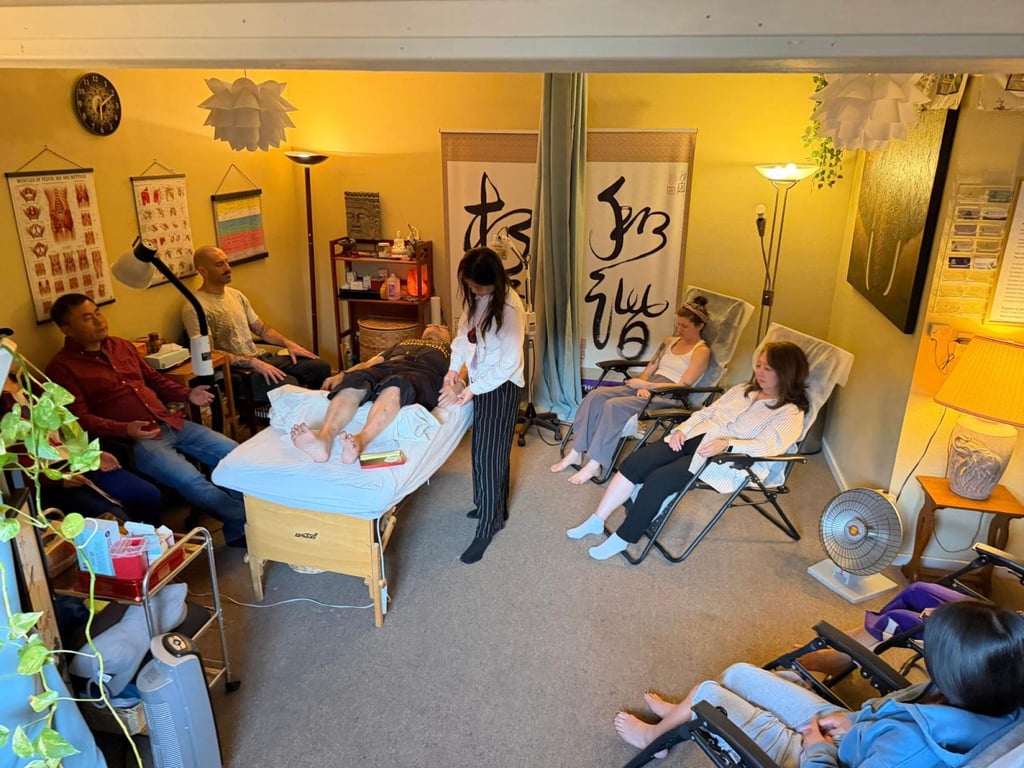
A group of people affected by Californian wildfires receive free community healing sessions from Wang at her clinic. Photo: Winnie Chan Wang
At the heart of TCM, she says, is a deceptively simple idea: that health is easier to maintain than it is to restore.
Rather than waiting for disease to appear, TCM has long focused on recognising subtle imbalances before they develop into more serious problems. Acupuncture, herbal medicine, movement practices such as qigong, and careful attention to sleep, digestion and emotional well-being are all intended to support the body’s natural ability to stay in balance.
“It’s much easier to prevent illness than to treat it once it’s there. My dream isn’t to heal people when they’re already sick. My dream is to prevent people from becoming sick in the first place,” she says.
“People go to the dentist twice a year. Why wouldn’t you have acupuncture several times a year to keep your body in good shape?”
Modern society has become too focused on achievement at the expense of well-being, she believes.
“We’re always looking outside ourselves,” she says. “How much money do I make? What car do I drive? How many followers do I have? We value being productive, but we don’t value sleeping. We don’t value resting.”
That, she believes, lies at the heart of today’s epidemic of exhaustion.
“Everyone is burned out,” she says. “Doctors, teachers, people working in technology – everybody is working harder, but we’re not investing enough in keeping ourselves healthy.”
Many of the people who seek her help are less concerned with serious illness than with the cumulative effects of stress.
She recalls one patient – a cousin in Singapore – who developed crippling neck pain after the emotional strain of having to lay off a large number of employees.
“She told me the pain was worse than childbirth,” Wang says.
After three treatment sessions, her cousin called to say she had experienced significant relief.
“For me, that’s what this work is about,” she says. “Helping people before stress becomes something much bigger.”
For readers looking for practical advice, not lofty ideals, Wang’s recommendations are straightforward:
· Protect your sleep
· Learn how to calm your nervous system
· Move your body every day
· Eat nourishing foods
· Nurture meaningful relationships
· Find ways to reduce stress before it takes a physical toll
“If you have peace, you sleep better,” she says. “When you sleep well, you recharge yourself.”
She recommends simple practices such as breathing exercises, qigong and meditation – not to replace medicine, but because they help people slow down and reconnect with themselves.
Her own definition of spirituality is equally pragmatic.
“I think of it as moving from ‘me’ to ‘we’,” she says. “It’s asking, ‘How can we help each other?’”
Despite having lived in the United States for decades, Hong Kong remains central to her life. In June, she boarded a flight to spend Father’s Day with her father before returning to Los Angeles two days later.
The visit, she says, reminded her that the values guiding her work today were shaped long before she ever picked up an acupuncture needle. They began in a Hong Kong household where medicine was respected, curiosity was encouraged and caring for others was simply part of everyday life.
“My goal isn’t just to help people live longer,” she says. “It’s to help them enjoy the life they’re living.”



 Medicine