

 i_need_contribute
Traditional Chinese Medicine (TCM) is an ancient Eastern medical system that views the body as an interconnected ecosystem rather than a collection of isolated parts or systems. At its core, TCM is about balance and understanding the flow of Qi (energy), blood and body fluids through organ systems that each have functional roles beyond their Western definition.
As co-founder of M BODY Minerals, founder of women’s natural health and fertility clinic, The Pagoda Tree, and with degrees in Applied Health Sciences, Chinese Herbal Medicine and Acupuncture, Nat Kringoudis has dedicated her life to empowering women to understand their hormones, reclaim their health and feel confident in their bodies. “Instead of asking ‘What symptom are we treating’, as a TCM practitioner I ask, ‘Why is the body expressing this?’ to treat the root of the problem,” says Kringoudis. “We call this ‘root’ and ‘branch’, with branch being symptoms and root being the cause of the symptoms.”
As the weather starts to cool, the rate of sniffles start to rise for various reasons. Cold air can irritate the lining of the nasal passages, causing the body to produce extra mucus. People also tend to spend more time indoors as the temperature drops, making it easier for viruses to spread.
Shorter days and lifestyle changes can also influence immunity; for example, less sunlight can reduce Vitamin D levels.
“When it comes to immunity, TCM places strong emphasis on what we call ‘Wei Qi’, often described as our defensive or protective energy,” says Kringoudis. “Wei Qi is governed primarily by the Lung and supported by the Spleen, which in Chinese medicine is responsible for digestion and the transformation of food into usable energy. If digestion is weak, energy production is compromised and immune function drops. This is why in-clinic I so often look at gut health and hormone balance when someone tells me they are frequently sick. From a TCM lens, immunity isn’t something you boost overnight; it’s something you build daily through nourishment, rhythm, stress management and supporting the body’s foundational systems.”
Autumn is a season of transition, when the intense heat of summer gradually softens and the cooler, quieter rhythms of winter begin to approach. Often autumn weather is marked by crisp mornings, mild afternoons, and steadily lengthening nights. Another defining feature of autumn is changing wind patterns. In many regions, shifting pressure systems bring breezier conditions as the seasons change.
Kringoudis says, “As the weather cools, we transition from the expansive, outward energy of summer to the more inward, contracting energy of autumn. In TCM, organs also have a time that they are most active. Autumn is associated with the Lung and Large Intestine, organs linked to both immunity and elimination. It’s a season that asks us to strengthen our boundaries, both physically and emotionally. We’re more susceptible to dryness (as the weather is also dryer it can transfer internally), respiratory issues (also due to the windy nature of autumn) and sluggish digestion and for many women, hormone symptoms can feel amplified during this shift.”
Colder weather naturally encourages the body to conserve energy. Blood vessels constrict, circulation changes and we often crave more grounding, warming foods. “This is not the season for raw smoothies and iced drinks,” she says. “Think slow-cooked meals, root vegetables, broths, warming spices like ginger and cinnamon and adequate protein to stabilise blood sugar – which is critical for hormone regulation. Fibre also becomes especially important; from both a Western and TCM perspective, as efficient elimination supports oestrogen clearance and reduces inflammatory load. Beyond food, this is a time to prioritise earlier nights, gentle movement over exhaustive training, and protecting the nervous system. When we honour seasonal shifts instead of pushing through them, both immunity and hormones stabilise.”
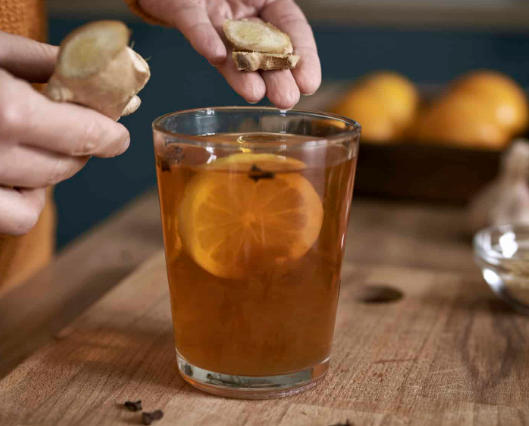
Nat Kringoudis explains that in TCM, the very early stage of a cold is called a ‘wind invasion’. “You might notice a slight scratchy throat, stiffness in the neck, mild chills or just a sense that something is brewing. This is the window where intervention is most effective,” she says. “Rest becomes non-negotiable. Warmth is critical: keep the neck covered, switch to warm fluids and avoid cold or raw foods. Simple strategies like fresh ginger tea with lemon and honey can help gently release the exterior and support circulation. Soups and broths are far more beneficial than fasting or skipping meals, as they provide the energy your immune system requires to respond effectively. MSM (methylsulfonylmethane) has also been found to thin and mobilise congestion so it doesn’t just sit there and turn into something bigger. In Chinese medicine, thick mucus is a sign that fluids aren’t transforming properly. We want movement, not stagnation, especially early on. From a hormonal perspective, we also need to remember that stress and lack of sleep suppress immune function. Many women push through the early signs of illness, but this often prolongs recovery. My philosophy is always the same: listen early, act early and respect the body’s signals rather than overriding them. Ultimately, you must rest.”




 Medicine