

 i_need_contribute
The age-old Chinese habit of drinking hot water has gone viral. On TikTok and RedNote, influencers clutch steaming mugs and extol the benefits of drinking warm water for digestion, circulation – of both blood and qi – and balance. What they are describing is yang sheng – the practice of nourishing life that exists at the heart of traditional Chinese medicine. TCM, once the nagging voice of your grandmother, is now what the cool kids post on their feeds.
The Mandarin term for this is guochao, loosely meaning “national wave” and describing the rebranding of Chinese heritage as something desirable rather than dowdy. It began with Li-Ning starring on the runway at New York Fashion Week in 2018, followed a year later by Florasis’ engraved lipstick cases – the designs of which were inspired by ancient Chinese relief-engraving craftsmanship.
Now, the trend has migrated to restaurant and bar menus – guochao in digestible form – steeped in a promise of wellness and cultural pride. The challenge, however, is how to translate a tradition defined by bitter medicine into something people actually crave.
For many younger diners, the first barrier to TCM is its sheer intellectual density. It can feel like an arcane maze of unseen bodily energies and ancient texts that have accumulated over the centuries. Jayson Tang, executive Chinese chef of Man Ho Chinese Restaurant, solves this by translating TCM’s abstract philosophy into a highly visual, intuitive language.
It helps that Tang grew up with TCM as a practical reality. “When I was a child, I suffered from frequent skin irritation,” he says. “My uncle would take me to see an old TCM practitioner. The herbal remedies worked.” Elsewhere, his mother brewed soups according to the calendar: “This one to clear heat, that one to strengthen the lungs,” he recalls.
It was later though, when studying at the Chinese Culinary Institute, that Tang began to understand the natural systems underlying the soups and remedies from his childhood and noticed how ingredients shifted in harmony with the seasons.
At Man Ho, Tang dismantles the esoteric nature of TCM using his Five Elements Menu, which draws inspiration from the 2,000-year-old Huangdi Neijing, one of the foundational texts of TCM that gained a following among Taoist practitioners. The text maps colours onto organs and elements: white is for the lungs and metal; green for the liver and wood; black for the kidneys and water; red for the heart and fire; yellow for the spleen and earth.
Tang uses colours to help select ingredients for the restaurant’s medicinal properties before applying contemporary culinary techniques. In doing so, he makes a 2,000-year-old medical text instantly legible on the plate.
Take one example on the current menu: the deep-fried fish maw with shrimp mousse and banana in a pumpkin and rice stock is built around yellow. Both banana and pumpkin are understood in TCM to benefit the spleen and aid digestion. Bananas are rarely used in Chinese cooking, which lends the dish an avant-garde appeal – but Tang first cooked with them 20 years ago, winning a competition with a banana-based dish. He brought that memory back for this menu, grounding his theory in something personal.
The entire menu follows a deliberate sequence, with the early courses cleansing while the later ones build strength. “This respects the TCM principle of beginning with detoxification before moving towards nourishment,” he explains.
If Tang seeks to decode the vernacular of TCM for regular diners, Sandy Keung wants to overcome the palatability barrier and Hongkongers’ memories of having to choke down aggressively bitter, dark, medicinal brews. The chef-owner of Table by Sandy Keung sidesteps this through a brilliant strategy of culinary camouflage.
Her current summer menu is built around the element of fire. “In TCM, summer is when yang energy rises; the body consumes more, and the heart works hardest,” Keung explains. According to traditional TCM theory, the flavour that naturally balances fire and clears internal heat is bitterness. Therefore, a summer wellness menu demands ingredients like bitter gourd.
But bitter gourd (fu gua) is an obviously hard sell. “It would be difficult to convince a client to eat a plate of fu gua only,” Keung jokes.
Yet she does not hide the gourd. It is clearly presented on the menu, and the vegetable is deliberately chopped into larger cubes rather than diced into smaller pieces that might be less detectable. To sweeten the pill, Keung pairs the bitter gourd with threadfin fish and layers it with a Pommery mustard-garlic-herb creme, cutting the harshness of the gourd without completely erasing it. “I still want diners to taste it,” she says.
Ultimately, Keung views her TCM menus not as a trend to exploit, but as a desirable cultural renaissance. “I’m not here to convince the hardcore, diehard TCM fans” who are already converts, she says. “I’m here to remind people of their heritage, especially the ones who are not believers.”
Reclaiming that forgotten heritage, however, requires overcoming one final obstacle. It’s not just that TCM seems obscure or tastes bad. It’s that it feels outdated; a relic belonging to musty old neighbourhood shops smelling of dried roots and lined with countless jars containing who-knows-what. Dennis Mak, co-founder of Clan & Co by Magnolia Lab, solves this by moving TCM out of the apothecary store and into the high-energy, social space of contemporary nightlife.
Like his culinary peers, Mak’s relationship with TCM was forged in childhood: the bitter herbal medicine his parents made him drink, the herbal tea stalls on the street, the gui ling gao herbal jelly eaten as a summer treat, the soups his mother brewed with purpose.
“Those memories shaped me,” he says. “Not because of the health benefits, but because of the meaning embedded in every flavour. It is knowledge passed down through generations, and what we are doing is keeping that conversation alive.”
At Clan & Co, that conversation is revitalised through a liquid remix of Hong Kong’s collective childhood. To bridge the generational gap, Mak takes the traditional remedies Gen Z usually avoids and repackages them into sophisticated, trendy cocktails.
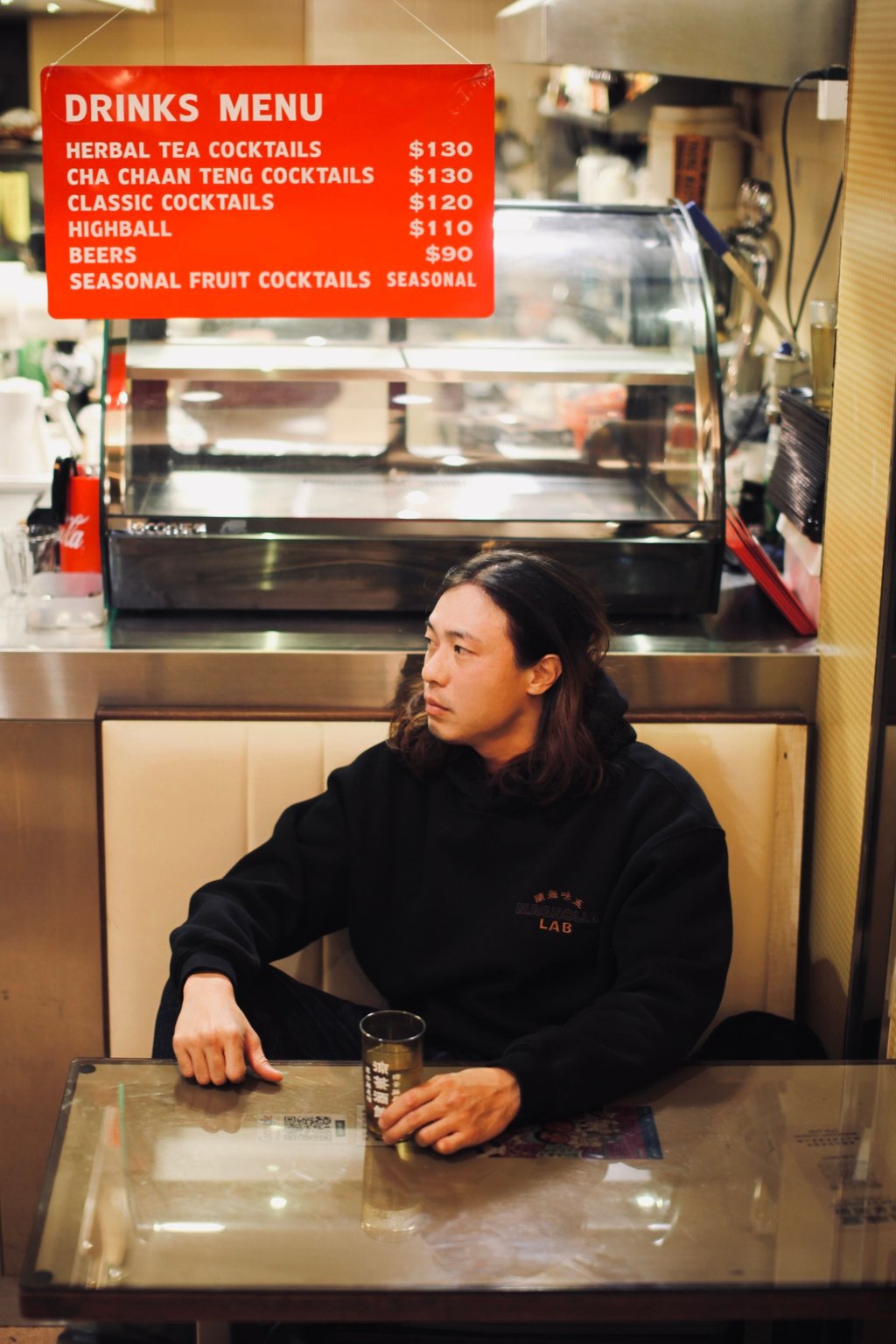
Dennis Mak, co-founder of Magnolia Lab. Photo: Handout
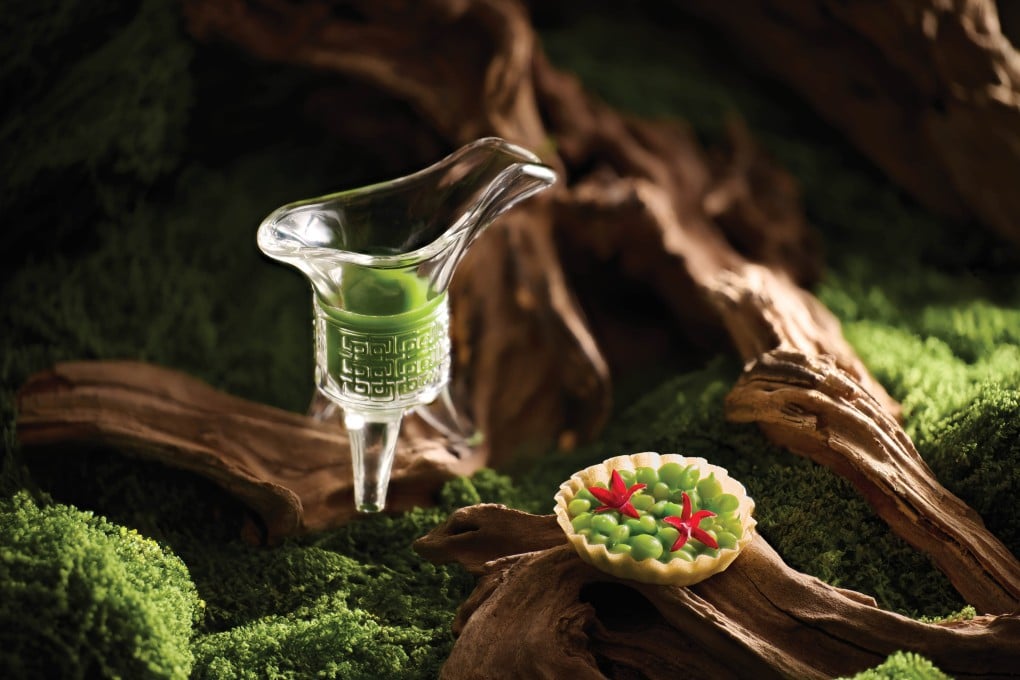
Five Flower Tea, the mild herbal brew drunk in summer to clear heat, is reimagined as a vibrant cocktail built on Two Moons Five Flowers Tea Gin, Magnolia Lab Roselle. Cynar. Sour Plum Soup, the classic sweet-sour drink served at hotpot restaurants to aid digestion, is used in a thirst-quenching cocktail tailored for the city’s humid months.
Mak is careful to draw a line between what he does and what a TCM practitioner would prescribe though. “We do not treat our drinks as medicine, nor do we promote any medicinal benefits,” he explains. To that end, the team selects milder herbs from the TCM category of “dietary herbs” rather than any potent medicinals.
However, Mak points out that alcohol has actually been an integral part of TCM for centuries, traditionally used to preserve herbs, alter their effects and even serve as medicine itself. On colder days, Clan & Co serves warm cocktails, honouring the TCM emphasis on harmony with the seasons and the body’s own needs.
Mak sees his work as part of something larger than mixology. Younger Hongkongers, he says, are losing touch with their traditions: “A lot of Gen Z have never stepped into a traditional herbal tea shop, nor tasted 24 Herbs and Chinese medicinal wine. They know these things exist, but there has always been a gap between knowing and appreciating.”
Clan & Co seeks to bridge that gap. When a customer tastes Mak’s Five Flower Tea cocktail and says it reminds them of their grandmother, a frayed cultural connection is restored. “TCM is not a trend,” Mak insists. “It is simply the local expression of a universal truth: people gravitate towards flavours that feel like home.”
What these innovative dishes and drinks offer is not a cure-all, and they don’t pretend to. Instead, they offer a younger generation permission to believe – for the length of a tasting menu or a few sips – that they are taking care of themselves, all while their ancestors look on from somewhere, nodding in quiet approval.
Placebo or profound, this is guochao at its most intimate. And Hong Kong is ordering another round.




 Medicine