

 i_need_contribute
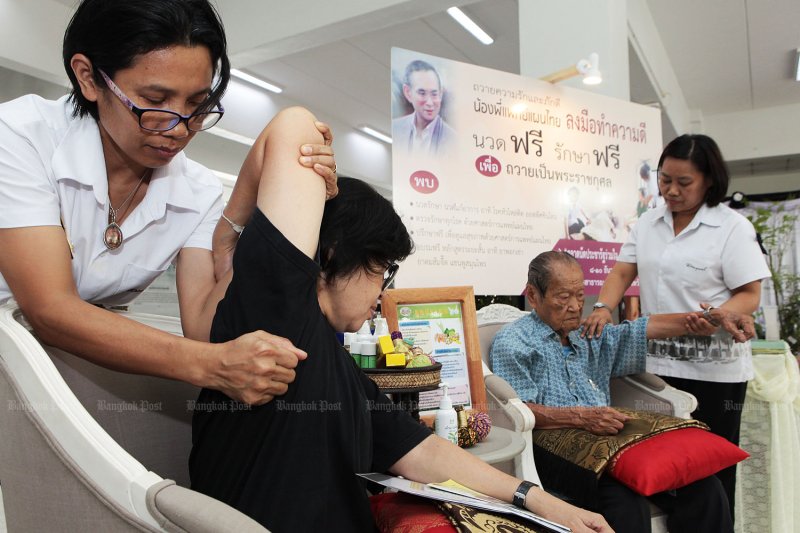
The House of Representatives has accepted in principle a bill to strengthen protections for Thai traditional medicine and to promote the country's herbal sector as a strategic economic asset.
During parliamentary deliberations on the Thai Traditional Medicine and Alternative Medicine Act on Wednesday, lawmakers from the Democrat and Pheu Thai parties voiced support for the legislation, citing its potential to enhance drug security, protect traditional knowledge and boost the wellness economy.
Democrat MP Rudklao Intawong Suwankhiri said the bill extends beyond healthcare, touching on Thailand's future in three areas: drug security, health security and the creation of a high-value economy based on local wisdom.
She noted that Thailand has more than 16,789 herbal species and over 54,979 traditional remedies, but remains largely an exporter of raw materials while foreign countries undertake research, and value addition.
"We must stop being merely a supplier of raw materials and move up to become an innovator using our own resources," Ms Rudklao said.
A key principle of the bill, she said, is ensuring that communities owning traditional knowledge are recognised, protected and fairly compensated when their remedies are used commercially.
Ms Rudklao also cited lessons from the Covid-19 pandemic, saying Thailand should reduce dependence on imported medicines and strengthen self-reliance in health products and herbal medicines.
She pointed to Andrographis paniculata (Fah Thalai Jone, in Thai) and turmeric as examples of herbs that can be integrated into healthcare when supported by scientific evidence and production standards.
She proposed five follow-up measures, including protecting community rights, expanding research and clinical trials, reducing regulatory duplication, designating strategic national herbs and building a complete herbal value chain benefiting farmers, communities, researchers and entrepreneurs.
Pheu Thai MP Manaporn Charoensri said Thailand's traditional medical knowledge is a unique national asset, but existing legislation, in force for more than 26 years, no longer meets modern needs.
She said the herbal sector was valued at 56 billion baht in 2023, with average annual growth of 14%, while growth reached 23.1% in 2024 amid rising global demand.
The draft law would, for the first time, protect community intellectual property rights and require commercial users of community remedies to seek permission and provide compensation.
Fellow Pheu Thai MP Rawee Lekuthai welcomed provisions expanding protection to community medical texts and strengthening registration rights, while cautioning against duplicate registration procedures that could increase costs.




 Medicine