

 i_need_contribute
What do you get when balanced health and being Chinese start trending online at the same time?
The rise of “Chinamaxxing” and a growing appetite for cupping reels and the like has launched traditional Chinese medicine (TCM) content into the mainstream – where it now stands as the perfect combination of holistic healing and all things Chinese.
Millennials and Gen Z – the latter dubbed the “crispy generation” in a self-deprecating nod to their seemingly fragile bodies – are increasingly wary of pharmaceutical quick fixes. Instead, they seek root-cause solutions to chronic issues such as period pain, bloating, insomnia and anxiety – which are not seen as isolated symptoms but as signals of a deeper imbalance.
TCM, with its holistic framework of qi – the vital energy that creates balance in the body – offers exactly the kind of whole-body narrative they crave.
“Chinese medicine doesn’t just treat the surface-level things you can observe – it treats disharmony … In Chinese medicine, we see physical, mental and spiritual health all together,” says Elizabeth Yau, a Hong Kong-based TCM influencer with more than 25,000 followers on Instagram.
Yau studied TCM at the University of Hong Kong for six years – two of them spent focusing on Western medicine alongside medical students – and holds a master’s degree in sports nutrition.
She is part of a new wave of medical-professional content creators who are demystifying ancient healing practices by repackaging them in informational clips on social media platforms such as Douyin, RedNote and Instagram.
“Chinese medicine plays a huge part in understanding wellness. It’s not a trend for us,” she says.
Angeline Chong is a 26-year-old Malaysian TCM practitioner who studied at the Tianjin University of Traditional Chinese Medicine in northern China and, like Yau, has around 25,000 Instagram followers.
She started her account for a similar reason – to counter misinformation – and says that one of the most persistent misconceptions about TCM is that it has “no scientific basis”.
Critics often point to concepts such as qi and meridians (energy channels) as untestable and therefore invalid, but this stems from a language barrier rather than a lack of critical analysis.
Yau, who gave public talks on TCM in Hong Kong before launching her social media account, says many people think Chinese medicine is unscientific “because it’s just difficult to talk about in their language”.
This point is supported by a growing body of research – most of it published in Chinese medical journals – that shows the efficacy of acupuncture for chronic pain, herbal formulas for digestive disorders and integrative approaches for cancer support.
Chong says that the misconception persists largely because TCM does not look at health the same way Western medicine does. But just because it uses a different approach does not mean it should be dismissed as “pseudoscience”.
“I personally don’t think TCM can be fully explained clinically, apple to apple, A to Z,” she says.
“Most of my audience is from English‑speaking countries – the US, the UK, Australia. A lot of TCM knowledge is in Chinese. You can’t just Google Translate it or trust AI. My goal is to make it accurate and accessible.”
She adds that certain concepts, such as dampness and heat inside the body, are especially difficult to explain.
“I tell them to imagine a lot of clouds in your body, stuck in the blood circulation. You feel tired, you feel swollen. But Western doctors usually find it difficult to relate to or fully comprehend what I mean.”
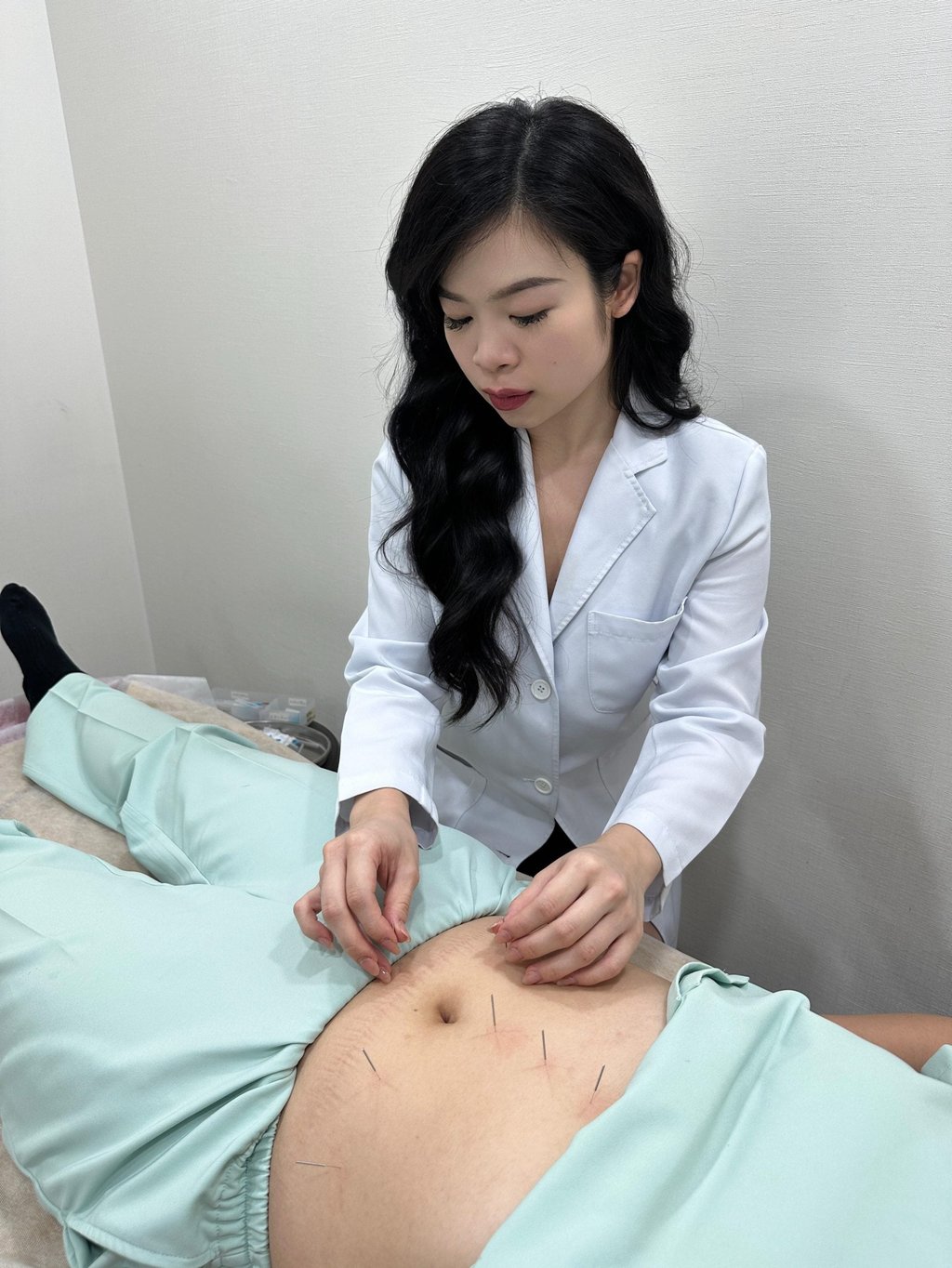
Yau treats a patient with acupuncture. She says that it can be hard to communicate certain TCM concepts to Western doctors because they are hard to translate from Chinese. Photo: Elizabeth Yau
Modern TCM education in Hong Kong, mainland China and elsewhere is being incorporated into Western medical science. Many practitioners have substantial training in Western practices, including blood tests, ultrasound reports and clinical trials, and often review these before making treatment decisions.
“There are things Western medicine does better,” Yau says. “I can’t do an ultrasound or a blood test [as a TCM practitioner]. I tell my patients: if you have this kind of symptom, go to a gynaecologist first. Both kinds of [Western and TCM] doctors have strengths and weaknesses, and this is something that they can provide.”
Chong agrees that integration is not just possible but necessary. “I don’t think TCM could completely replace modern medicine, and it shouldn’t. They should complement each other, hand in hand,” she says.
When it comes to online consultations, Yau and Chong both have firm rules. When strangers message them asking for diagnoses, they refuse.
“I tell them it’s much more accurate to assess in person, and there’s no way for me to know for sure what you need until I see you,” Chong says. “I treat those inquiries as inspiration for my next video – not as a remote clinic.”
The rise of online TCM content has recently come under official scrutiny. In August 2025, Chinese authorities issued new rules requiring digital creators of health sites to verify their medical licences. Platforms must now vet accounts, and a “negative behaviour list” bans advertising disguised as education following the opening of the Chinese Medicine Hospital of Hong Kong in December 2025.
For serious influencers such as Chong and Yau, this is not a threat but validation. “Anything that stimulates conversation around TCM – good or bad – is helpful,” Chong says. “I just hope more people share accurate knowledge.”
Yau and Chong view trending TCM‑inspired products – from herbal gelato to medicinal cocktails – with both excitement and caution.
Yau finds the trends “interesting and exciting”, but warns of risks.
“Food can be medicine if used correctly. Goji berry is mild. But if they use bitter almonds, which contain trace toxins, to make something like ice cream, it could be a health risk when consumed excessively.”
She also stresses that TCM is not one-size-fits-all. “You don’t boil the same soup for your 80-year-old grandpa and your two-year-old grandson.”
Chong echoes these sentiments.
“It’s a bit scary. Even in China, where TCM originated, there are many different practitioners with different beliefs. Some content could be inaccurate. Take everything you see online with a grain of salt, and find an actual practitioner in-person to make sure.
“With that, TCM can become even safer, more effective and regulated in this modern world.”



 Medicine