

 i_need_contribute
The smell of something herbaceous in the air, jars containing medicinal ingredients of every shape and form, a chiller lined with bottled home-brewed teas—if you’ve stepped into a Traditional Chinese Medicine (TCM) clinic or medicine hall before, you’ll know this scene all too well. You might already recognise your meridian points, because you’ve gotten a tuina massage or cupping treatment. You have congee recipes and lymphatic drainage tutorials saved. No matter where you started or how much you know of it, TCM is taking root in wellness routines everywhere.
For Catarina Oliveira, it became a way of life. After gruelling athletic training started taking a toll on her body, she looked beyond sports science to seek healing elsewhere. With its holistic approaches and natural remedies, TCM piqued her interest. Now a certified doctor and co-founder of TCM-centred skincare brand, Herbar, Oliveira is putting the ancient health system on the map. Sharing concepts, recipes and, more recently, glimpses into her daily life at a TCM hospital in China on Instagram, she speaks to Vogue Singapore to trace her journey, favourite moments and her thoughts on where TCM is headed in the modern age.
What’s a TCM wellness practice that you have found especially helpful recently?
Lately I’ve been coming back to very simple things, like eating warm, cooked meals consistently and protecting my mornings. In TCM we talk a lot about the spleen and its role in transforming food into Qi (vital energy) and blood, and how it prefers warmth and regularity. When you support that rhythm, digestion becomes more efficient, fluids are better managed and you’re less prone to things like bloating, fatigue or dampness. It’s not glamorous, but it’s one of the most powerful things I do for my energy, digestion and mental clarity. I also like to do a few minutes of qi gong between back-to-back calls. It really helps regulate Qi and move stagnation, which is great after sitting all day stressing out about entrepreneurship.
What first stoked your interest in TCM, and inspired you to become a TCM doctor?
I studied sports science before TCM, so I was always interested in performance, recovery and how the body adapts. I was also an athlete, and at one point I pushed my body too far—training over eight hours a day, under-fuelling and eventually falling into what’s known as the female athlete triad. It led to complete hormonal shutdown and, ultimately, a stress fracture that forced me to stop. A broken leg was the turning point. I realised I couldn’t keep pushing my body deeper into depletion. TCM gave me a completely different framework, one that wasn’t just about output and performance, but about restoring balance, rebuilding energy, and understanding the body as an interconnected system. That shift is what led me to become a TCM doctor.
You’ve recently shared about your experience working in a TCM hospital on Instagram. Could you describe a day in the life of being in a TCM hospital?
A day in a TCM hospital is intense, but in a very grounding, almost meditative way. I start at 8am in one department, and I rotate regularly on a weekly basis, so it could be cosmetology, pediatrics, trauma and rehabilitation, or general medicine. It keeps you out of autopilot—every day feels different, even after years of study. From the start, it’s patient after patient. Very hands-on. You’re constantly observing, listening, taking pulses, reading tongues, asking the right questions. Some cases are simple, others really challenge you and push you to think deeper.
Around 12pm, I’ll stop for lunch, usually at the hospital canteen or somewhere nearby for soup or porridge. I keep my food very medicinal so it supports my energy through the day and my spleen. Then it’s straight back in. The afternoon is non-stop with new patients coming through constantly. I move between diagnosis and treatment all day: pulse taking, tongue analysis, refining strategies, then acupuncture, herbs—often multiple modalities in one session. There’s a rhythm to it that truly carries you. It’s deeply practical, not theoretical, and it keeps you sharp in a way nothing else does. I usually finish around 7pm, but some days I’ll stay until 11pm to shadow one of my favourite TCM masters. I love to be able to learn from someone with over 60 years of practice, where you really get to see the infinite depth of the medicine.
It’s long and demanding, but so worth it. Especially as you see your patients get better right in front of your eyes.
What’s been your favourite moment during your time there?
Honestly, seeing how people experience meaningful shifts right in front of my eyes. Making their lives better. A patient sleeping better, digestion improving, pain reducing the mind becoming more still. Those small changes, when you see them every day, remind you how powerful this medicine is when it’s practised properly. And also, being around true TCM masters, practitioners with 50 or 60 years of experience. Watching how they think, how they observe, how precise and calm they are in their approach, that’s been just as impactful as working with the patients themselves.
What would you say are the key differences between a TCM clinic and a TCM hospital?
Scale and depth. In a hospital, you see a much wider range of conditions, including more complex and chronic cases, and a stronger integration between practitioners. The pace is also much faster. Clinics tend to be more intimate and slower, which has its own value, but hospitals really sharpen your diagnostic and treatment skills.
Has working in a TCM hospital changed your own practices as a TCM doctor? If yes, how exactly; if no, why?
Yes, it made me more precise. You realise you don’t need to overcomplicate things. When your diagnosis is clear, your treatment can be very direct. It also made me much more disciplined in observation. Paying close attention to subtle signs, small shifts in the pulse, slight changes in the tongue, the way someone speaks or carries themselves. Those details can completely change your understanding of a case, and ultimately lead to much more accurate and effective treatment.
What area or aspect of TCM do you wish more people would talk about?
How nuanced it actually is. TCM is often reduced to very binary thinking—hot or cold, good or bad, this food for that symptom—but in reality it doesn’t work like that at all. The same symptom can come from completely different patterns; the same herb or food can be beneficial for one person and aggravating for another. It all depends on the individual, their constitution, their current state and the underlying imbalance.
Without that level of differentiation, you lose what makes TCM so powerful. It’s not about quick fixes, it’s about understanding patterns with precision.
TCM has long been positioned as an alternative form of medicine, especially in relation to Western medicine. With the recent surge in its popularity on social media, do you think there will be a day where TCM becomes the main medical system of choice for a majority of people?
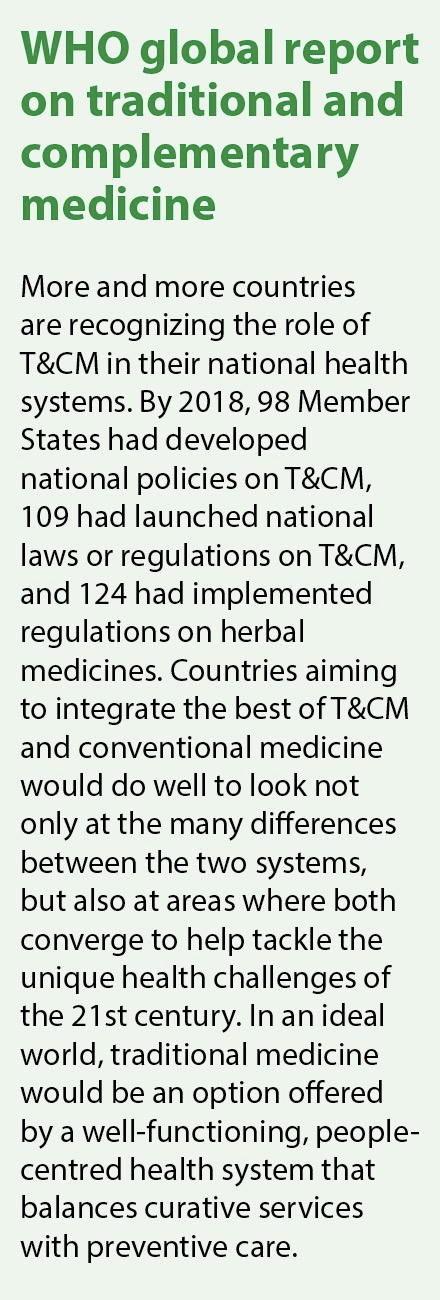
I don’t think it’s about replacing one system with another. I think the future is integration. TCM offers a way to understand patterns, prevention and chronic conditions in a way that Western medicine often doesn’t. But both systems have clear strengths.In practice, we already use them together. Western medicine is incredibly effective for acute care, diagnostics and emergencies. TCM is very strong when it comes to prevention, regulating the body, managing chronic conditions and supporting long term balance. The real opportunity is learning how to combine both approaches properly, using each where it’s most effective, rather than positioning them in opposition.
You also started a TCM skincare brand, Herbar, a few years ago. What made you decide to bring the TCM influence to the skincare space specifically?
For me, skin was never just surface level. In TCM, the skin reflects internal balance, fluids, circulation, even emotional states. I wanted to create products that respect that philosophy, formulations that support the skin barrier while also working with the body’s natural processes, not against them. At the same time, both my co-founder Rui—she’s a plant scientist—and I felt there was a real gap in the West. We were working with and studying these incredible ingredients in China—herbs and mushrooms with centuries of use—and we simply couldn’t find anything that translated that knowledge in a modern, well-formulated way.
So Herbar really came from that intersection, where these raw materials and this depth of tradition are combined with clinical formulations and modern skincare standards to create something that felt both authentic and effective.
Herbar has also recently been a part of the backstage prep at London Fashion Week. How do you hope that TCM can influence the beauty scene as a whole?
I hope it brings a shift from quick fixes to long term skin health, and a deeper understanding of the skin as a living system, not something to constantly fight or correct. Less focus on stripping, overcorrecting, or chasing trends, and more focus on balance, nourishment and consistency. Beauty doesn’t need to be aggressive to be effective. There’s a quieter, more intelligent approach, and I think people are starting to look for that.
Beauty doesn’t need to be aggressive to be effective. There’s a quieter, more intelligent approach, and I think people are starting to look for that.



 Medicine