

 i_need_contribute
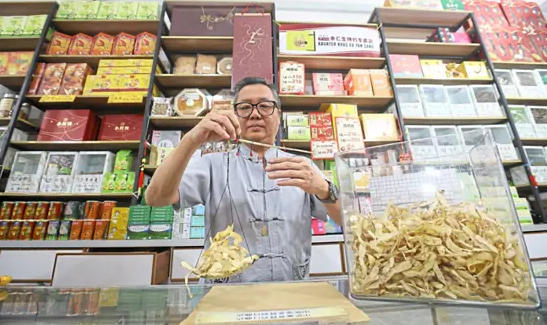
Ma represents the 800-strong business arm of the Traditional Chinese Medicine industry. — Photos: AZLINA ABDULLAH, LOW BOON TAT and LEONG WAI YEE/The Star
IN the bright and aromatic aisles of Tuck Fong Herbs & Foods in Petaling Jaya Old Town, Selangor, the scent of healing is apparent.
The smell comprises of earthy Angelica sinensis (dong quai), dried scallop and the saline brine of high-grade sea cucumber.
This aroma has defined the rhythm of working life for the Chin family for over 10 years.
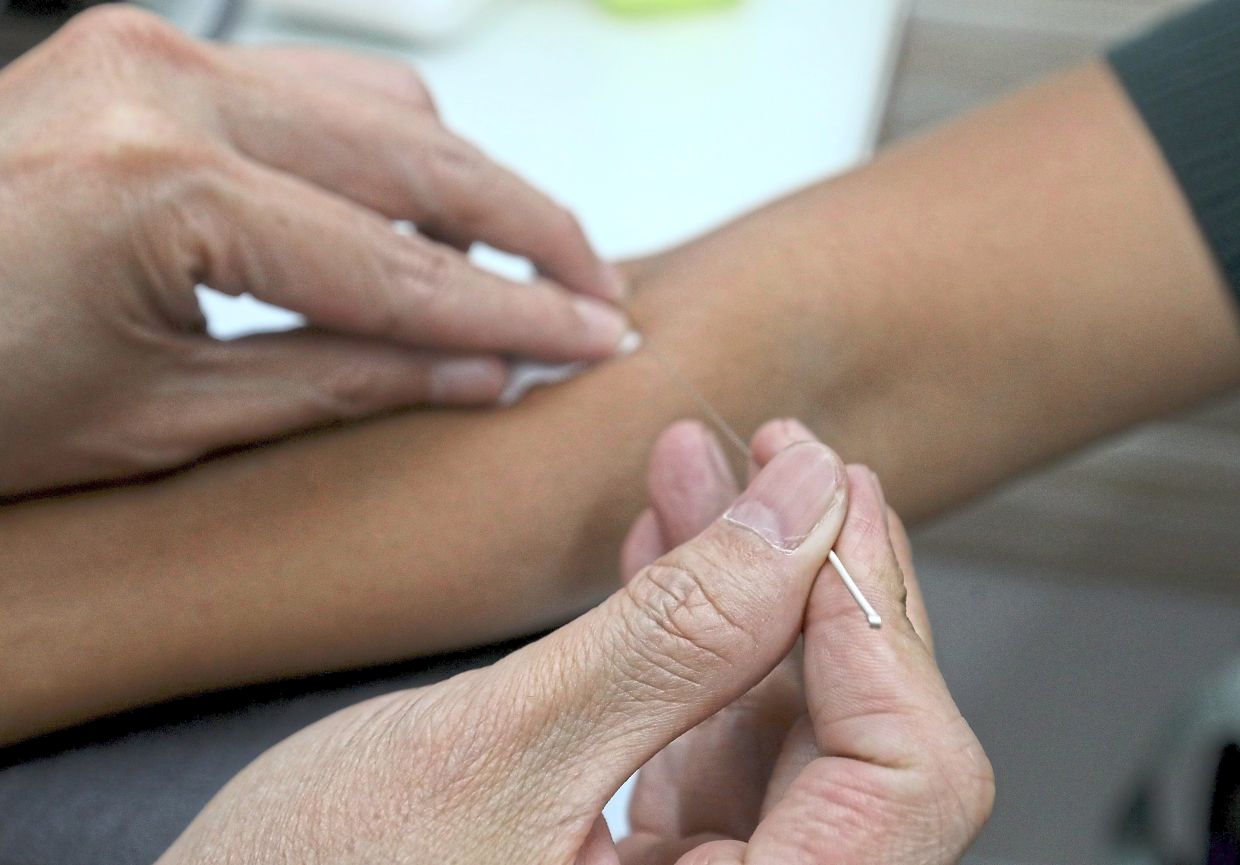
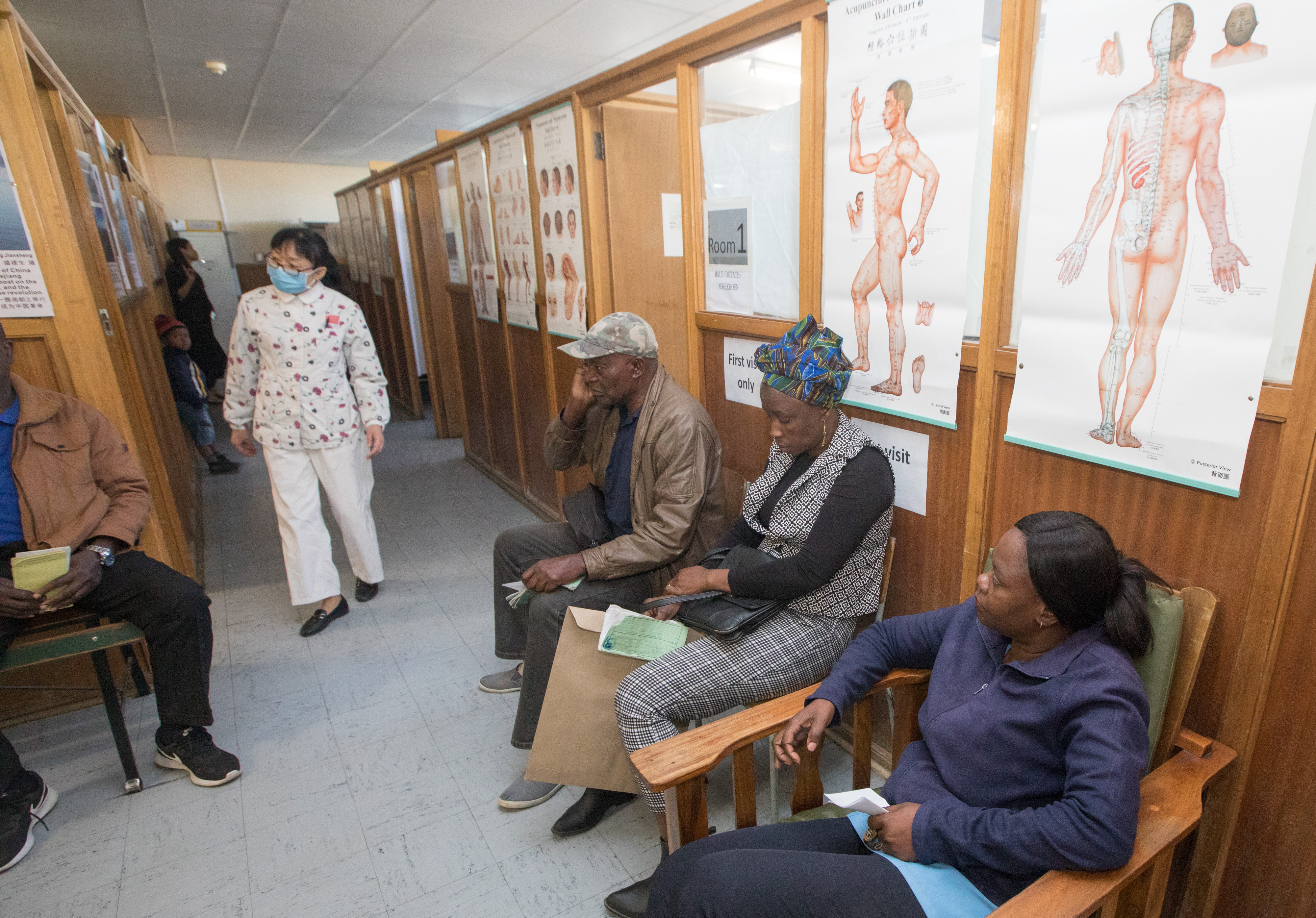
Acupuncture is a component of TCM’s holistic approach to health.
To Chin Chee Khai, 62, the shelves represent a lifetime of “self-taught perseverance,” pivoting from a small Sungai Way sundry shop in the 1970s to a premium medical hall.
To son Kenneth, 35, a registered pharmacist with a bachelor’s degree in Chinese Medicine from IMU University in Kuala Lumpur, it is a “complex inheritance” in an era where ancient roots meet modern clinical standards.
Other than nutritional therapy, Traditional Chinese Medicine (TCM) also combines treatments such as acupuncture, tuina (therapeutic massage), guasha (scraping) and cupping.
Pulse of the industry
This struggle for succession and survival that the Chins are navigating is felt across the state.
Federal Territory and Selangor Chinese Medicine/Drug Sellers Association president Alex Ma has seen the industry’s pulse weaken as the digital age clashes with heritage.
Operating Zhong Yi Group TCM Pharmacy in Desa Petaling, Kuala Lumpur, for 26 years, Ma represents the 800-strong business arm of the industry.
“A lot of TCM shops have closed down and downsized, maybe fewer than 1,000 are left in KL and Selangor,” he told StarMetro.
He pointed to the double-edged sword of progress: mandatory e-invoicing and a lack of “torch-bearers”.
“The older generation finds e-invoicing too difficult.
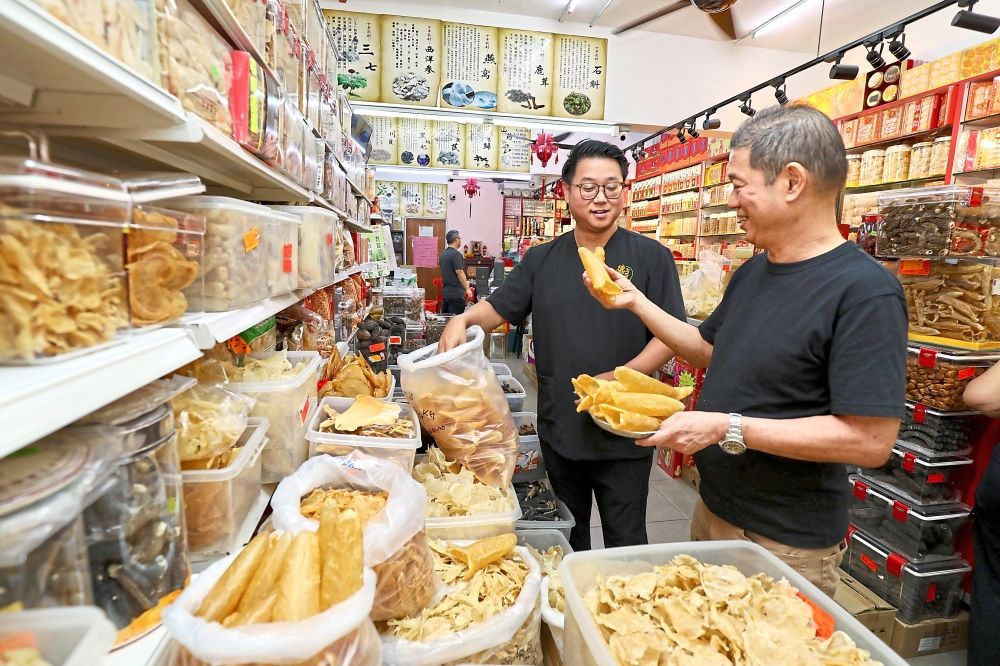
Premium offerings: Chin Chee Khai and son Kenneth Chin checking on imported fish maw at their medicine hall in Petaling Jaya, Selangor, which marries traditional healing practices with operational digitalisation. — LEONG WAI YEE/The Star
“If they are in their 60s and 70s, asking them to deal with computers and real-time tax systems is a lot,” Ma said.
“Children also now want the freedom to do what they want. Forcing them to take over will not work.”
Ma’s own journey was sparked by interest. He earned his degree from Xiamen University after being encouraged by his uncle’s sensei, a TCM physician.
His apothecary has special machines to extract as much nutrients as possible from the ingredients he uses.
Ma added that the effect from boiling the same ingredients at home would not be the same.During the Covid-19 pandemic, he noted a surge in demand for dried honeysuckle – prized for its cooling properties – which sold for between RM10 and RM20 per 100g as customers sought to reduce fever and body aches.
The clinical bridge
While Ma manages the retail frontline, Malaysian Chinese Medical Association (MCMA) president Dr Heng Aik Teng focuses on the science behind TCM.
As TCM programme head at INTI International University in Nilai, Negri Sembilan, Heng is bridging the gap between ancient theories and clinical evidence.
“Previously, TCM was misunderstood and lacked evidence-based studies, but there is much more research now, mostly in China.
“We don’t claim to cure viruses or bacteria directly; we keep them from disrupting your health.”
He highlighted TCM’s advantage in “functional disorders” – ailments where Western medical scans show nothing, but the patient still feels unwell.
“For example, dizziness and discomfort despite normal blood pressure is considered functional.
“We harmonise the yin and yang.”
Under Health Ministry’s guidelines, this diagnosis now requires formal qualification.
While increased professionalisation has forced some medicine halls to shutter, Heng sees it as the only path to building public confidence.
Evolution of the trade
Kenneth is a living embodiment of this professionalisation.
After practising for three years as a Western medicine pharmacist, he found the shift back to the family trade somewhat challenging.
“It was difficult at first because the concept is different,” he said.
“In Western medicine, we look at the disease and treat it accordingly.
“TCM is more about treating symptoms and the person holistically.”
His father Chee Khai’s story is one of radical adaptation.
Hailing from Kuala Kangsar, Perak, he started running a sundry shop and TCM hall in Sungai Way as a teenager.
However, the arrival of retail giants forced him to focus on TCM, specifically premium products.
“When hypermarkets started mushrooming in Klang Valley, my buying power was not as strong as the big players.
“I changed my business model and the TCM products I sell now are mostly premium goods.”
That decision defines the shop’s identity today.
Chee Khai pointed to a South African fish maw that can fetch thousands of ringgit.
“I had to be brave in pivoting to selling more premium and quality products and change my target audience,” he said.
The shop now focuses on high-value “treasures” such as 16 species of sea cucumber sourced from Papua New Guinea to Australia.
The Golden Sea Cucumbers are known as the “ginseng of the sea”, where top-tier Tasmanian varieties can fetch RM2,000 per kg.
However, the supply and demand of the trade is volatile.
“General herbs have increased in price, with top-tier wolfberries costing RM80 per kg.
“For premium goods like bird’s nest however, supply has caught up, so prices have stabilised or gone down,” said Chee Khai.
Kenneth has stepped in where his father’s “self-taught” methods hit the digital wall.
“My father doesn’t do the back-end work anymore.
“I’m the one taking over finance, sales and stock-keeping,” he said, adding that these elements had to be digitised to manage inventory.
Taking it further
Despite the closure of landmarks, like the decades-old Vie Onn medical hall and sundry shop in Section 14, Petaling Jaya, last December, Kenneth is bullish about the future.
He is currently spearheading a rebrand under the name De Yuan TCM.
Kenneth explained that in TCM, yuan means ‘qi’ and the ‘source’ or ‘origin’ (referring to Yuan Qi, or life force).
“The name De Yuan actually represents the philosophy of ‘treating the source with virtue’.
“It’s about approaching the very root of health (yuan) with the highest integrity and moral excellence (de).”
He said TCM was growing; and so was the public’s knowledge of alternative medicine.
For Chee Khai, seeing his children succeed in the field he pioneered is rewarding.
“I have two sons and two daughters. Kenneth and my daughters are pharmacists.
“My other son studies IT focusing on artificial intelligence.”
Though Kenneth is now a father himself, he is pragmatic about the third generation taking over the business.
“They are still young, we will see how it goes,” he said.



 Medicine