

 i_need_contribute
India–ghana Collaboration In Holistic Medicine
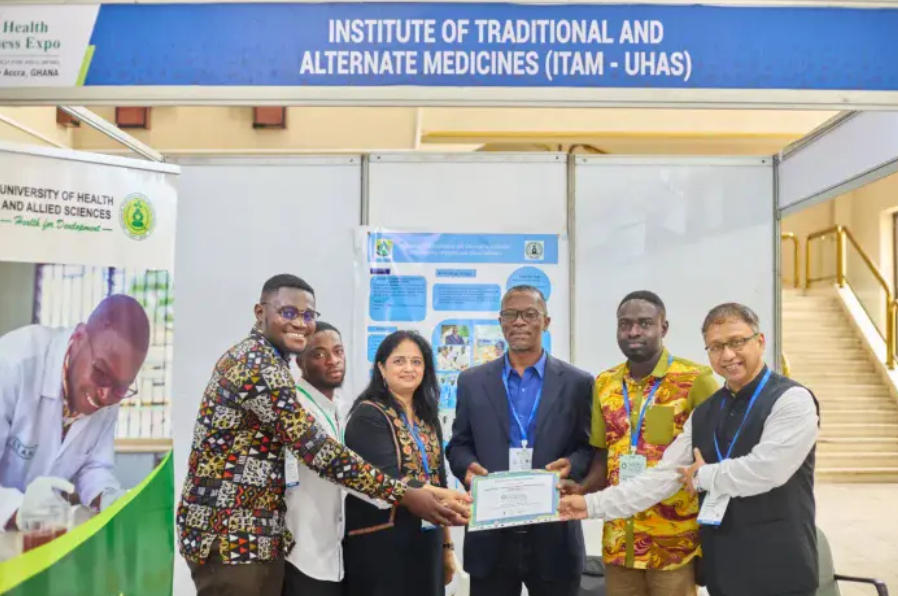
Organised by Vipex Associates, the two-day event drew 845 participants including healthcare policymakers, academics, manufacturers, doctors, and students, and culminated in the signing of multiple Memorandums of Understanding (MoUs) between Ghanaian and Indian institutions.
Among the most significant agreements was one between Deshavari Global Pharmaceuticals LLP and the Ghana Alternative Medical Practitioners Association (GAMPA), covering Good Manufacturing Practice (GMP)-compliant herbal product supply, clinical training opportunities in India, research collaboration, and the establishment of the GAMPA-Deshavari International Scholarship Scheme. A parallel MoU between Deshavari and the Ghana Association of Medical Herbalists (GAMH) focused on professional development through structured knowledge exchange in pharmaceutical and therapeutic herbal medicine.
Additional agreements were signed between the IRA Chamber of Ayurveda and GAMH, targeting research commercialisation and capacity building, and between Arujiva Ayurveda and Naturopathy Hospital in India and the University of Nyarkotey of Holistic Medicine in Ghana, formalising academic exchange, clinical training in Ayurveda and naturopathy, and faculty development.
A major institutional milestone announced at the event was the forthcoming establishment of an Ayush Chair at the University of Health and Allied Sciences (UHAS), enabling structured academic collaboration, teacher and student exchange programmes, and joint research between Indian and Ghanaian universities. The High Commission of India confirmed that preparatory work is already underway, with an Indian academic expected to take up the post before the end of 2026.
V.N. Parameswaran, Charge d’Affaires at the High Commission of India in Accra, described the outcome as a turning point from dialogue to structured implementation, stressing that traditional medicine should be viewed as a complementary and essential part of modern healthcare delivery rather than an alternative to it.
Deputy Minister of Health Dr. Grace Ayensu Danquah, who attended the exhibition, encouraged Indian companies to pursue long-term partnerships in technology transfer, contract manufacturing, and packaging innovation. She noted that between 70 and 80 percent of Ghanaians rely on traditional and herbal medicine as a primary or supplementary healthcare option, and reaffirmed the Ministry’s commitment to regulatory compliance and structured product registration to improve the sector’s export readiness.
Professor Kwame Benoit Bango, Director of the Institute of Traditional and Alternative Medicine at UHAS, called on stakeholders to use the expo as a platform for research partnerships and regulatory reform rather than trade alone, arguing that scientific validation is now essential for Ghana’s herbal medicine sector to compete in global markets.
The expo builds on the comprehensive partnership agreement signed during Indian Prime Minister Narendra Modi’s state visit to Ghana in July 2025, which included a bilateral MoU between India’s Institute of Teaching and Research in Ayurveda (ITRA), under the Ministry of Ayush, and UHAS under Ghana’s Ministry of Health.
Organiser Vaishali Zinzuwadia confirmed the Ministry of Health has requested the expo be held on a biennial basis, with the next edition planned for 2028 and expected to draw participants from across West Africa.




 Medicine