

 i_need_contribute
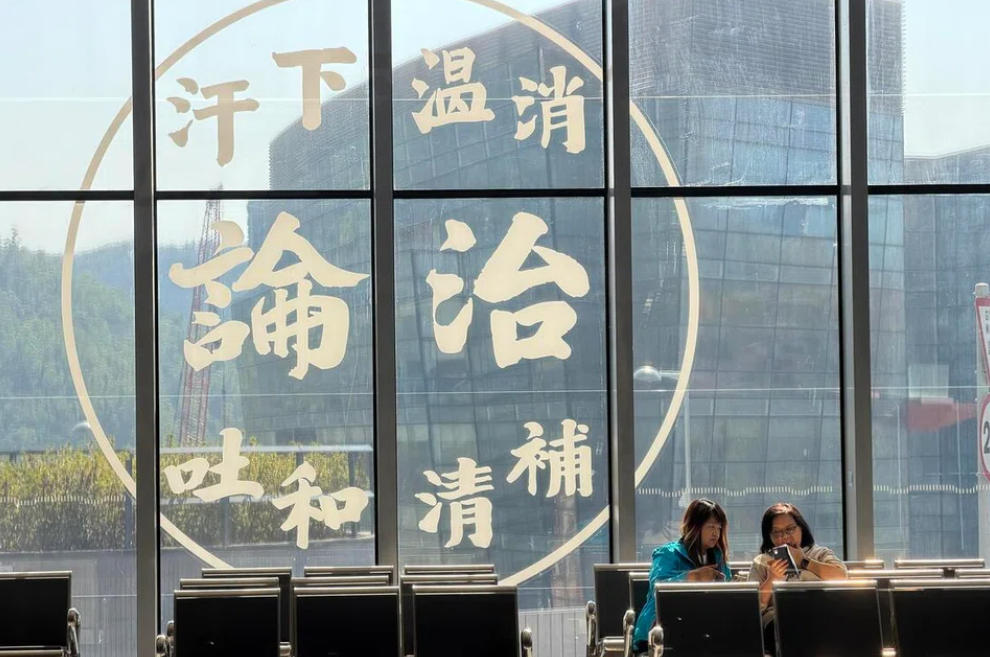
The Chinese Medicine Hospital of Hong Kong is part of China's extensive plan to promote the use and development of TCM worldwide.
ST PHOTO: MAGDALENE FUNG
“I’ve returned for several follow-up sessions since. The combination of treatments I’ve received so far has really helped improve my condition a lot.”
Ms Chan’s experience – a combination of both Chinese and Western medical treatments – is a key selling point of the Chinese Medicine Hospital of Hong Kong (CMHHK), which opened on Dec 11, 2025.
The hospital in Tseung Kwan O – the first of its kind in Hong Kong – offers healthcare services that are integrated with or complemented by Western medical practices, but use TCM as their primary approach.
The 42,900 sq m government-funded facility, which was over a decade in the making, is part of China’s extensive plan to promote the use and development of TCM. And Singapore is among the countries looking to learn from Hong Kong’s experience in integrating TCM into its own public healthcare system.
At first glance, CMHHK’s reception, clinics and wards look little different from a typical Western medicine-led hospital, with healthcare professionals in white coats and nursing scrubs going purposefully about their tasks.
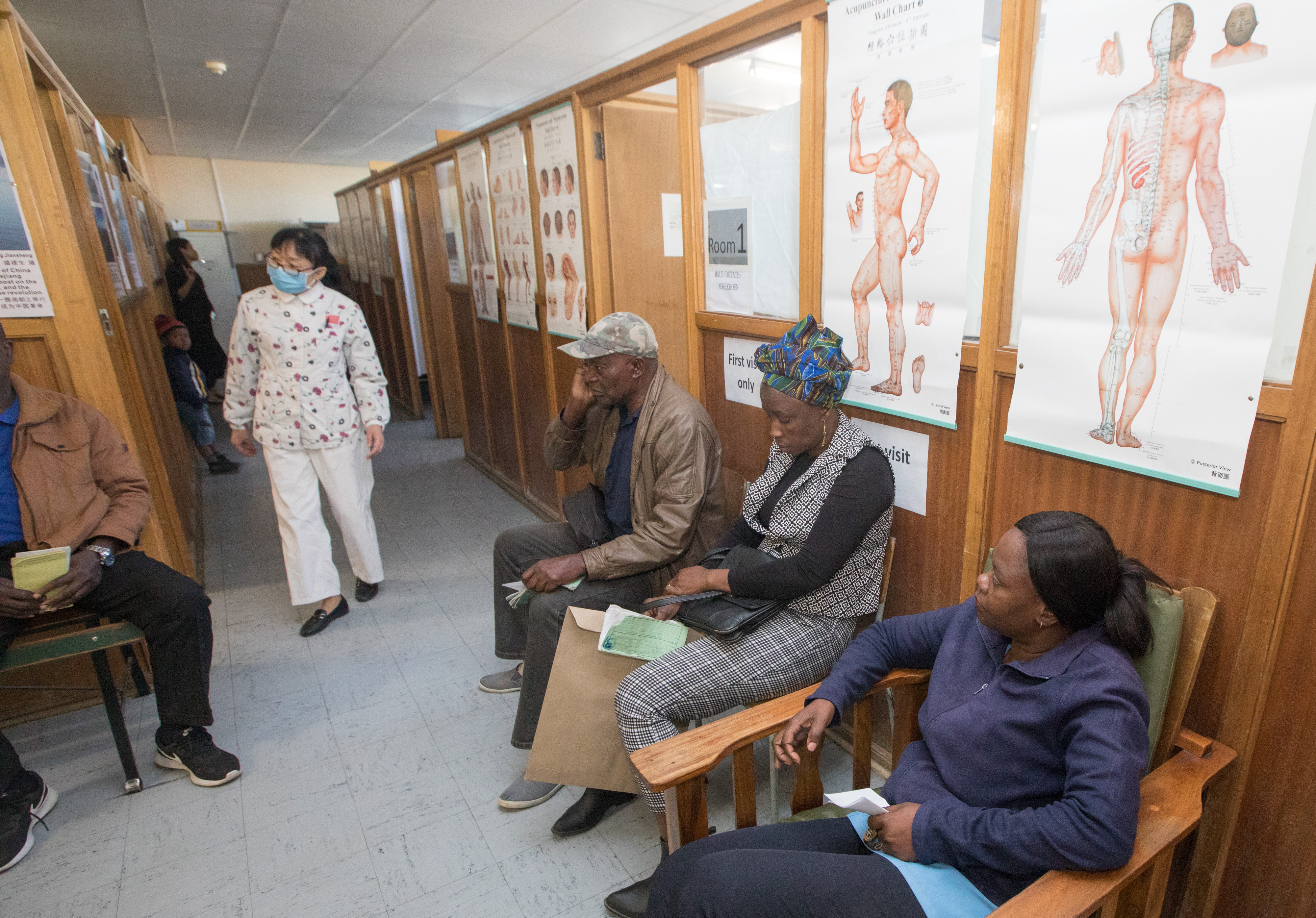
But on the walls and corridors of the hallways are elaborate posters and displays detailing the ancient science of TCM and the historic Chinese physicians behind them.
The treatment rooms include equipment for heat and light therapy, cupping, and even steam and soaking machines to infuse users with herbal medication.
The hospital is set to gradually expand its services over the next five years. It now provides outpatient and day-patient services for chronic pain management, infertility, stroke and cancer rehabilitation, and palliative care, among others.
Inpatient services will be available from the hospital’s second year of operation, with plans to operate 400 beds by the end of 2030.
CMHHK chief executive Bian Zhaoxiang described the hospital’s opening as “a milestone for Hong Kong and a huge step for our Chinese medicine industry”.
TCM services in Hong Kong used to be offered almost entirely through private outpatient clinics, and patients with more complex issues could go only to Western hospitals.
CMHHK’s East-West integrated approach provides “more holistic support”, said Professor Bian, a research scientist and leading expert in Chinese medicine clinical studies.
The hospital has a team of 22 Chinese medicine practitioners (CMPs) and five Western-trained medical doctors, a pharmacy that dispenses both Chinese and Western medications, and its own radiological diagnostics and laboratory analysis capabilities. It plans to grow its total headcount from the current 270 employees to as many as 1,000 by 2028.
During a visit, a patient is first assessed by a CMP, who decides if the patient needs to undergo TCM treatment – such as acupuncture or cupping – or Western treatment with diagnostic processes like an X-ray or magnetic resonance imaging (MRI), or a combination of both.
“In our hospital’s day ward, for example, a patient with back pain can receive a range of treatment, including acupuncture, tuina (traditional massage) and physiotherapy, all in one visit,” Prof Bian explained. “It can be far more effective than just taking painkillers.”
Ms Chan, the retiree with the back pain, benefited from this approach.
A sudden flare-up in her back condition in September 2025 caused excruciating pain that travelled down her legs, rendering her unable to walk.
After an MRI scan found a bulging disc in her lower back compressing her spinal nerve, a Western-trained doctor at another hospital suggested surgery if her condition did not improve after three months of medication and physiotherapy.
In despair and wanting to avoid undergoing an operation, Ms Chan turned to TCM for the first time. When she found significant relief from one acupuncture session at a private TCM clinic, she gained confidence in the approach and decided to give the new TCM hospital a try.
“My experience has been very positive,” Ms Chan said. “So far, I’ve been very satisfied with the treatment and services I’ve received at this hospital, as well as the bedside manner of the healthcare professionals here.”
Prof Bian said CMHHK’s initial rounds of subsidised outpatient consultation slots until mid-February were all snapped up just days after the hospital was opened to the public since November.
“The demand reflects the significant need for Chinese medicine services,” he noted.
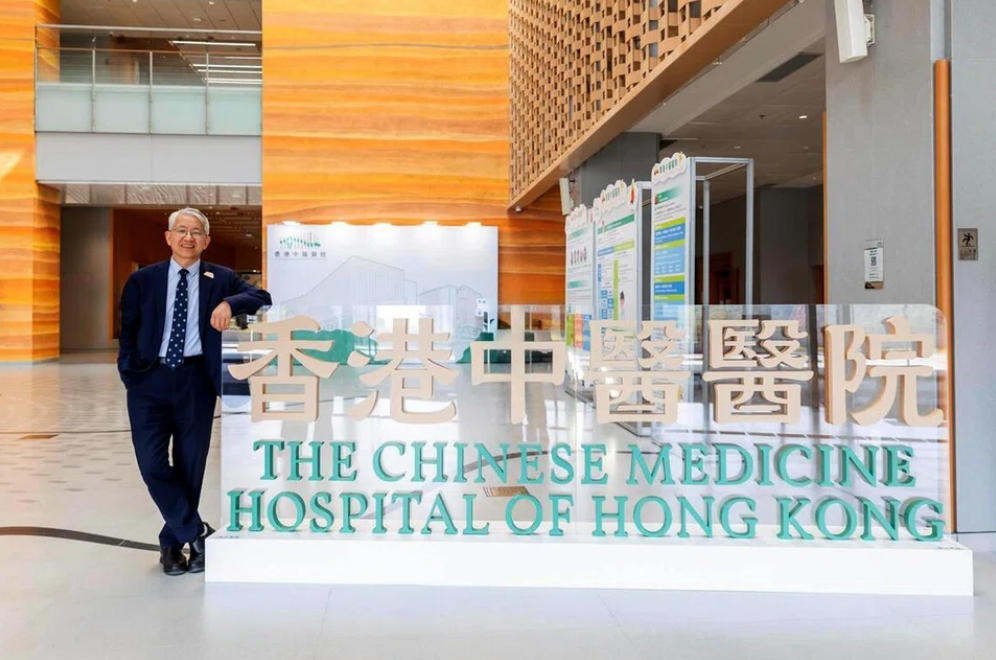
Professor Bian Zhaoxiang, chief executive of the newly opened Chinese Medicine Hospital of Hong Kong, said TCM and Western medicines play a “collaborative role” in the government-funded facility, the first of its kind in the city.
PHOTO: CMHHK
Globalising TCM is one of China’s national strategies as it seeks to strengthen its soft power abroad, and Beijing has tasked Hong Kong to play a key role in the endeavour.
China’s health chief, National Health Commission head Lei Haichao, in January urged Hong Kong to “accelerate the internationalisation of Chinese medicine” and to become a global hub for TCM testing and research.
Hong Kong in December unveiled its first blueprint to take TCM global by leveraging the city’s strengths to set international standards for TCM products and raise professional competence.
The city has opened the Government Chinese Medicines Testing Institute’s new premises right next to CMHHK to facilitate research into Chinese medicine and training of scientists who research Chinese medicine.
“We plan to have more joint research with other institutes,” Dr Edmund Fong, an assistant director overseeing Chinese medicine management in the government’s Health Department, told reporters on Jan 15.
“We are also planning more cooperation in the training of experts in Chinese medicine... (Hong Kong) will serve as a training hub in the Greater Bay Area and also in the region.”
Singapore is observing Hong Kong’s TCM endeavours with keen interest.
The Government is seeking to enhance the field of Chinese medicine in Singapore, with Nanyang Technological University
launching the country’s first Chinese medicine master’s degree
in 2026 and opening a new artificial intelligence lab for TCM research.
The Ministry of Health (MOH)
is evaluating integrating evidence-based TCM treatments
into the national healthcare system. If implemented in public clinics and hospitals, such treatments could become eligible for subsidies and MediSave coverage.
CMHHK’s approach “represents an alternative model” to Singapore’s, where “Western medicine is the primary approach in public healthcare, with TCM offered as a complement”, an MOH spokesperson told ST.
“This TCM-centric approach presents valuable learning opportunities for Singapore in areas such as hospital management, regulatory framework and clinical care pathways, which are typically structured around Western medicine systems,” the spokesperson said.
Challenges that could arise include establishing clear clinical practice boundaries, ensuring consistent quality standards, and creating timely referral pathways, the spokesperson said.
The spokesperson added that research and training collaborations between Singapore healthcare institutions and international partners on integrative medicine are ongoing.
“These could also help Singapore better develop our own integrative model while building stronger evidence for TCM effectiveness,” the spokesperson said.
A Hong Kong private TCM practitioner, who preferred not to be named, said the city’s new TCM hospital was a boon for his trade.
“With this hospital, aspiring CMPs will have the luxury to choose to do their practicum in Hong Kong in the future,” said the osteopath, who studied TCM in Hong Kong but completed his training at a hospital in Zhongshan, Guangdong.
He anticipated, however, that CMPs at the hospital might face more bureaucracy than at private clinics, whose “more flexible” practices typically allow patients to get their treatments faster without enduring lengthy registration, referral or diagnostic procedures.
CMHHK’s Prof Bian said the hospital’s systems are in place for good reason.
“We have procedures to ensure that our patients receive a high standard and quality of care and treatment,” he said. “The guidelines prioritise patient safety, and these are the foundational blocks that will guide Hong Kong’s TCM practices.”
Prof Bian added that the hospital also plans to set up a mechanism that would allow private CMPs to refer their patients to the public facility.
“Ultimately, we are not just a hospital – we are also a platform to collaborate, whether with CMPs, students in training, researchers, or with the broader industry abroad.”



 Medicine