

 i_need_contribute
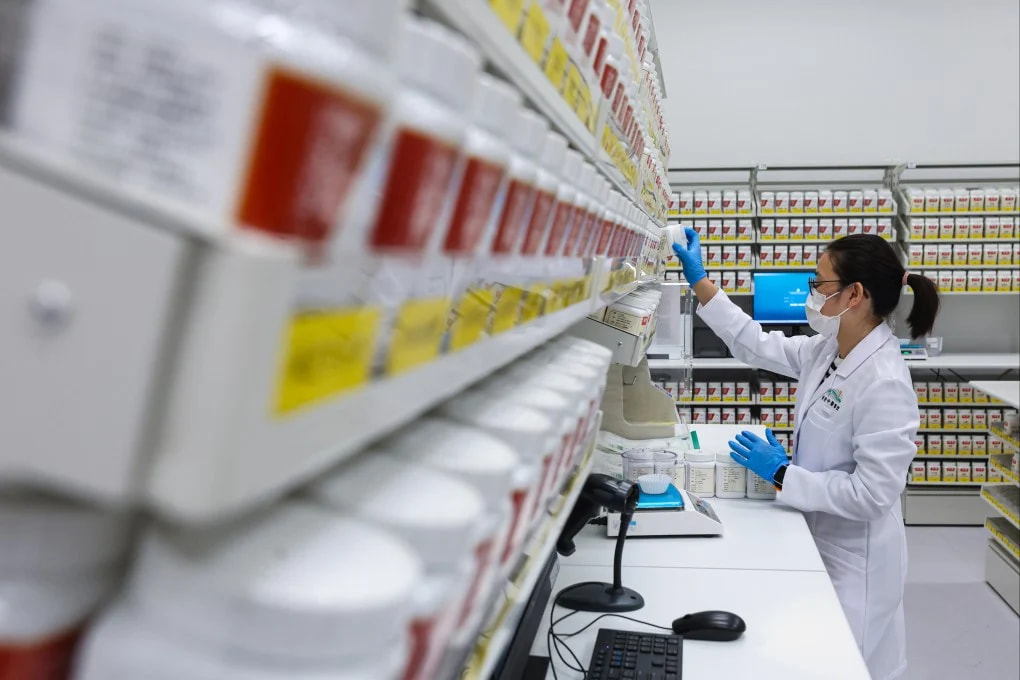
A pharmacy at the Hong Kong Chinese Medicine Hospital in Tseung Kwan O. Photo: Edmond So
Traditional Chinese medical practitioners in Hong Kong will work more closely with their Western medicine counterparts in pain management and post-illness recovery, according to the city’s health officials.
Chinese medicine is also expected to play a bigger role in primary healthcare, as authorities prepare a list of illnesses for patients who are advised to consult medical practitioners in the sector for better treatment options.
Professor Vincent Chung Chi-ho, commissioner for Chinese medicine development, said in a television interview on Sunday that Chinese medicine fared better in areas such as stroke care, chronic pain management and cancer palliative care.
“We need to guide the general public on when they should seek help from Chinese medicine and when it is better to consult Western medicine,” Chung said.
“We will work out a list of illnesses.”
Chung added: “There are also many cases in which the best results could be achieved by cross-disciplinary cooperation. Like stroke, after one receives emergency treatment at the hospital, physiotherapists, nurses or Chinese medical practitioners can also play a part to help the patient recover.”
He also said Chinese medicine could play a bigger role in primary healthcare.
“A common problem for city dwellers nowadays is pain, be it neck pain, shoulder pain or back pain. There is clinical evidence that acupuncture therapy can effectively treat various pain conditions,” Chung said.
“As such, we can promote acupuncture therapy in primary care. It can also help the development of Chinese medicine.”
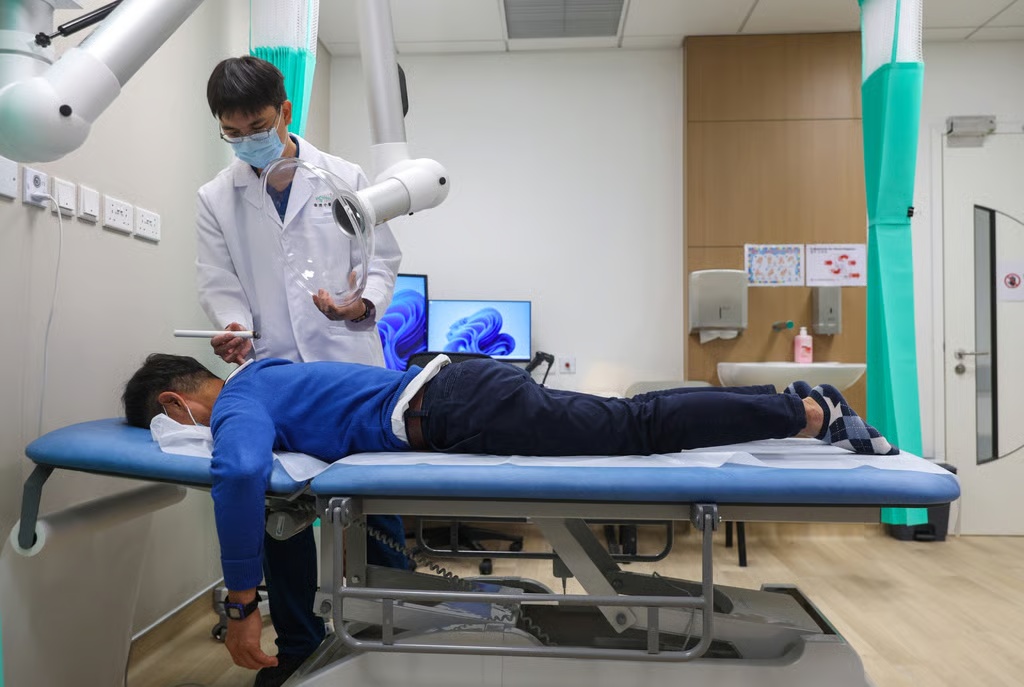 A Chinese medicine practitioner demonstrates moxibustion therapy at the hospital in Tseung Kwan O. Photo: Edmond So
Authorities last week unveiled a blueprint for Chinese medicine development to enhance healthcare quality and establish Hong Kong as a “global bridgehead” for the field.
One of its key objectives is to improve clinical services in Chinese medicine.
The blueprint’s release followed the opening of the Chinese Medicine Hospital of Hong Kong and the launch of operations at the permanent premises of the Government Chinese Medicines Testing Institute earlier this month.
In the same television interview, Professor Bian Zhaoxiang, chief executive of the Chinese Medicine Hospital, said the Tseung Kwan O institute had been received positively by the community.
“Its subsidised general clinic has been fully booked and we are reviewing the demand and will be increasing quotas to accommodate more patients,” said Bian, adding the hospital was seeing more than 200 patients a day on average.
Chung also said the government had plans to expand Chinese medicine services at existing district health centres.



 Medicine