

 i_need_contribute
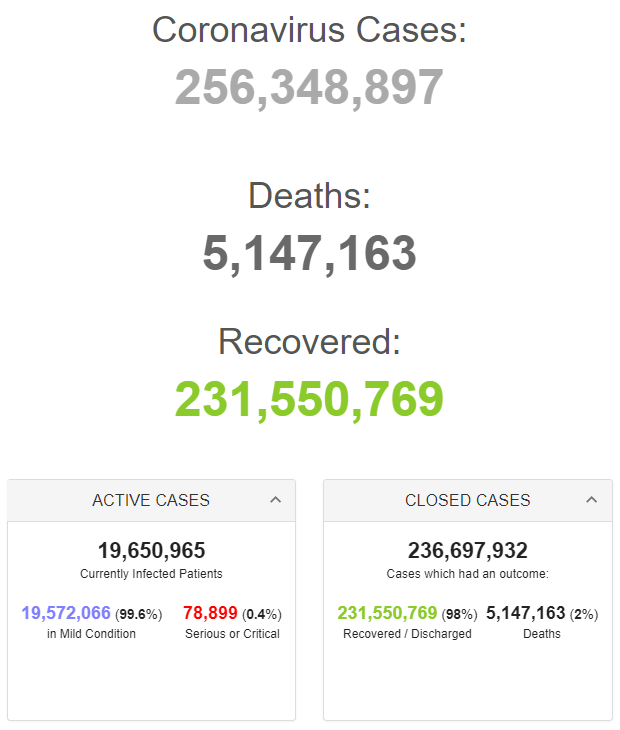

Retrieved from: https://www.worldometers.info/coronavirus/
By Anshuman Daga and Scott Murdoch
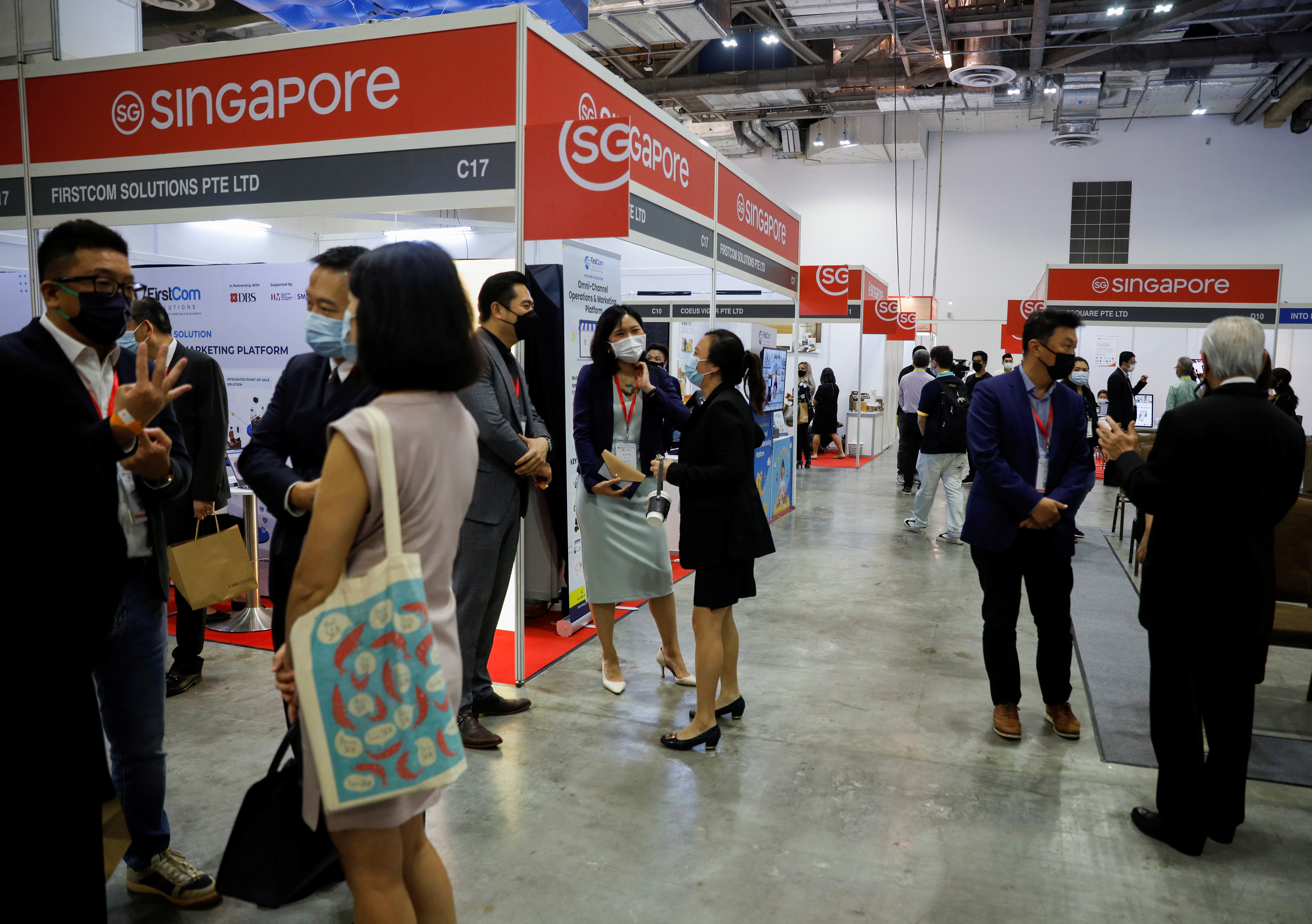
Visitors attend the Restaurants Asia and Cafe Asia trade conventions in Singapore November 18, 2021. REUTERS/Edgar Su
Singapore is hosting top executives of big global companies this week at a host of conferences, marking its gradual return to normalcy and underscoring the contrast with long-time rival Hong Kong, which is sticking with some of the toughest quarantine rules in the world.
The Milken Institute's annual Asia Summit, run by billionaire Michael Milken's think tank, the Bloomberg New Economy Forum, and an event by sovereign wealth fund GIC attracted hundreds of executives vaccinated against COVID-19.
Participants were allowed entry only after clearing swab tests and were required to wear masks and comply with strict safe distancing measures, though enjoyed relatively more freedom than the country's general population in terms of eating together.
The resumption of on-site events in the Southeast Asian hub comes as Singapore is allowing quarantine free travel to at least a dozen countries including Britain, France, Germany, Australia, Canada and the United States.
On Wednesday, UBS inaugurated the Swiss bank's largest office in Asia, an event attended by its chairman chief executive officer and others in the city-state.
"Things develop, things evolve but evolve fast here in Singapore. And even with the kind of semi lockdown situation that we are currently in, if you come here, you still feel the vibe," UBS CEO Ralf Hammers said.
Top officials from Goldman Sachs, HSBC, NYSE Group, Standard Chartered, Paypal and BNP Paribas spoke at the business events in Singapore, with many likely to be making their first trip to Singapore since authorities imposed restrictions early last year..
The two-day Milken event and an evening event by GIC was attended by about 550 people, including 150 overseas executives. The Bloomberg event had over 300 attendees, with 80% flying in.
Rooms at the plush 112-room Capella hotel in Sentosa island where a one-night stay costs at least $1,600 and which hosted the Bloomberg forum were sold out.
Later this month, Singapore singer JJ Lin performs at a two-day concert that organisers expect to be at near full capacity of about 2,000 people per night, the Straits Times daily said.
Over 100 exhibitors from 12 countries are participating in a food and beverages and supply chain event currently underway, with an international jewellery show and a martial arts event taking place in coming weeks.
Despite all this, compared to Europe, Britain and the United States, Singapore still has tight COVID-19 restrictions, with dining out largely limited to two people and mandatory mask-wearing in public.
TIGHTER RULES IN HONG KONG
By contrast, Hong Kong has followed Beijing's lead in retaining strict travel curbs to curb new COVID outbreaks, prompting warnings from international business lobby groups that the financial centre could lose talent and investment.
"When you restrict travel in and out, when you restrict the ability for people to come and visit and engage, for people to leave to go engage around the world, over time, that has an impact on your economic activity," Goldman Sachs CEO David Solomon told the Bloomberg event in Singapore on Wednesday.
Singapore's daily COVID-19 cases are hovering at more than 2,000 and the city-state still has strict restrictions on social gatherings, but with 85% of its 5.45 million population vaccinated, the government wants to open more for business.
Hong Kong has barely recorded any local coronavirus cases in recent months but the government hopes that its tight rules, including up to three weeks' hotel quarantine for visitors, would convince China to gradually open its border with the city.
"There's only a few cities where people want to congregate where you have that gateway of bringing global finance together and redistribute it. Hong Kong is one of those," BlackRock CEO Larry Fink told the Hong Kong FinTech Week earlier this month.
"I'm truly looking forward to physically being there in Hong Kong without a 21-day quarantine but that is a whole other story."
Retrieved from: https://www.reuters.com/markets/europe/singapore-business-events-bounce-back-post-covid-hong-kong-flounders-2021-11-18/
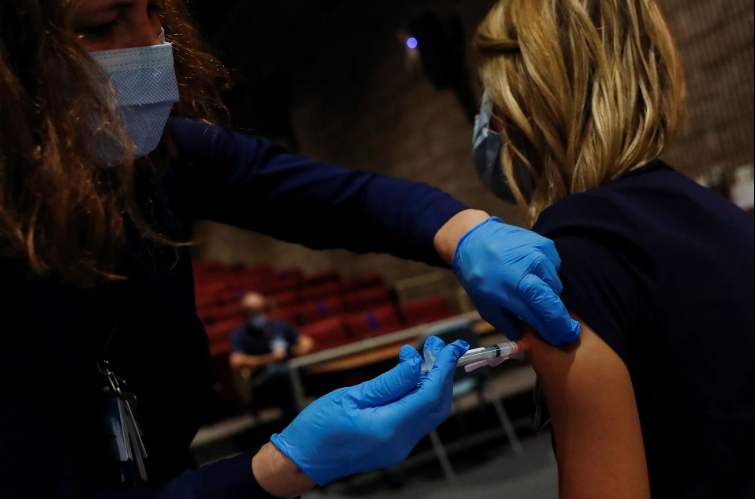
REUTERS/Shannon Stapleton
Florida on Thursday banned schools and businesses from requiring vaccination against COVID-19 and set the stage for a possible withdrawal from the federal agency aimed at protecting workplace safety.
Governor Ron DeSantis, a right-wing Republican widely believed to be planning a run for the U.S. presidency, signed the new laws in a community called Brandon, the same name used as a euphemism for a coarse epithet in a chant against Democratic President Joe Biden.
"We’re making sure that people have a right to earn a living, people have a right to have protections at their place of employment and that parents have protections to be able to direct the upbringing of their kids," said DeSantis.
In a later announcement of the bills' signing on Twitter, DeSantis referred to "the free state of Florida."
Echoing anti-vaccine rhetoric, DeSantis repeated a misleading claim that vaccines do not protect against coronavirus infections, and said "natural immunities" should qualify people to return to in-person work.
The bills drew immediate condemnation from public health officials and Democratic leaders.
"Gee," California Governor Gavin Newsom wrote on Twitter. "What could go wrong..."
The bills were passed in a three-day special session of the Republican-dominated Florida legislature called by DeSantis with the goal of thwarting coronavirus vaccine mandates imposed by the federal government as well as by private employers and school districts.
The laws allow employers to ask employees to become vaccinated, but also require them to allow people to opt out for religious, health and other reasons. People who previously had COVID-19 would be exempt despite evidence the vaccines provide greater protection against reinfection as well as serious cases that require hospitalization.
Employers who refuse to allow the exemptions can be fined up to $50,000 per violation. The new laws also ban government entities from requiring vaccinations. Schools districts may not require vaccinations or ask teachers and students to wear masks.
The laws also ban school districts from requiring otherwise healthy students who have been exposed to COVID-19 to quarantine before returning to class.
The legislature also directed the governor's office to develop a plan to set up the state's own agency for the protection of workers, which would replace the authority of the federal Occupational Safety and Health Administration.
Florida is among several conservative states suing the federal agency to stop it from enforcing the Biden administration's vaccine mandate.
About 61,000 people have died from COVID-19 in Florida, the third-most-populous U.S. state, although new cases have decreased dramatically there in recent weeks as the summer surge ebbed.
Retrieved from: https://www.reuters.com/legal/government/florida-bans-strict-vaccine-mandates-schools-businesses-2021-11-18/
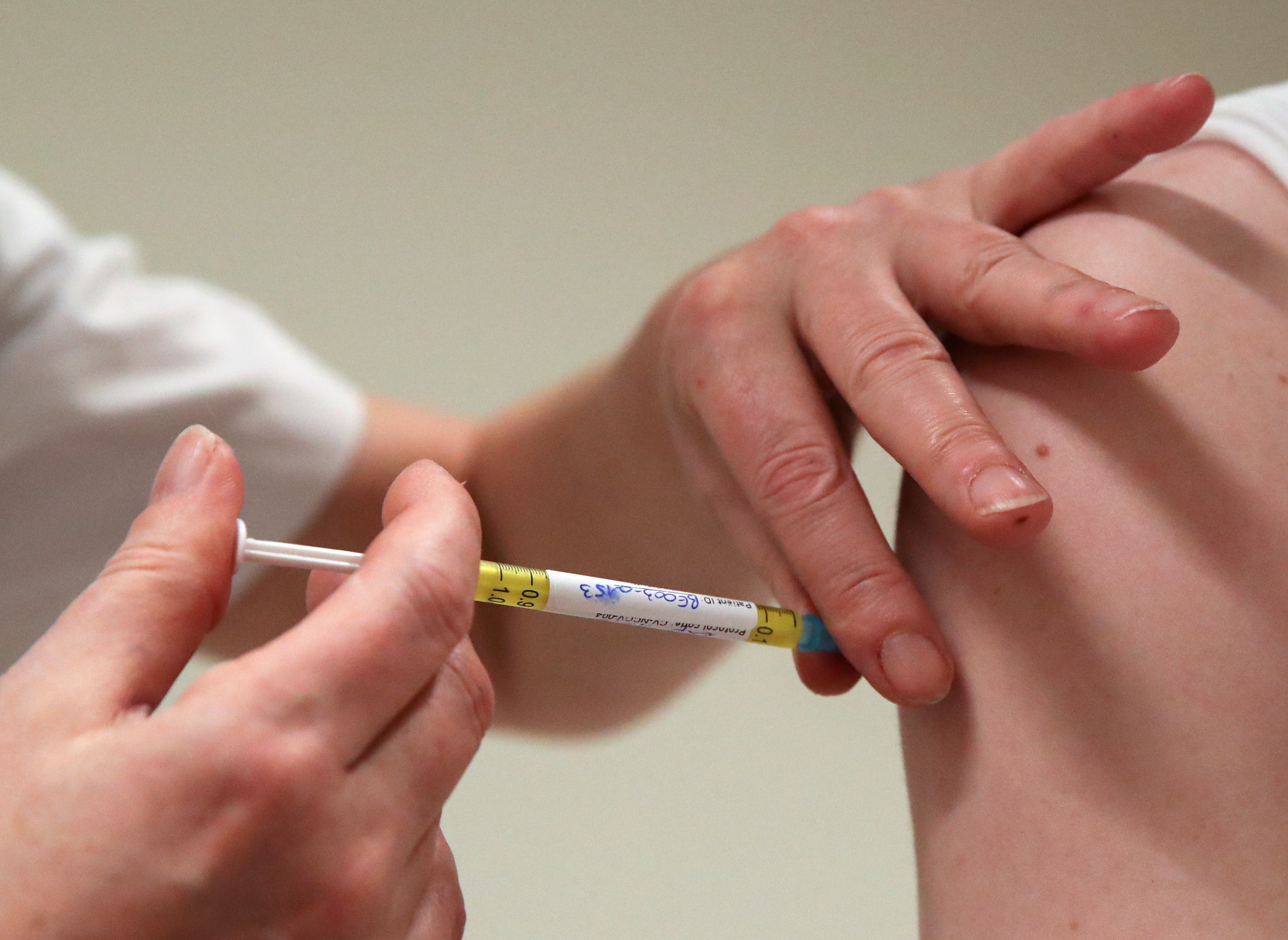
A volunteer receives a dose of CureVac vaccine or a placebo during a study by the German biotech firm CureVac as part of a testing for a new vaccine against the coronavirus disease (COVID-19), in Brussels, Belgium March 2, 2021. REUTERS/Yves Herman
German biotechnology company CureVac NV said on Thursday clinical trials for its second-generation COVID-19 vaccine are expected to start within the next few months.
Earlier on Thursday, the company published data that showed its next-generation shot, CV2CoV, produced neutralizing antibodies in monkeys that were comparable to those produced by Pfizer Inc's (PFE.N) approved vaccine. The efficacy was also greater than the company's first-generation vaccine, it added.
In October, CureVac gave up on its first-generation COVID-19 vaccine candidate, CVnCoV, to focus on collaborating with GSK (GSK.L) to develop improved mRNA vaccine technology.
The company also withdrew its application for approval from the European Medicines Agency for CVnCoV after late-stage trials results in June showed only 47% efficacy.
Following the discontinuation, the agreement CureVac signed to sell shots to the European Union also ended, and the company said it expects it would not have to repay the 450 million euros received from the bloc which had been utilised towards the vaccine's development.
The company had 1.06 billion euros in cash as of Sept. 30, and said it was continuing to assess supplier commitments related to the withdrawal of the first-generation COVID-19 vaccine candidate
Retrieved from: https://www.reuters.com/markets/europe/curevac-begin-trials-next-generation-covid-19-shots-within-months-2021-11-18/
By Nadine Schmidt and Tara John
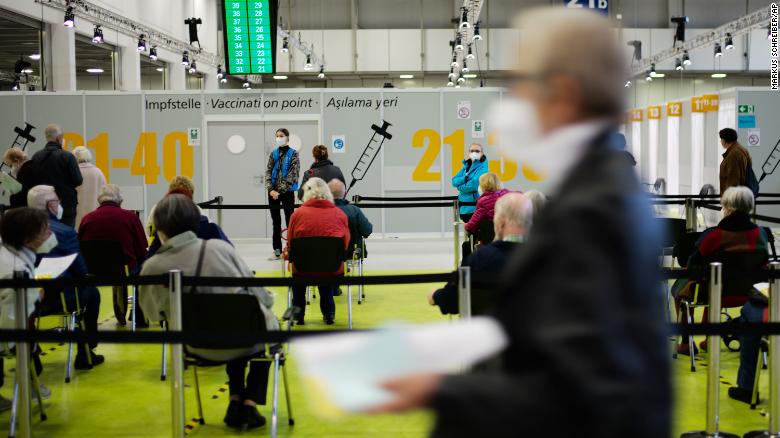
People wait to be vaccinated at a vaccination center in Berlin on November 3.
Germany reported its highest single day surge of Covid-19 infections as Chancellor Angela Merkel said the "dramatic" situation was the result of the fourth wave "hitting our country with full force."
The Robert Koch Institute (RKI), Germany's disease and control center, has reported 65,371 new cases within the last 24 hours -- it is an increase of 12,545 new infections compared to the previous 24-hour period.
But these figures are likely to be under reported, and true scale of infections could be "twice or three times as many," RKI chief Lothar Wieler told an online discussion with Saxony's state premier Michael Kretschmer on Wednesday evening.
The country reported 264 Covid-19 related deaths from Wednesday to Thursday, pushing the total number of deaths since the pandemic began to 98,000 people in Germany, according to RKI data.
Germany's seven-day incidence rate also hit record levels of 336.9 cases per 100,000 people, up from 249.1 cases reported a week ago, RKI reported.
Germany has one of the lowest vaccination rates in western Europe, with just over 67% of the population fully vaccinated. Around 33% have no protection against the virus, according to the RKI.
This is one of the reasons why infections have soared to record levels, say experts, aided by waning immunity of the Covid-19 vaccines and the more infectious Delta variant.
"As the vaccination campaign started in Germany at the beginning of this year, we now see some age groups and some people lose their immunity against Covid-19 quickly,'' Tobias Kurth, a professor of public health and epidemiology at the Charité university hospital in Berlin, told CNN.
''The current pandemic situation in Germany is dramatic, I can't say it any other way," outgoing Chancellor Merkel told mayors from across Germany on Wednesday.
Hospitalizations and deaths remain at a much lower level than in previous peaks, but there is growing concern about gaps in the country's vaccination coverage as it moves into the winter months.
''It would be a disaster to act only when the intensive care units are full, because then it would be too late,'' she added.
The situation means Germany is on track to become the next country to impose stricter rules on those who haven't been fully inoculated. Three parties making up the country's prospective new coalition government approved a draft law on Thursday that would see stricter rules come into effect.
The measures -- which will be debated in the upper house of parliament on Friday -- would require Germans to wear face masks and provide proof of vaccination, a certificate of recovery, or a negative Covid-19 test in order to ride a bus or board a train, in an expansion of the country's "3G" system that required a negative Covid-19 test to enter certain venues and settings. Free Covid-19 tests would be reintroduced as well as permission to work from home whenever possible.
The new legislation is designed to provide a nationwide framework in which the country's regions can choose from a toolbox of other measures, depending on the severity of the outbreak. To that end, regions have room to tighten curbs in Covid-19 hotspots as needed.
Green Party co-leader Robert Habeck told public broadcaster ARD on Sunday that the rules in effect amount to a "lockdown for the unvaccinated."
Merkel will also debate the implementation of stricter Covid-19 curbs with Germany's leaders of the 16 federal states.
A country-wide lockdown might be the only option at this stage in Germany's fourth wave, Kurth told CNN, as "we simply have too many Covid-19 infections every day."
"Even if people are vaccinated, they can transmit the virus to others and we will continue to see a surge in cases. Unfortunately, we may need to think about going a step further and put in curbs for potentially the entire population,'' he added.
Berlin has already imposed restrictions on unvaccinated people, where as of Monday proof of full vaccination or recovery from Covid-19 in the past six months is required for entry to bars, restaurants, cinemas and other entertainment venues.
But the current wave of infections is mainly affecting the southern and eastern parts of the nation, where vaccine uptake is lower.
The pace of vaccinations have been picking up as officials call on the public to get immunized. "For the first time since August, over 500,000 citizens in Germany were vaccinated in one day yesterday," Germany's acting Health Minister Jens Spahn tweeted Thursday.
He said this included 381,560 booster vaccinations, "which are so important to break this 4th wave."
Germany's vaccine advisory committee recommended boosters for everyone over the age of 18 on Thursday as it attempts to address waning immunity from a two-dose regimen.
Despite the widescale availability of vaccines this winter compared to the last, Europe's Delta-variant fueled fourth wave has made it the only region last week to see an increase in Covid-19 related deaths, the World Health Organization said Tuesday.
If the measures proposed by the coalition are agreed, they would move Germany closer in line with its southern neighbor Austria, where a lockdown specifically targeted at unvaccinated people came into force Monday. It bans unvaccinated people -- more than a third of the country's population -- from leaving their homes except for a few specific reasons.
On Thursday, it was announced that the lockdown would be extended to the entire population living in the provinces of Salzburg and Upper Austria as ''new coronavirus infections continue to rise sharply," Salzburg's local government wrote on its website.
Austria, where vaccine uptake is lower than Germany, is suffering an intense wave of infections and reported a record 15,145 new daily on Thursday.
The country's seven-day incidence rate also hit a record of 989 cases per 100,000 people.
By contrast, Spain and Portugal have avoided the brunt of the winter wave after posting the highest vaccination rates in Europe.
France, which has almost 75% of its total population vaccinated, is weathering the new infection spike better than its neighbors.
Nearly 5 million French have received their Covid booster vaccine shot, French government spokesperson Gabriel Attal said in an interview with French media LCI on Thursday.
"This is a lot. It puts us above most of our European neighbors, but it's still too little," Attal said. "We must continue."
Retrieved from: https://edition.cnn.com/2021/11/18/europe/germany-covid-merkel-record-intl/index.html
Report says detailed plans on shielding, job support schemes and school disruption were lacking
Ministers were not “fully prepared” for the “wide-ranging impacts” that Covid-19 had on society, the economy, and essential public services in the UK – lacking detailed plans on shielding, job support schemes and school disruption, a report has found.
And some lessons from “previous simulation exercises” – that would have helped with Covid-19 preparations – were “not fully implemented”, according to the National Audit Office (NAO).
The report, which looked at the government’s preparedness for the Covid-19 pandemic, also found that time and energy spent preparing for Brexit both helped and hindered planning for future crises.
The watchdog said preparations for leaving the European Union enhanced some departments’ “crisis capabilities”, but also took up significant resources, meaning the government had to pause or postpone some planning work for a potential flu pandemic.
“Some work areas of the Pandemic Flu Readiness Board and the Pandemic Influenza Preparedness Programme Board, including scheduling a pandemic influenza exercise in 2019-20, were paused or postponed to free up resources for EU exit work,” the report says.
The NAO found that the emergency planning unit of the Cabinet Office allocated 56 of its 94 full-time equivalent staff to prepare for potential disruptions from a no-deal exit, “limiting its ability” to plan for other crises.
“This raises a challenge for the government as to whether it has the capacity to deal with multiple emergencies or shocks,” the report says.
The watchdog found that, overall, the pandemic “exposed a vulnerability to whole-system emergencies”. Although the government had plans for a pandemic, many of these were “not adequate” for the challenge at hand, it said.
It added that there was “limited oversight and assurance” of the plans in place, and that some lessons from “previous simulation exercises” – that would have helped with Covid-19 preparations – were “not fully implemented”.
For example, the report said that Exercise Winter Willow, a large-scale pandemic simulation exercise carried out in 2007, warned that business continuity plans needed to be “better coordinated” between organisations – and this was “not evident” in most of the plans reviewed by the NAO.
It also said that following Exercise Cygnus, another pandemic simulation held in 2016, the government noted that “consideration should be given to the ability of staff to work from home, particularly when staff needed access to secure computer systems”.
However, when Covid-19 hit, “many departmental business continuity plans did not include arrangements for extensive home working”, the watchdog said.
According to the report, the government had prioritised preparations for “two specific viral risks” – an influenza pandemic, and an emergency high-consequence infectious disease.
The latter typically has a high death rate among those who contract it, or has the ability to spread rapidly, with limited treatment options – like Ebola and the Middle East respiratory syndrome (Mers).
The NAO said this meant the government did not develop a plan specific to a disease with characteristics such as Covid-19 – which has an overall lower death rate than Ebola or MERS, and widespread asymptomatic community transmission.
It said that, according to the Cabinet Office, scientists considered such a disease “less likely” to occur.
The report said the government was able to use some mitigations it had in place when Covid-19 hit – for example, the personal protective equipment (PPE) stockpile.
However, it was “not fully prepared” for the “wide-ranging impacts” that the disease had on society, the economy, and essential public services – lacking detailed plans on shielding, job support schemes and school disruption, the watchdog said.
This was despite the fact that the government’s 2019 National Security Risk Assessment recognised that a flu-like pandemic could have “extensive non-health impacts, including on communications, education, energy supplies, finance, food supplies and transport services”.
The report also said that, prior to the pandemic, the government “did not explicitly agree what level of risk it was willing to accept for an event like Covid-19”.
The NAO said it was told by the Cabinet Office that, as the crisis began, the government’s “risk appetite changed”, and it “lowered the threshold for the health and societal impacts of the pandemic that it deemed acceptable”.
It concluded that Covid-19 had highlighted the need to strengthen both the government’s risk management process and “national resilience” to prepare for any similar events in future.
The watchdog said the government had already started to consider addressing many of the issues raised – for example, through its National Resilience Strategy.
It went on to make a number of specific recommendations for the Cabinet Office on risk management and preparedness.
These include establishing who is in charge of whole-system risks, helping departments to take stock of how funding is prioritised and managed, working with departments to ensure plans are “comprehensive, holistic and integrated”, strengthening oversight of emergency planning, and ensuring lessons from simulation exercises are put to use.
The NAO also said the Cabinet Office and Treasury should help departments to “reduce variation in capacity, capability and maturity of risk management, emergency planning and business continuity”.
Gareth Davies, the head of the NAO, said: “This pandemic has exposed the UK’s vulnerability to whole-system emergencies, where the emergency is so broad that it engages all levels of government and society. Although government had plans for a flu pandemic, it was not prepared for a pandemic like Covid-19 and did not learn important lessons from the simulation exercises it carried out.
Fleur Anderson, Labour’s shadow cabinet Office Minister, said the report showed that “Conservative ministers failed to prepare and they failed the public. A Labour government will learn the lessons to create a more resilient Britain and ensure that never again is our country left unprepared and dithering when crisis hits,” she said.
A government spokesperson said: “We have always said there are lessons to be learned from the pandemic and have committed to a full public inquiry in spring.
“We prepare for a range of scenarios and while there were extensive arrangements in place, this is an unprecedented pandemic that has challenged health systems around the world.”
Retrieved from: https://www.theguardian.com/world/2021/nov/19/uk-ministers-were-unprepared-for-impact-of-covid-says-watchdog
New research published on Thursday hopes to shed more light on the topic of Covid’s origins and indicates the first case of Covid-19 in Wuhan, China, was actually days later than previously believed and at an animal market.
The original patient is believed to have been a woman who worked in the market, according to virologist Michael Worobey.
As Europe once again finds itself back at the epicentre of the pandemic, some countries have introduced restrictions on those who are on unvaccinated in the run-up to Christmas.
However, France has said it will not be following suit because of the success of its health pass in curbing the virus’ spread.
“Those countries locking down the non-vaccinated are those which have not put in place the (health) pass. Therefore this step is not necessary in France,” president Emmanuel Macron told a local paper on Thursday.
· Covid origins: The first known Covid case originated was a vendor at a Wuhan wet market, a leading virus expert has claimed in a report published on Thursday.
· Germany will limit large parts of public life in areas where hospitals are becoming dangerously full of coronavirus patients to those who have either been vaccinated or have recovered from the illness, Chancellor Angela Merkel said on Thursday.
· Saxony, the German region hit hardest by the country’s fourth wave of coronavirus, is considering a partial lockdown.
· Austria may impose a full Covid lockdown as infections are still rising despite the lockdown for the unvaccinated.
· Greece expands restrictions for the unvaccinated, prime minister, Kyriakos Mitsotakis warned during a televised address urging citizens to get vaccinated against Covid-19.
· The UK reported another 46,807 Covid cases and a further 199 deaths within 28 days of a positive test.
· Hungary will make a booster shot mandatory for all healthcare workers and will require protective mask wearing in most enclosed places from Saturday, Viktor Orbán’s chief of staff said.
· Slovakia will impose stricter measures for people who have not been vaccinated against coronavirus amid a surge in infections and hospital admissions, prime minister Eduard Heger said.
· Brazil has recorded 12,301 new cases of coronavirus reported in the past 24 hours, and 293 deaths from Covid, the health ministry said on Thursday.
· The US state of Florida has banned schools and businesses from requiring vaccination against Covid as Republican governor Ron DeSantis signed the new laws.
· Canada will announce on Friday it is authorising the use of Pfizer’s Covid vaccine in children aged between five and 11, a government source said on Thursday.
· India has approved the export of 20m doses of the Novavax Covid vaccine made by the Serum Institute of India (SII) to Indonesia, according to a government document seen by Reuters and a government source.
· The Philippines has approved a plan to allow entry soon to foreign tourists vaccinated against Covid-19, its tourism ministry said on Friday, following moves by other south-east Asian countries to relax travel curbs.
Retrieved from: https://www.theguardian.com/world/live/2021/nov/19/covid-news-live-macron-says-locking-down-frances-unvaccinated-not-necessary




 Medicine