

 i_need_contribute
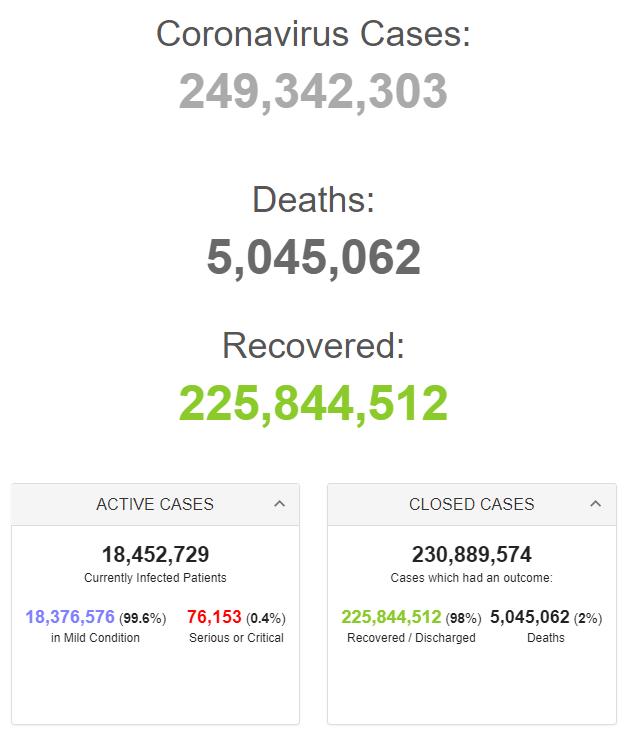

Retrieved from: https://www.worldometers.info/coronavirus/
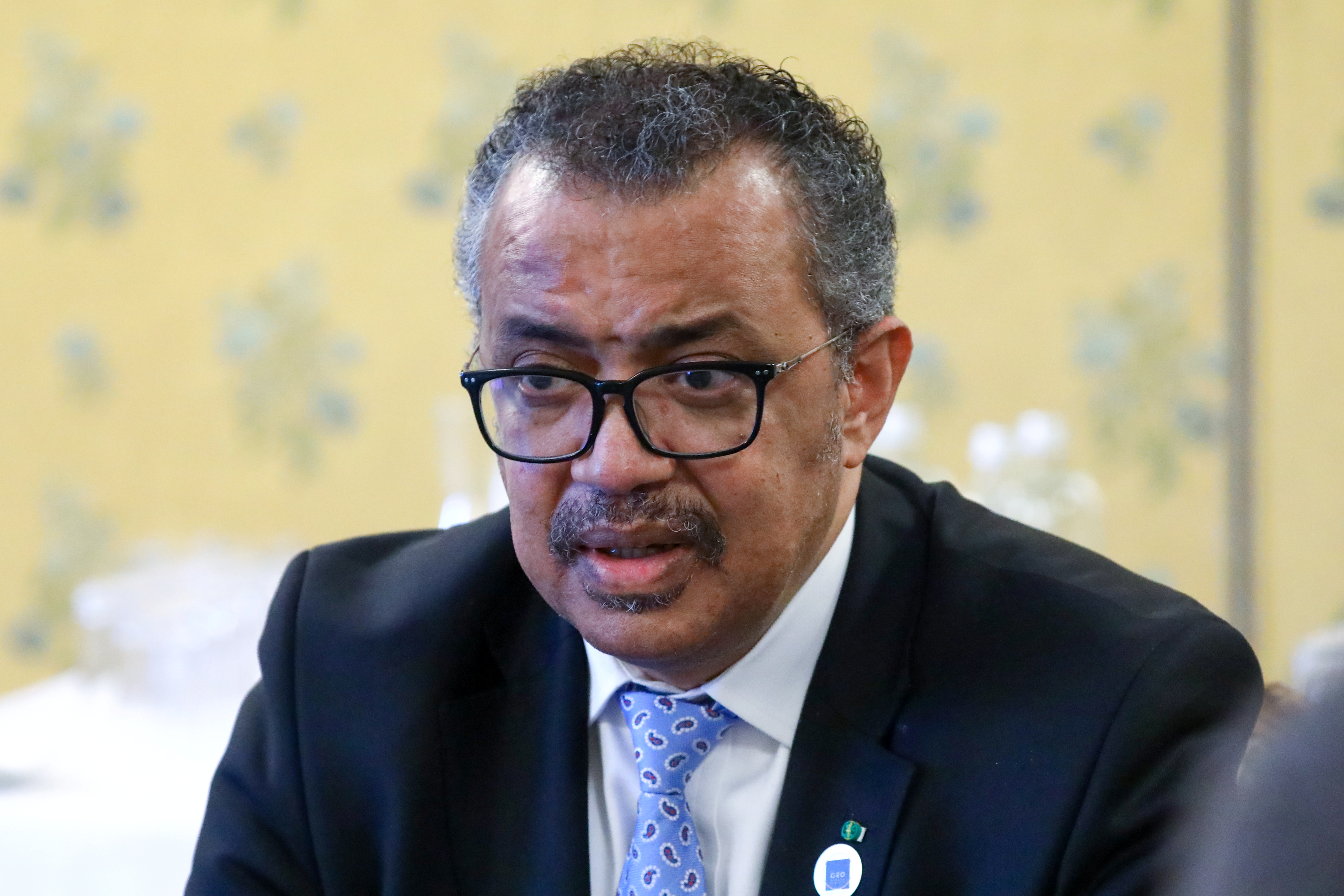
World Health Organization (WHO) Director-General Tedros Adhanom Ghebreyesus attends a meeting with Russian Foreign Minister Sergei Lavrov on the sidelines of the G20 leaders' summit in Rome, Italy October 30, 2021. Russian Foreign Ministry/Handout via REUTERS
The World Health Organization called on Thursday for vaccine makers to prioritise deliveries of COVID-19 jabs to the COVAX dose-sharing facility for poorer countries and said that no more doses should go to countries with more than 40% coverage.
Tedros Adhanom Ghebreyesus, WHO Director-General, said that
boosters should not be administered except to people who are immunocompromised.
"We continue to call on manufacturers of vaccines that already have WHO Emergency Use Listing to prioritize COVAX, not shareholder profit," he said. The WHO listing of Indian drugmaker Bharat Biotech's Covaxin on Wednesday contributes to vaccine equity, he added.
Retrieved from: https://www.reuters.com/business/healthcare-pharmaceuticals/who-says-reserve-covid-19-boosters-immunocompromised-2021-11-04/
Hong Kong leader Carrie Lam said on Friday she expected the border with mainland China to largely reopen in February next year as the two governments stick to their zero COVID-19 policies, public broadcaster RTHK reported.
Despite barely recording any local coronavirus cases in recent months, authorities in the global financial hub have tightened up quarantine and patient discharge rules to convince Beijing to allow cross-border travel.
Hong Kong is following Beijing's lead in retaining strict travel curbs, in contrast to a global trend of opening up and living with the coronavirus.
RTHK said Lam's remarks were made during a forum about China's Greater Bay Area.
International business lobby groups have warned Hong Kong could lose talent and investment, as well as competitive ground to rival finance hubs such as Singapore, unless it relaxes its restrictions on travel. read more
Lam has repeatedly said opening the border with mainland China, Hong Kong's main source of growth, was her priority.
Hong Kong's government said in a statement late on Thursday that a video call between health experts and officials from Hong Kong and the mainland was "constructive, heading towards the goal of resumption of quarantine-free travel" in a "gradual" manner.
Hong Kong requires hotel quarantine of up to 21 days for arrivals from most countries at the travellers' cost.
Those who test positive are immediately admitted to hospital regardless of their condition. Since last month they have been required to spend a further 14 days in a designated facility after leaving the hospital.
Retrieved from: https://www.reuters.com/world/asia-pacific/hong-kong-leader-expects-mainland-china-border-reopen-feb-broadcaster-2021-11-05/
By Pushkala Aripaka and Ludwig Burger
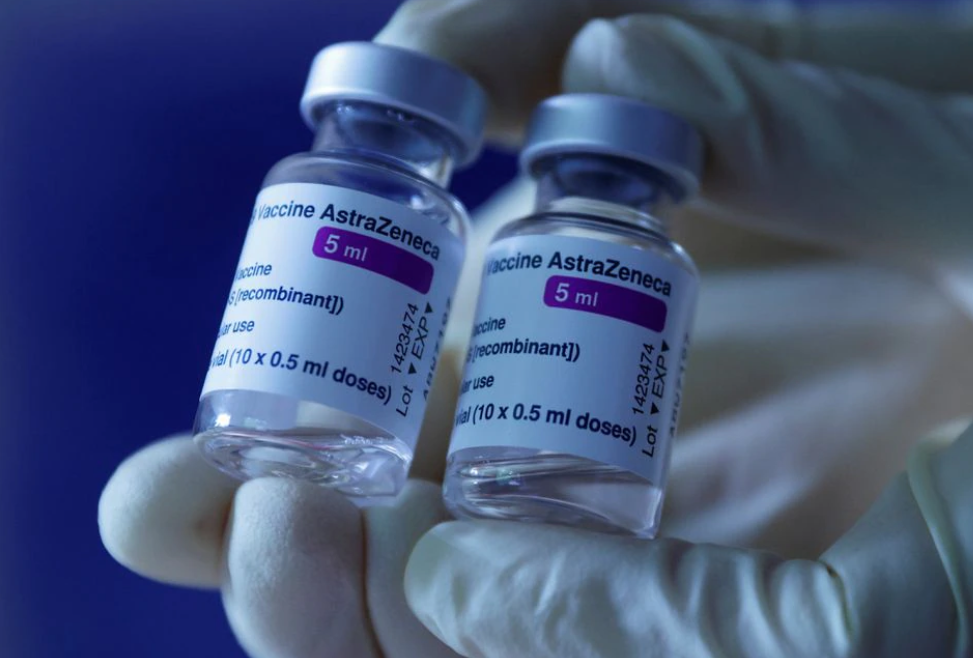
A doctor shows vials of AstraZeneca's COVID-19 vaccine in his general practice facility, as the spread of the coronavirus disease (COVID-19) continues, in Vienna, Austria May13, 2021. REUTERS/Leonhard Foeger
The European Union's drug regulator said on Thursday it was in discussions with AstraZeneca (AZN.L) over possible authorisation of booster doses of the drugmaker's COVID-19 vaccine, after it already gave the green light to mRNA booster shots.
"AstraZeneca is submitting data to us. Actually today they submitted a new package of data that could support an extension to use the booster," the European Medicines Agency's head of vaccines strategy, Marco Cavaleri, said at a briefing.
"We will be discussing with them whether this data could be sufficient for (authorisation) or whether we need more evidence," Cavaleri added.
EMA has previously given the go-ahead for vaccines by the Pfizer-BioNTech (PFE.N), (22UAy.DE) alliance and by Moderna (MRNA.O), both based on messenger RNA technology, to be given as a third booster dose at least six months after a standard two-shot course.
The focus of booster campaigns in Europe was initially on the elderly and on those with weakened immune systems but larger parts of the population have been called on to seek a third shot.
Retrieved from: https://www.reuters.com/business/healthcare-pharmaceuticals/eu-regulator-reviewing-data-astrazeneca-covid-19-booster-shots-2021-11-04/
Europe is again experiencing near-record levels of coronavirus cases, and could experience half a million Covid-related deaths in the next three months, the World Health Organization said on Thursday.
Europe accounted for 59 percent of the world’s newly reported coronavirus cases last week, and for nearly half the world’s Covid-related deaths, Hans Kluge, the W.H.O.’s director for the 53 countries in its European region, told reporters.
Dr. Kluge said that there were 1.8 million new cases and about 24,000 deaths in the European region in the past week.
“We are at another critical point of pandemic resurgence,” Dr. Kluge said. “Europe is back at the epicenter of the pandemic — where we were one year ago.”
The region is reporting an average of more than 30 new cases a day for every 100,000 people, a rate that has almost doubled since mid-September. Eighteen of the 20 countries around the world that are reporting the most new cases per day, relative to their populations, are in Europe or the part of Central Asia that the W.H.O. includes in its European region.
New reported cases reached a record high in Germany on Wednesday, when the nation recorded 33,949 new infections in a 24-hour period. Only 67 percent of the country is fully vaccinated.
Covid-related deaths in Europe are also increasing.
“If we stay on this trajectory, we could see another half a million Covid-19 deaths in Europe and Central Asia by the first of February next year,” Dr. Kluge said.
The surge in infections, driven by the Delta variant, is affecting all age groups, Dr. Kluge said, but it has been deadliest among older people. Three-quarters of those who died last week were over 65, and most were not fully vaccinated, he said.
Hospitals are being flooded with Covid patients across the region; in 43 of the 53 countries, hospitals are likely to face high to extreme stress in the next three months, the W.H.O. projected.
Dr. Kluge said the virus was surging because precautions like mask-wearing were relaxed and because too few people have been vaccinated.
Eight countries in the region have vaccinated more than 70 percent of their populations, but two have managed to immunize less than 10 percent, he said. Hospital admission rates were high, he said, in the countries where vaccination rates were low.
Outbreaks have also appeared in unvaccinated populations in countries with relatively high rates of vaccination. In Italy, which has fully vaccinated 72 percent of its population and recently imposed stringent national rules to encourage workers to get vaccinated, the city of Trieste became a hotbed of infections two weeks after thousands of vaccine skeptics gathered to protest the new rules.
Dr. Kluge also emphasized the continued need for basic precautions like mask-wearing, social distance and good indoor ventilation, and he took note of projections that 188,000 lives could be saved in Europe in the next three months if 95 percent of the population wore masks.
“We must change our tactics, from reacting to surges of Covid-19 to preventing them from happening in the first place,” Dr. Kluge said.
Retrieved from: https://www.nytimes.com/2021/11/04/world/europe/covid-surge-europe-who.html
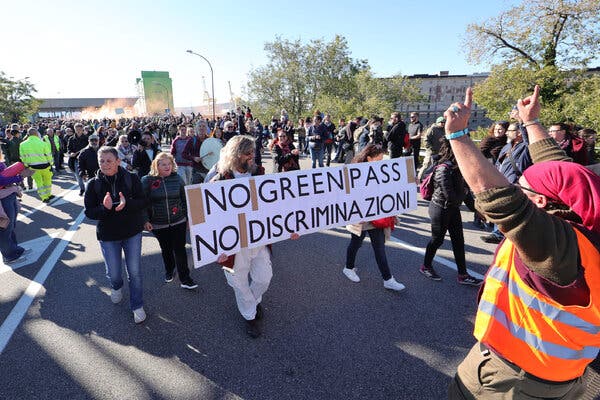
Workers protesting in Trieste, Italy, last month about the sweeping government plan to curb the coronavirus.Credit...Paolo Giovannini/EPA, via Shutterstock
The northeastern Italian port city of Trieste, once a cosmopolitan maritime hub of the Austro-Hungarian empire, became an epicenter of protest last month as thousands of vaccine skeptics marched alongside dock workers to protest the government’s tough new plan to control the coronavirus.
Two weeks later, Trieste has emerged as a center of something else: a Covid outbreak linked directly to those protests that threatens to burden intensive care units, usher in new social-distancing restrictions and mar the reputation of a city best known as a linguistic and cultural borderland with vast ambitions for its revitalized port.
“The situation in Trieste is particularly worrisome,” said Dr. Fabio Barbone, the epidemiologist leading the effort against the spread of Covid in the Friuli-Venezia Giulia region, where Trieste is the capital.
The region’s president, Massimiliano Fedriga, was more blunt, saying, “It is the moment to say with clarity: Enough idiocy.”
The nationwide plan Italy adopted threatens workers with unpaid leave and fines if they fail to obtain a health certificate, known as a Green Pass. Italians are required to provide proof of vaccination, a negative rapid swab test or proof of a recent recovery from Covid-19 to go to the workplace.
Under the leadership of Prime Minister Mario Draghi, Italy has mostly succeeded in containing Covid cases after having been devastated early in the pandemic, a fact that drew praise at the Group of 20 summit in Rome at the weekend.
But the Trieste outbreak shows how an unvaccinated minority — whether motivated by concerns about freedom, the right to work or unfounded conspiracy theories — can still threaten the greater public health and how difficult it can be to bring vaccine resisters into the fold.
By Sameer Yasir
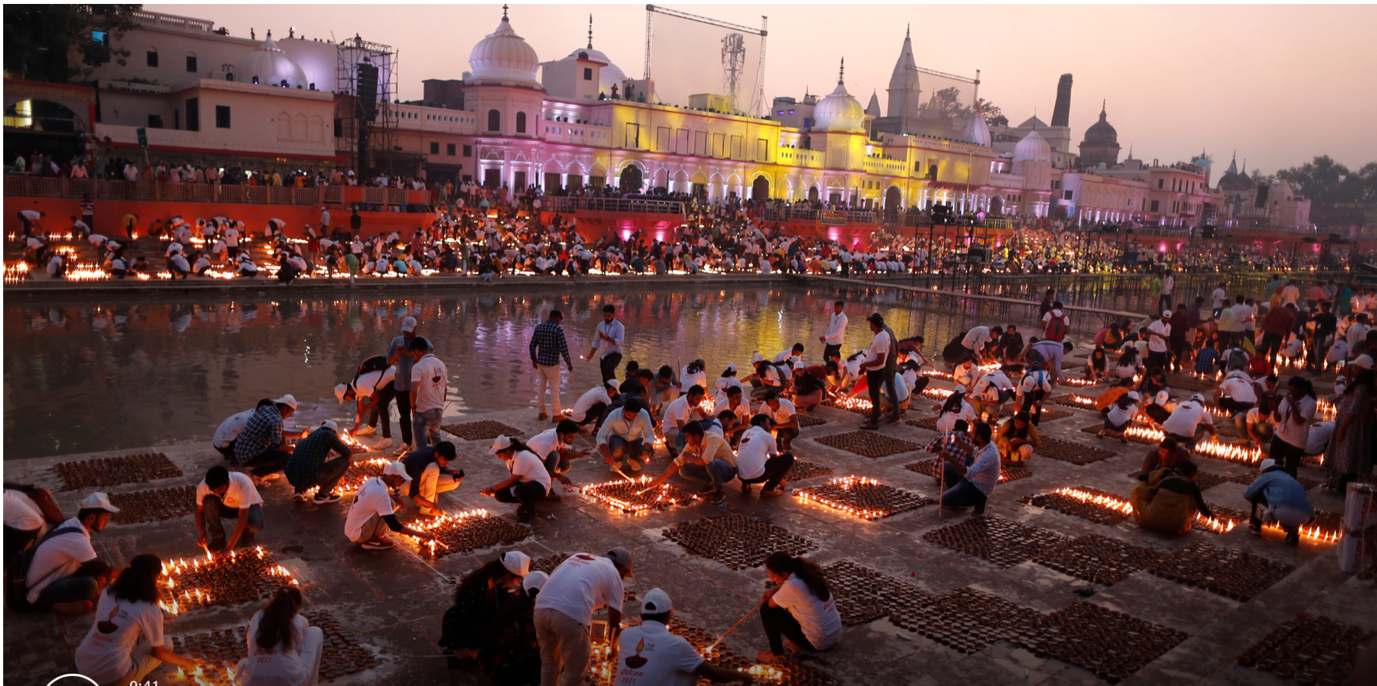
The festival of lights, one of the country’s major holidays, seemed to be back in full as India reported its lowest number of daily coronavirus cases since February.CreditCredit...Rajesh Kumar Singh/Associated Press
Hundreds of thousands of people traveled around India this week as the country prepared to celebrate Diwali, the festival of lights and one of the country’s major holidays, on Thursday.
Bazaars and malls across India filled up with shoppers as India reported its lowest number of daily coronavirus cases since February. The crowded scenes stood in stark contrast to last year’s festival, which was observed without the usual fanfare of prayers and fireworks. A year ago, the authorities deployed police officers in residential areas to restrict large gatherings and group prayers.
This year, the festival seemed to be back in full swing, prompting the mass movement of Indian migrant workers from cities and towns back to their village homes to celebrate with family.
More than 680,000 people flew from airports across the country on Monday in the lead-up to the festival, according to government officials. The surge in traffic was an apparent sign of confidence in the country’s inoculation campaign, which has successfully administered more than a billion doses of coronavirus vaccines, with 54 percent of the population having received at least one shot and 25 percent fully inoculated, according to the Our World in Data project at the University of Oxford.
But health experts warned that large-scale gatherings could still turn into superspreader events and fuel a further wave of coronavirus infections, particularly as tourism hot spots across the country swarmed with visitors.
Dr. Hemant Thacker, who works as a physician in Mumbai, India’s financial capital, said that he was worried about the relaxed attitude.
“We should be extra careful when it comes to masks, and avoid large gatherings,” he said.
India has one of the world’s highest known death tolls from the coronavirus, recording about 35 million cases and more than 450,000 fatalities, according to data from Johns Hopkins University. Experts say the true numbers are almost certainly much higher.
The Indian Ministry of Health reported 12,885 new coronavirus cases on Thursday, with 461 deaths in the previous 24 hours. In May, the number of new daily cases peaked at more than 400,000, with more than 4,000 deaths per day, according to the Johns Hopkins figures.
More news from around the world:
Germany recorded 33,949 new coronavirus cases over a 24-hour period on Wednesday, surpassing a record set in mid-December 2020, when the country was in the throes of its second Covid wave. Vaccine refusal appears to have fueled infection hot spots in several districts this week, like Munich, in the south, where the case rate has climbed to more than 500 cases per 100,000 people per week.
Thousand of vaccines skeptics marched in the streets of Trieste, Italy, two weeks ago. Now, Trieste is in the throes of a Covid outbreak linked directly to those protests, which threatens to burden intensive care units, usher in new social-distancing restrictions and mar the reputation of a city.
Officials in Hong Kong said on Wednesday that starting on Nov. 11 the city will offer free additional doses of Covid vaccines to residents with a higher risk of severe illness. Certain people with weakened immune systems, like cancer patients, organ transplant recipients, patients with advanced stage H.I.V. and people taking active immunosuppressive drugs, will be eligible for the extra shots four weeks after their second doses, the Hong Kong authorities said in a statement.
South Korea said on Thursday that it would hospitalize even asymptomatic high school seniors with Covid if they are taking the country’s high-stakes college entrance exam later this month, as the drive to vaccinate younger people lags and teenagers account for nearly a quarter of all Covid patients.
Retrieved from: https://www.nytimes.com/2021/11/04/world/asia/diwali-india.html
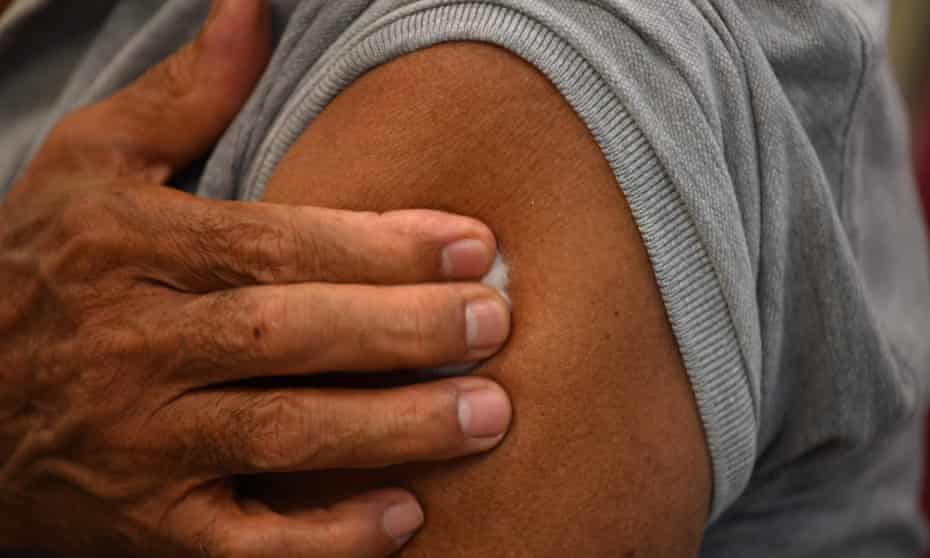
A man holds his arm after receiving a dose of coronavirus vaccine in Mumbai, India. Photograph: Indranil Mukherjee/AFP/Getty Images
Scientists have identified a gene that doubles the risks of respiratory failure and death from Covid and could explain why people of south Asian heritage are more vulnerable to the disease.
The gene, which changes the way the lungs respond to infection, is the most important genetic risk factor identified so far and is carried by roughly 60% of people with south Asian backgrounds, compared with 15% of those with white European backgrounds. The finding could partly explain the excess deaths seen in some communities in the UK and the impact of Covid-19 in the Indian subcontinent.
Prof James Davies, a geneticist at Oxford University’s Radcliffe Department of Medicine and a senior author of the paper, said: “The genetic factor we have found explains why some people get very seriously ill after coronavirus infection … There’s a single gene that confers quite a significant risk to people of south Asian background.”
Advertisement
Other scientists cautioned that the findings needed further confirmation and that genetic explanations should not overshadow other potentially more significant socioeconomic risk factors faced by ethnic minorities, including workplace exposure and unequal access to healthcare.
The study builds on previous work that identified a large chunk of DNA that appeared to influence how severely ill people become from Covid, based on genetic sequencing of tens of thousands of hospital patients in the UK and other countries. The latest study homed in on a single gene called LZTFL1, which was revealed to double the risk of respiratory failure and death.
The gene, which was previously unstudied, was found to act as a switch to turn on a crucial defence mechanism that prevents the Covid-19 virus from entering epithelial cells that line the lung. With the high-risk version of the gene, this response was blunted, meaning the virus would continue entering, infecting and damaging cells in the lung for a longer time period after exposure.
“Although we cannot change our genetics, our results show that the people with the higher-risk gene are likely to particularly benefit from vaccination,” said Davies. “Since the genetic signal affects the lung rather than the immune system, it means that the increased risk should be cancelled out by the vaccine.”
Davies said the findings also pointed to the possibility of new treatments targeting the lung cells’ response. Most current treatments work by changing the way the immune system responds to the virus.
The findings could offer some explanation for why south Asian populations have been worst affected in the pandemic. In England’s second wave, ONS data showed a risk of death three to four times higher for people of Bangladeshi backgrounds, 2.5 to three times higher for those of Pakistani backgrounds and 1.5 to two times higher for Indian backgrounds compared with the general population.
Unlike the excess risk seen in black populations in the first wave, in south Asian groups there remained a significant unexplained risk once socio-economic factors were taken into account. “[Genetic factors] would account for a large proportion of that,” said Davies.
Raghib Ali, of the University of Cambridge and an independent expert adviser on Covid-19 and ethnicity to the Race Disparity Unit in the Cabinet Office, said: “This is an important study which contributes to our ongoing efforts to understand the causes of the higher death rates from Covid in some ethnic groups and specifically as to why their outcomes or survival from Covid are worse after infection.”
However, others urged caution. Nazrul Islam, of Oxford University’s Nuffield Department of Population Health, pointed out that some ethnicities are not well represented in the large genetic databases used to determine the prevalence of particular genes such as LZTHL1.
“It provides an easy gateway for policymakers to say ‘it’s genetic, we can’t do anything’,” he said. “We have to be very careful in analysing the data, questioning it repeatedly, and how we disseminate the findings. It has profound social issues.”
Retrieved from: https://www.theguardian.com/science/2021/nov/04/gene-common-in-south-asian-people-doubles-risk-of-covid-death-study-finds
Here’s a round-up of the day’s leading Covid stories:
· Europe is once again at centre of the Covid pandemic, the World Health Organization has said. Cases are at near-record levels and 500,000 more deaths are forecast by February. Uneven vaccine coverage and a relaxation of preventive measures have brought Europe to a “critical point” in the pandemic, WHO says.
· The UK has become the first country to approval an oral antiviral pill to treat Covid. Nearly half a million doses of molnupiravir, a pill that can be taken twice daily at home, are due for delivery from mid-November and will be given as a priority to elderly Covid patients and those with particular vulnerabilities, such as weakened immune systems. The drug will initially be given to patients through a national study run by the NHS.
· Central and Eastern Europe are grappling with spiralling coronavirus cases with several countries hitting new daily records in the regions, which have lower vaccination rates than the rest of the continent. Ukraine, Croatia, Slovenia and Slovakia reported their highest ever numbers of daily cases, while other countries registered the most infections in months.Most Central and Eastern European countries have vaccinated about half of their populations or less, which is lower than the European Union average of some 75%.
· Understanding the origins of Covid-19 remains a key focus of the Biden administration and that they will continue pushing for answers, The White House said.
· A study suggests UK Covid cases may have peaked for this year.The study, which estimates the number of Covid cases in the community from the information that users log on an app, found a clear decline in cases in under-18s since mid-October, with infection rates levelling off in most other age groups though still climbing in 55- to 75-year-olds.
· Latvia will allow businesses to fire workers who refuse to either get a Covid vaccine or transfer to remote work, from 15 November as the country battles one of the worst Covid waves in the EU. The new law allows businesses to suspend the unvaccinated without pay if they refuse to either get the Covid jab or, if possible, to get transferred to remote work. They can then fire the employees if they do not get the vaccine in three months of the suspension.
· US vaccine mandate for private sector workers to begin 4 January. President Joe Biden will begin enforcing the mandate that private-sector workers in the US be vaccinated against Covid or be tested weekly from 4 January.




 Medicine