

 i_need_contribute

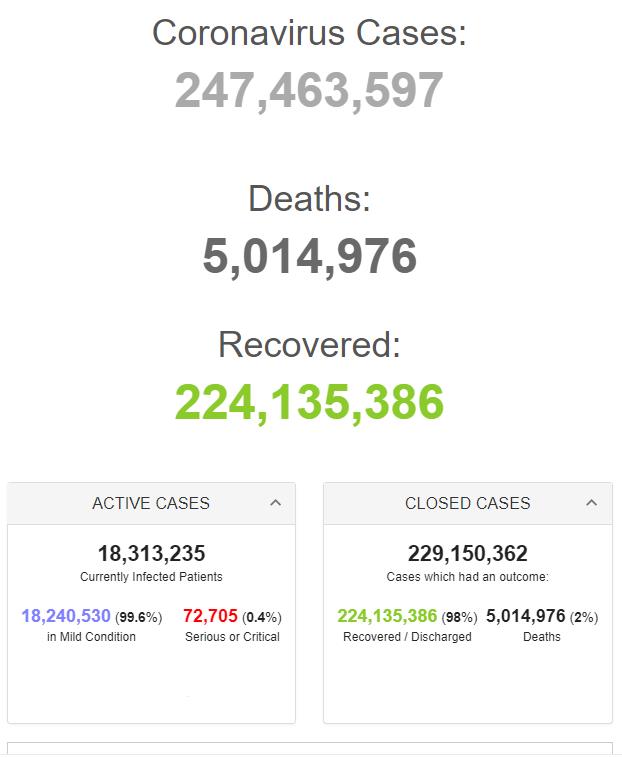
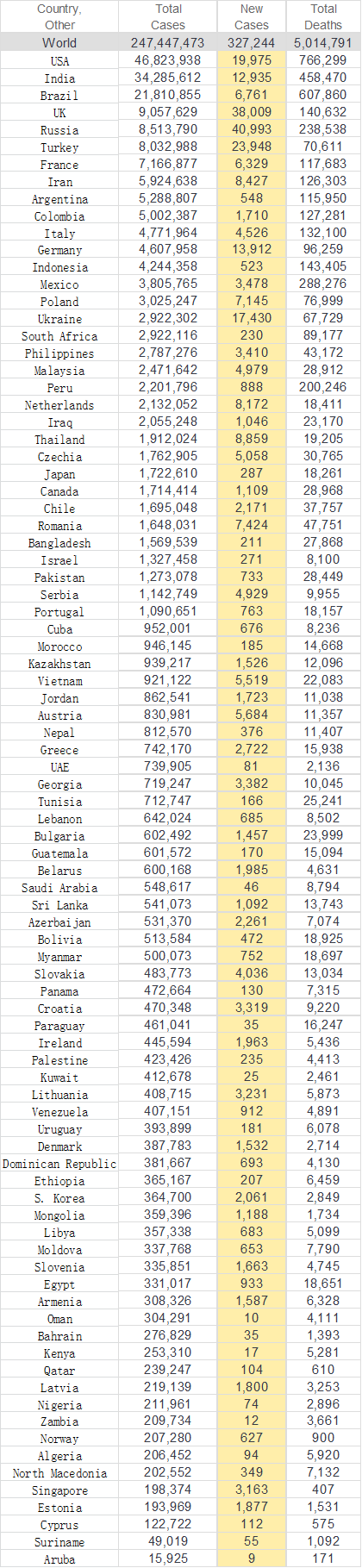
Retrieved from: https://www.worldometers.info/coronavirus/
By Jiraporn Kuhakan

First group of foreign tourists arrive at Suvarnabhumi Airport during the first day of the country's reopening campaign, part of the government's plan to jump start the pandemic-hit tourism sector in Bangkok, Thailand November 1, 2021. REUTERS/Soe Zeya Tun
Hundreds of vaccinated foreign tourists are scheduled to arrive in Bangkok on Monday, the first wave of visitors to Thailand in 18 months who will not have to undergo quarantine for the coronavirus.
Seeking to resurrect its pandemic-ravaged tourism economy, Thailand's government has given the green light to vaccinated tourists from more than 60 countries, including the United States and China.
Several European countries are also on the list as officials hope to capitalise on travellers from the northern hemisphere escaping the winter blues.
Thailand, one of the Asia-Pacific's most popular tourist destinations, has for the past 18 months enforced strict pandemic entry rules that have been criticised in the travel industry for being too restrictive and onerous.
Before the pandemic, tourism accounted for about 12% ofThailand's GDP and its capital city was the world's most visited city. The crisis has cost Thailand about 3 million tourism-dependent jobs and an estimated $50 billion a year in revenue.
Thai officials tested the waters with the reopening of the resort island of Phuket in July, allowing fully-vaccinated tourists to skip the then-mandatory two-week quarantine provided they stay on the island, where tourism accounts for 90% of the local economy.
However, the "Phuket Sandbox" was less popular than officials had hoped, with arrivals to the island in July at just 1% of pre-pandemic levels.
Under the new national programme, arrivals must spend their first night in a pre-approved hotel and receive a negative COVID-19 test before they are able to travel freely to rest of the country.
Airlines have rushed to ready the country for the hoped influx of visitors, bringing jets back from hibernation. Still, the return will be relatively slow. The finance ministry predicts just 180,000 foreign arrivals this year and 7 million next year, compared with some 40 million in 2019.
The majority of Thailand's 1.9 million infections and more than 19,000 coronavirus-related fatalities have been recorded since April. Around 42% of the 72 million population has been vaccinated.
Retrieved from: https://www.reuters.com/business/aerospace-defense/bangkok-welcomes-first-tourists-quarantine-free-holiday-2021-11-01/
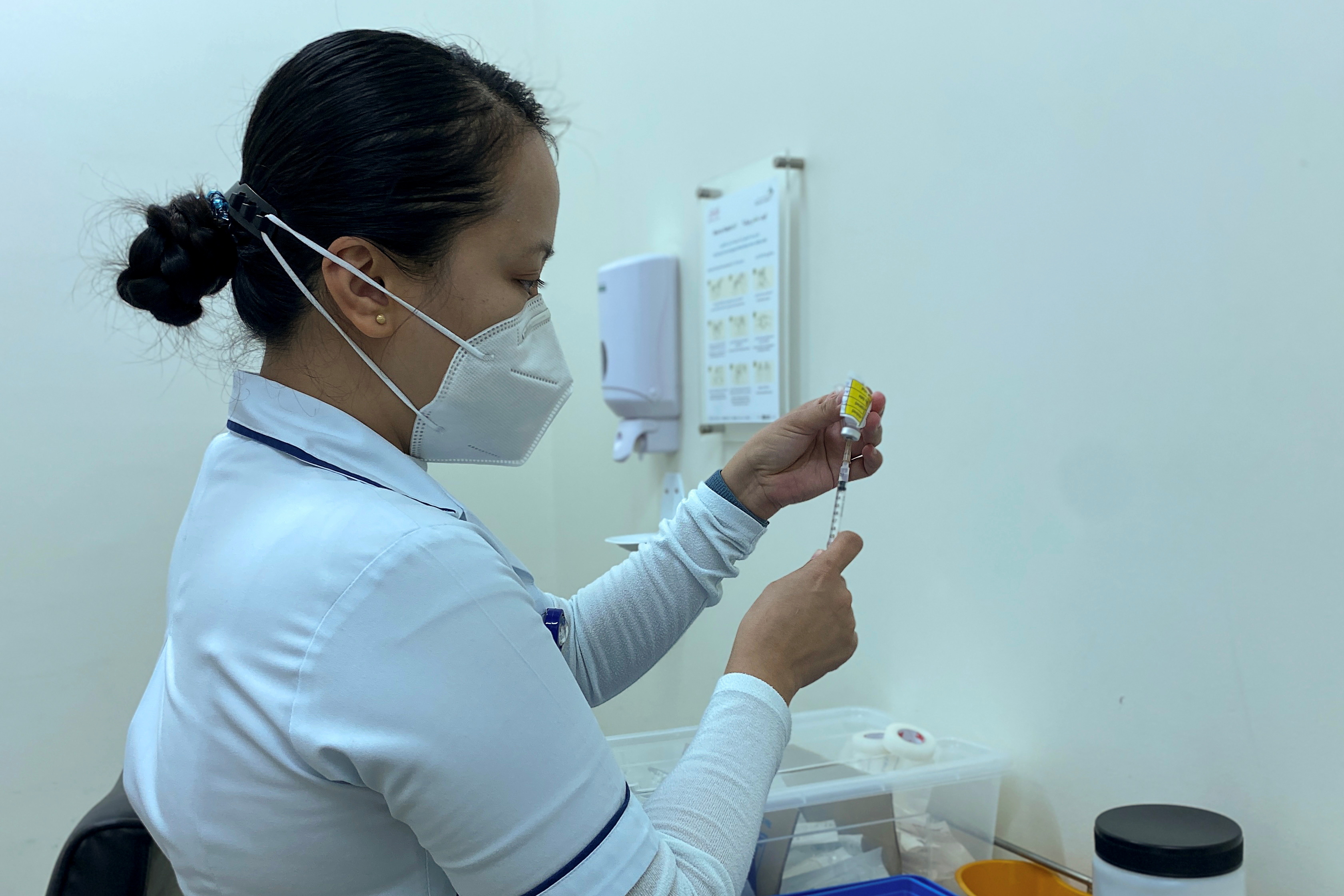
A medical worker prepares a vaccination against the coronavirus disease (COVID-19), in Dubai, United Arab Emirates December 28, 2020. Picture taken December 28, 2020. REUTERS/Abdel Hadi Ramahi
The United Arab Emirates has approved for emergency use the Pfizer-BioNtech (PFE.N) COVID-19 vaccine for children aged 5-11, the health ministry said in a statement carried by state media on Monday.
Before this decision the only vaccine that had been approved for use in very young children was the Sinopharm (1099.HK) vaccine which was approved for ages 3-17, with Pfizer shots being available to children above 12. read more
"The results of clinical studies indicated that the vaccine is safe and has given a strong immune response to children between the age of 5 and 11 years," the statement said of the Pfizer shots.
It also said people with chronic diseases who previously received Pfizer-BioNtech or the Russia-developed Sputnik vaccinations can now get a third booster shot.
Previously the government had been giving booster shots to people fully vaccinated with Sinopharm vaccines.
Retrieved from: https://www.reuters.com/world/middle-east/uae-approves-pfizer-covid-19-vaccine-ages-5-11-2021-11-01/
By Vimal Patel
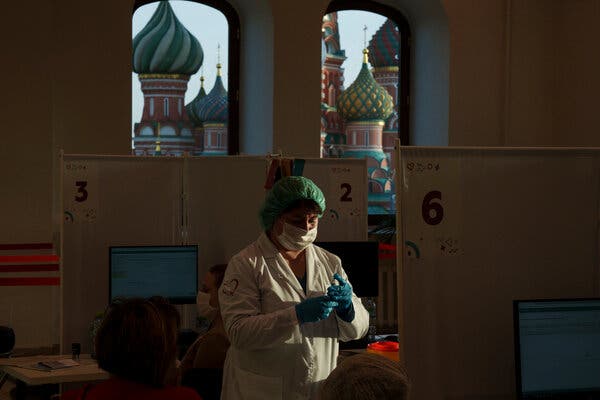
A medical worker preparing a dose of the Sputnik V coronavirus vaccine at a department store in Red Square in Moscow.Credit...Pavel Golovkin/Associated Press
President Xi Jinping of China and President Vladimir V. Putin of Russia on Saturday called for “mutual recognition” of Covid-19 vaccines by global health authorities.
Both leaders delivered the remarks by video to the Group of 20 summit in Rome after deciding not to attend the meeting in person.
Mr. Putin said global access to Covid vaccines was suffering “in part because of protectionism, because of inability and unwillingness by some countries to recognize and register vaccines,” according to a video posted online by RT, a state-controlled Russian TV network.
A Russian vaccine, Sputnik V, has been authorized by 70 countries, Mr. Putin said. But it has not been authorized by the European Union’s main drug regulator, the European Medicines Agency, or the World Health Organization. Markus Ederer, the European Union’s ambassador to Russia, said this month that the Russian authorities had delayed inspections.
“The Russian side has repeatedly postponed the timing of the inspection requested by the E.M.A., which slows down the process,” Markus Ederer told the local outlet RBC. “These are the facts.”
Mr. Putin called on the W.H.O. to expedite the vaccine registration process. “As soon as this is done,” he said, “we will be able to restore and restart the economy.” He said he would also like the Group of 20 to “address the problem of mutual recognition of vaccine certificates.”
Over the summer, many countries opened to international travel, but the patchwork of rules regarding which vaccines would be accepted led to confusion and frustration for travelers, especially those who had received vaccines that were not widely accepted.
Two vaccines made by China, Sinopharm and Sinovac, are on the W.H.O.’s emergency authorization list. Across Asia and South America, millions of people have received doses of those vaccines, and millions more have received doses of vaccines, like Sputnik V, that have been authorized by individual governments only.
On Saturday, Mr. Xi said China had provided more than 1.6 billion shots to the world and was working with 16 countries on manufacturing vaccines, according to a transcript published by the official Xinhua news agency, Reuters reported.
Mr. Xi expressed support for a World Trade Organization decision that waived intellectual property rights for Covid-19 vaccines, Reuters said, and he called for vaccine manufacturers to transfer technology to developing countries.
Retrieved from: https://www.nytimes.com/live/2021/10/30/world/g20-summit-2021-biden/xi-and-putin-call-for-broader-global-acceptance-of-covid-19-vaccines
By John Yoon
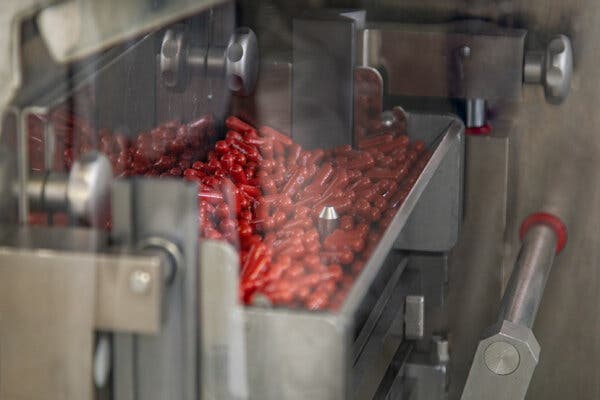
Merck’s antiviral drug for Covid-19, molnupiravir.Credit...Merck
Britain, Australia and South Korea have reached agreements with the drugmaker Pfizer to purchase its antiviral pills used to treat Covid-19 once regulators approve them, the company said on Friday.
Under the terms of the agreements, Australia will buy 500,000 courses of Pfizer’s pill, known as PF-07321332, and Britain will purchase 250,000, the company said. Earlier this month, Australiasecured 300,000 courses of another antiviral pill, molnupiravir, made by the drug manufacturer Merck, and Britain agreed to buy 480,000.
South Korea secured 70,000 courses of Pfizer’s pill, the health ministry said in a statement on Friday. It has also signed a purchase agreement with Merck for 200,000 courses of its pill.
The United States has not yet agreed to buy Pfizer’s pills, a spokeswoman for the company, Roma Nair, said by telephone on Friday. The United States has reached a deal with Merck to buy 1.7 million courses of molnupiravir.
Merck’s and Pfizer’s pills could be a milestone in the fight against the coronavirus because they do not require a visit to the hospital and are relatively inexpensive, unlike the antibody treatments currently being used.
Both pills are designed to interfere with viral replication. If approved by regulators, both pills could be prescribed at the first sign of infection or exposure without requiring hospitalization.
Merck has already reported data from its Phase 3 trials that showed molnupiravir reduced the risk of hospitalization or death by half. Merck has submitted an application to the U.S. Food and Drug Administration to authorize its pill. European Union regulators said on Monday that they had begun a review of molnupiravir.
Meanwhile, Pfizer said in a statement that it had begun Phase 2/3 trials to evaluate the efficacy and safety of its pill.
France has ordered 50,000 courses of Merck’s pills to be delivered starting in the end of November, the health minister, Olivier Véran, said on Tuesday.
The Philippines said this week that it had procured 300,000 courses of molnupiravir. Malaysia and Singapore have also secured supplies of Merck’s pills.
South Korea’s health ministry said it planned to purchase enough antiviral pills for 404,000 patients in total, and to have supplies available starting in the first quarter of 2022. It said it would closely monitor the progress of clinical trials for pills under development at several companies, including Merck, Pfizer and Roche, as it considers its options.
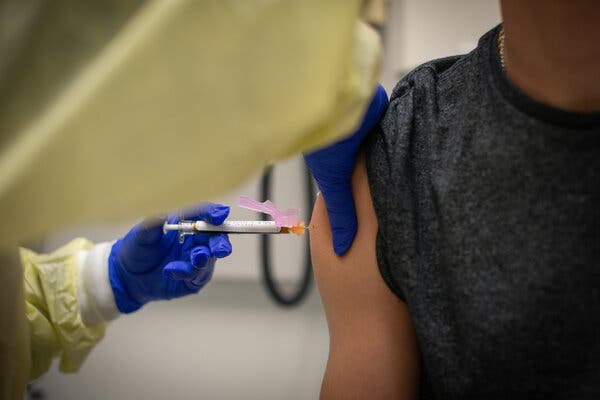
Several European countries have paused use of the Moderna vaccine in young people, citing concerns about myocarditis — an inflammation of the heart muscle.Credit...Brandon Thibodeaux for The New York Times
The Food and Drug Administration is reviewing reports suggesting the coronavirus vaccine made by Moderna can cause heart problems in some adolescents, the company said on Sunday.
Moderna requested authorization from the F.D.A. for use of its vaccine in children ages 12 to 17 years in June. The adolescents would receive 100 micrograms of the vaccine — the same dose given to adults 18 and above. But the agency has not yet made a ruling on the application, prompting speculation about reasons for the delay.
In a statement on Sunday, Moderna said the F.D.A. “requires additional time to evaluate recent international analyses of the risk of myocarditis after vaccination.”
The European Medicines Agency approved the vaccine for use in adolescents in July. But since then, several European countries have paused the vaccine’s use in people 30 and younger, citing concerns about myocarditis — an inflammation of the heart muscle.
Moderna said more than 1.5 million adolescents worldwide have received its coronavirus vaccine, and the data thus far do not suggest an increased risk of myocarditis. But studies from Israel and the United States have linked both the Pfizer-BioNTech and Moderna vaccines to rare and transient cases of myocarditis, with a higher risk from the Moderna vaccine.
The F.D.A. notified Moderna on Friday that it would need more time to assess the vaccine’s safety and may not deliver a decision until January 2022, the company said in a statement on Sunday. The agency took roughly a month to authorize the Pfizer-BioNTech vaccine for children ages 12 to 15 years. That vaccine has been available to adolescents in the United States and Europe since May.
Even with the heightened risk, myocarditis as a result of the vaccine is rare, mild, and resolves quickly, noted Dr. Paul Offit, director of the Vaccine Education Center at Children’s Hospital of Philadelphia and a member of the F.D.A.’s vaccine advisory committee.
Covid-19 is much more likely to cause myocarditis, Dr. Offit noted, because the virus can infect and damage the lining of the heart. “That would be the decision point I would make for my child,” he said.
In studies from Israel and the United States, the incidence of heart problems among people who had received Pfizer-BioNTech or Moderna vaccine is highest in males aged 16 to 29 years. The risk appears to decline in children 12 to 15, and is expected to be even lower in younger children, Dr. Offit said.
The F.D.A. in July asked Pfizer-BioNTech and Moderna to enroll more children in their clinical trials in order to detect less common side effects. Last week, after reviewing data from a clinical trial of the Pfizer-BioNTech vaccine in children aged 5 through 11 years, the F.D.A. authorized the vaccine for that age group.
Results from Pfizer’s vaccine trial in children under 5 are not expected till the fourth quarter of this year at the earliest. Last week, Moderna said its vaccine produced a potent immune response in children ages 6 through 11 who received half the adult dose. The company plans to request authorization from the F.D.A. for the vaccine’s use in this age group.
Retrieved from: https://www.nytimes.com/2021/10/31/world/moderna-covid-vaccine-teens-myocarditis.html
By Pjotr Sauer
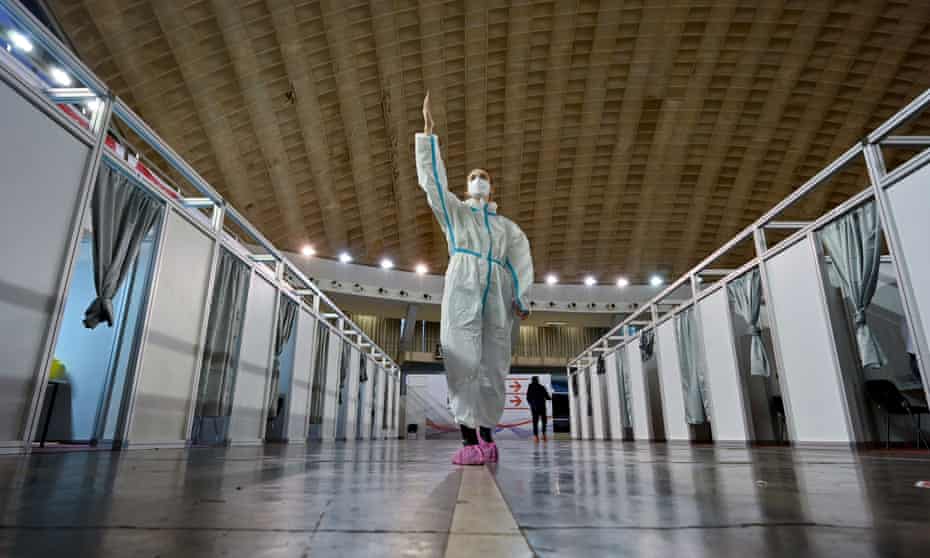
A Serbian health worker meets visitors arriving to receive the Chinese Sinopharm vaccine at a converted trade fair building in Belgrade. Photograph: Andrej Isakovic/AFP/Getty Images
When Denis Ovchinnikov read the news this summer that his Russian Sputnik V vaccine would not be recognised in Europe, he decided to take matters into his own hands and planned a trip to Belgrade.
“I contacted a travel agency that sorted everything out. It was very easy. I made a little holiday out of it too, in between getting the two Pfizer shots,” Ovchinnikov, who works at a PR agency in St Petersburg, said.
When Russia became the first country to register and mass-produce a vaccine at the end of 2020, President Vladimir Putin hoped it would allow the country to open up more quickly than its western rivals. But Sputnik V has struggled to get international approval, effectively barring Russians from travelling to the west, where only those with EU, US or UK-approved vaccinations are able to visit.
This has led to a boom in Russian vaccine tourists heading to nations such as Serbia, which allow visa-free travel from Russia. “I don’t really understand all the politics behind this. I believe in all vaccines,” said Ovchinnikov, who first got the Sputnik V vaccine last winter. “I just felt trapped, for almost two years now I haven’t been able to travel and work in Europe any more after the borders shut, so this was my way out.”
EU and World Health Organization approval of the vaccine would ease international travel for Sputnik-vaccinated Russians, who are currently barred from travelling to most European capitals. The US is also set to ban entry to non-citizens who have not been jabbed with a vaccine approved by the WHO or US Food and Drug Administration.
However, the EU has repeatedly delayed the approval of the Russian vaccine and has said Russia hasn’t provided its regulator, the European Medicines Agency (EMA), with the right data about the vaccine. Russia has dismissed these claims as politically motivated and said the EMA was “dragging its feet” on purpose.
Anna Filatovksaya, manager at the Russian Express travel agency, said that Sputnik V’s troubles abroad presented a business opportunity for her firm. “When we started to offer our vaccine tours in early September, we quickly realised there was a real market for them. People were desperate for a vaccine that would allow them to travel again.”
In a recent survey in Russia, about 40% of respondents said the opportunity to freely travel was the main reason for getting a jab, a figure roughly equal to that for those who cited health concerns.
Filatovksaya said that Serbia was an “obvious” option at first, as Russians didn’t require visas to go there and the country offered the Pfizer and AstraZeneca vaccines to all citizens.
The Balkan nation has been one of the early vaccine success stories in Europe, securing jabs from a number of different suppliers, and has been offering its citizens the option of western vaccines, including Pfizer and AstraZeneca, Sputnik V and the Chinese Sinovac.
Roughly 160,000 foreigners, mainly from elsewhere in the Balkans, have so far received their Covid-19 vaccines in Serbia, according to official data.
However, Serbia isn’t the only destination for Russians. After some clients complained about the “inconvenient” three-week gap between the two-component Pfizer and AstraZeneca shots, Filatovksaya’s tourism agency decided to provide trips to neighbouring Croatia, which offered the one-component Johnson & Johnson vaccine to foreigners.
One of those flying to Croatia was Oleg Sentsov, an engineer from Moscow. “I actually got jabbed right after getting a third Sputnik V booster so I am pretty vaccinated right now! I don’t believe you can be over-immunised,” he said.
While for many such as Ovchinnikov and Sentsov a foreign jab presented a way out of isolation, a smaller group said they were getting a western shot because they distrusted Russian vaccines. “I thought if I was going to get one vaccine, it would not be Sputnik, I am sceptical towards Russian-made products,” said 54-year-old Marina Kalushiva, who travelled to Serbia in September.
Although domestically produced vaccines are widely available, only 32% of Russians are double vaccinated and surveys show that the majority are still not ready to get immunised, as they distrust the three approved homegrown vaccines.
Critics have blamed the failing vaccination campaign on the Kremlin’s mixed messaging about the pandemic as well as a low trust in the authorities and domestically manufactured products.
And while distrust appears to be high towards all vaccines, a poll conducted in June showed that 15% of Russians who are refusing a domestic one would take a western jab if it were made available to them, as growing calls to allow western vaccines to be given are starting to be heard.
“I wish Russia would just offer any vaccine available on the market. That would be the fair thing to do. Let the people decide,” Kalushiva said.
Retrieved from: https://www.theguardian.com/world/2021/oct/31/russians-spurn-sputnik-jab-and-head-west-for-vaccines
Here’s a round-up of the day’s leading Covid stories:
· Thailand has reopened to fully vaccinated tourists from more than 60 “low-risk” countries as the nation reboots its tourism industry after 18 months of Covid restrictions.
· The UK recorded 38,009 new infections, but the rise in weekly cases is down 13.5%. A further 74 deaths saw the weekly average Covid deaths a day climb 15.8% on last week.
· Covid booster jabs are being offered at NHS walk-in clinics in England for people who have had their second dose at least six months ago.
· New Zealand will extend coronavirus curbs for another week in its largest city of Auckland after another day of record new infections.
· Russia reported 40,993 new Covid-19 infections, its highest single-day case tally since the start of the pandemic.
· The US jabbed the most vaccine doses into arms in 5 months,
delivering 1,412,416 doses of Covid vaccines in the last 24 hours.
· US regulators are delaying their decision on Moderna’s Covid-19 vaccine for 12- to 17-year-olds while they study the rare risk of heart inflammation, the company said on Sunday. The FDA is looking into a rare heart inflammation called myocarditis after vaccination.
· White House press secretary to US president Joe Biden, Jen Psaki, tested positive for the coronavirus on Sunday, but said she last saw Biden on Tuesday in masks and outside.
· France saw new infections surge by 26.5% on the previous week.
· Taiwan will receive a total of 4 million vaccine doses from the US, up 1.5 million from the former amount, Reuters reported.
· Singapore recorded 3,163 Covid-19 cases, a high tally for the city state during the pandemic which until recently pursued a zero-Covid strategy.
· New York City’s municipal worker vaccine requirements come into force on Monday, and officials said 2,000 fire department workers took medical leave to protest the measures. But officials said the part-vaccinated rate had jumped to 91% on Saturday from 76% on Thursday.
· Italy saw 26 more Covid-related deaths, taking the country’s death toll to 132,100 – the highest tally in Europe behind the UK.
· Poland reported 7,145 new Covid cases as the Eastern European epidemic continued to grow.




 Medicine