

 i_need_contribute

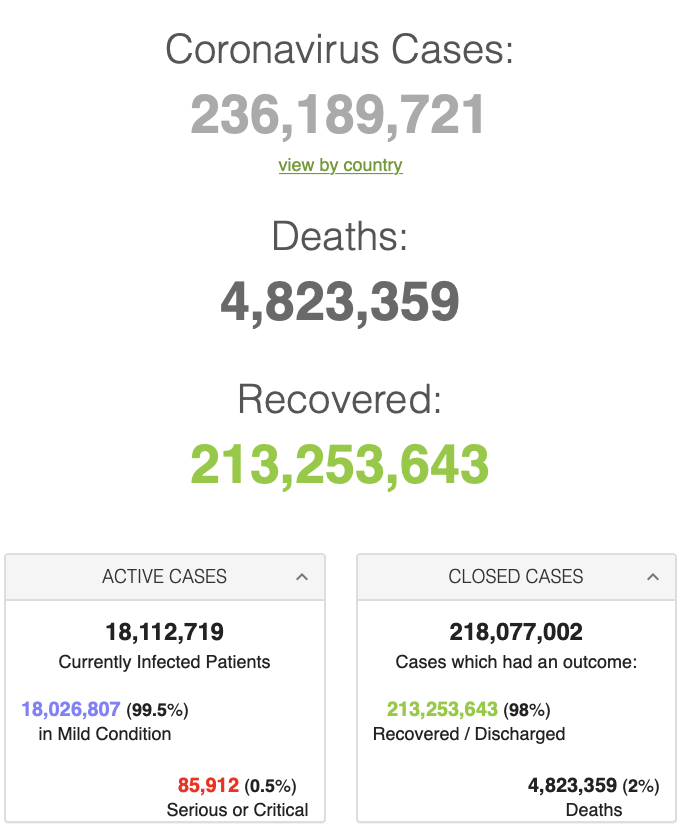
|
Country, |
Total |
New |
Total |
|
World |
236,153,644 |
+345,294 |
4,822,480 |
|
44,682,835 |
+73,729 |
722,268 |
|
|
33,851,005 |
+16,762 |
449,283 |
|
|
21,478,546 |
+10,425 |
598,185 |
|
|
7,934,936 |
+35,077 |
136,986 |
|
|
7,612,317 |
+25,781 |
210,801 |
|
|
7,267,077 |
+28,810 |
64,909 |
|
|
7,028,197 |
+1,138 |
116,848 |
|
|
5,638,735 |
+14,607 |
121,347 |
|
|
5,260,719 |
+981 |
115,283 |
|
|
4,965,399 |
+1,423 |
86,527 |
|
|
4,963,243 |
+1,189 |
126,425 |
|
|
4,683,646 |
+1,612 |
131,068 |
|
|
4,264,982 |
+4,488 |
94,342 |
|
|
4,220,206 |
+922 |
142,261 |
|
|
3,681,960 |
+2,980 |
278,801 |
|
|
2,911,549 |
+684 |
75,695 |
|
|
2,906,851 |
+429 |
87,819 |
|
|
2,604,040 |
+10,748 |
38,828 |
|
|
2,460,010 |
+4,821 |
56,889 |
|
|
2,285,640 |
+8,075 |
26,759 |
|
|
2,179,316 |
+377 |
199,502 |
|
|
2,011,634 |
+1,956 |
22,392 |
|
|
2,009,648 |
+1,624 |
18,184 |
|
|
1,705,046 |
+968 |
17,730 |
|
|
1,694,107 |
+314 |
30,478 |
|
|
1,657,256 |
+654 |
37,500 |
|
|
1,647,362 |
+9,930 |
17,111 |
|
|
1,640,606 |
+3,405 |
28,001 |
|
|
1,558,758 |
+794 |
27,591 |
|
|
1,293,498 |
+2,388 |
7,843 |
|
|
1,274,119 |
+8,292 |
37,677 |
|
|
1,251,348 |
+1,490 |
27,893 |
|
|
1,250,236 |
+1,331 |
25,624 |
|
|
1,071,307 |
+193 |
18,000 |
|
|
966,989 |
+5,983 |
8,430 |
|
|
935,560 |
+228 |
14,355 |
|
|
895,719 |
+4,272 |
7,618 |
|
|
892,710 |
+1,717 |
11,323 |
|
|
827,504 |
+1,222 |
10,753 |
|
|
824,876 |
+1,492 |
30,230 |
|
|
813,961 |
+5,383 |
19,845 |
|
|
798,004 |
+812 |
11,174 |
|
|
750,229 |
+1,404 |
11,034 |
|
|
736,897 |
+189 |
2,103 |
|
|
708,203 |
+220 |
24,934 |
|
|
663,433 |
+2,125 |
14,956 |
|
|
626,198 |
+224 |
8,356 |
|
|
618,620 |
+867 |
9,068 |
|
|
547,315 |
+53 |
8,727 |
|
|
545,843 |
+1,872 |
4,200 |
|
|
537,916 |
+881 |
6,494 |
|
|
521,218 |
+786 |
13,102 |
|
|
508,800 |
+2,806 |
21,216 |
|
|
501,362 |
+183 |
18,764 |
|
|
486,378 |
+391 |
6,584 |
|
|
469,782 |
+1,319 |
17,921 |
|
|
467,861 |
+121 |
7,244 |
|
|
460,061 |
+20 |
16,203 |
|
|
416,260 |
+267 |
12,676 |
|
|
411,855 |
+52 |
2,452 |
|
|
408,918 |
+219 |
8,685 |
|
|
408,211 |
+1,559 |
4,156 |
|
|
394,519 |
+893 |
5,249 |
|
|
389,260 |
+75 |
6,058 |
|
|
374,859 |
+1,527 |
4,526 |
|
|
368,022 |
+243 |
9,861 |
|
|
360,411 |
+380 |
2,664 |
|
|
349,231 |
+562 |
5,765 |
|
|
342,558 |
+719 |
4,702 |
|
|
338,532 |
+1,114 |
5,087 |
|
|
319,777 |
+1,672 |
2,513 |
|
|
312,376 |
+1,501 |
1,347 |
|
|
307,569 |
+771 |
17,469 |
|
|
298,310 |
+1,078 |
6,877 |
|
|
296,083 |
+225 |
4,581 |
|
|
275,279 |
+42 |
1,389 |
|
|
265,317 |
+627 |
5,397 |
|
|
250,191 |
+77 |
5,141 |
|
|
236,990 |
+77 |
606 |
|
|
209,172 |
+9 |
3,649 |
|
|
206,279 |
+141 |
2,724 |
|
|
203,915 |
+126 |
5,826 |
|
|
192,654 |
+176 |
6,719 |
|
|
191,017 |
+484 |
861 |
|
|
162,120 |
+479 |
2,743 |
|
|
158,895 |
+540 |
1,370 |
|
|
150,807 |
+3 |
1,919 |
|
|
143,416 |
+1,302 |
1,062 |
|
|
133,005 |
+309 |
1,943 |
|
|
127,862 |
+58 |
3,517 |
|
|
124,039 |
+63 |
3,162 |
|
|
118,893 |
+117 |
556 |
|
|
42,716 |
+431 |
919 |
|
|
15,543 |
+7 |
167 |
Retrieved from: https://www.worldometers.info/coronavirus/
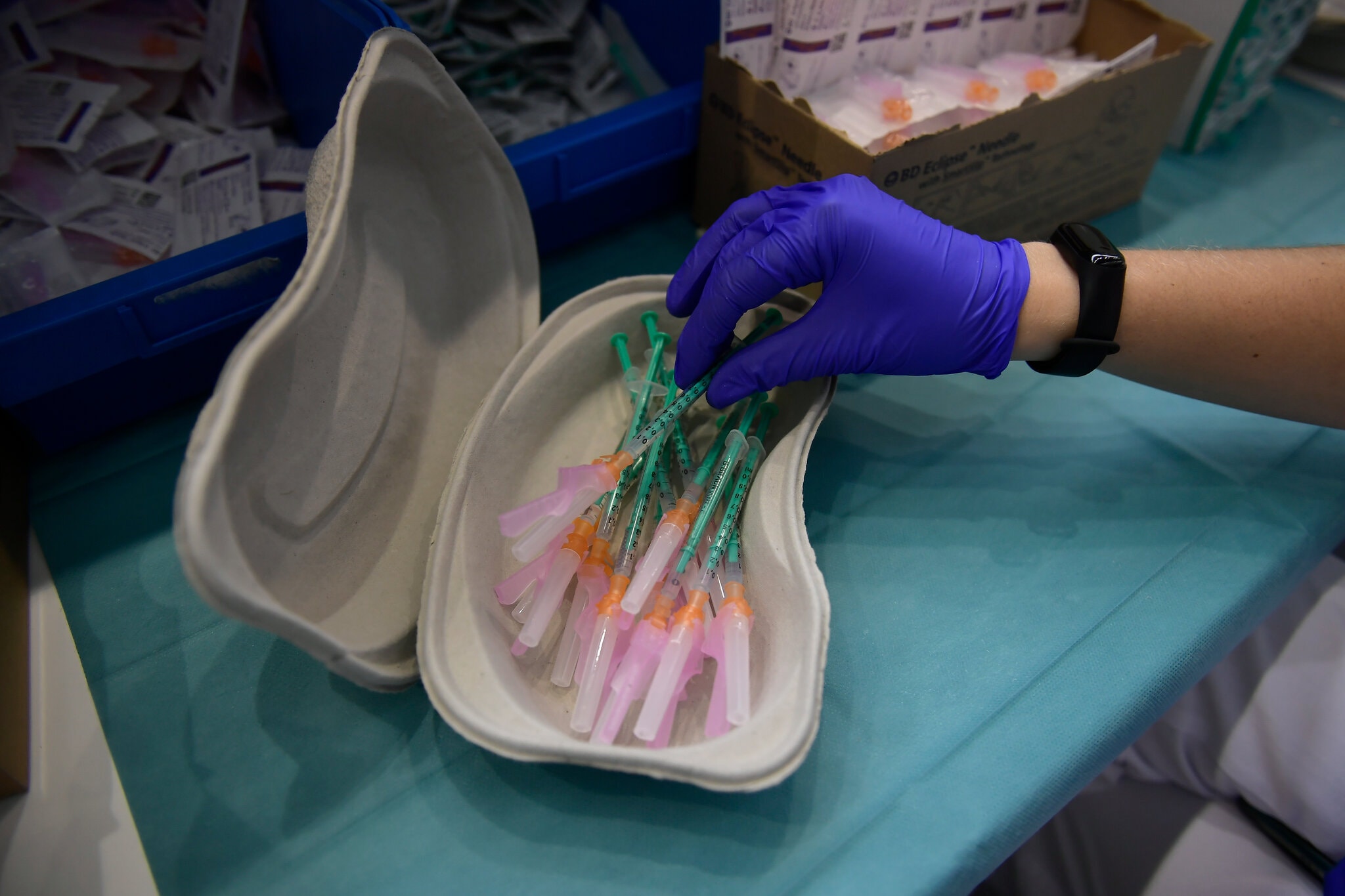
A health care worker handled vaccine shots in Pamplona, Spain in September.Credit...Alvaro Barrientos/Associated Press
The European Medicines Agency, the European Union’s main drug regulator, said on Monday that a booster shot of the Pfizer-BioNTech coronavirus vaccine can be given to healthy adults at least six months after the second dose.
The agency said that data showed antibody levels increased in adults aged 18 to 55 with normal immune systems who received a third dose of the vaccine. It is still assessing booster shots of the Moderna vaccine.
The agency also said that those with “severely weakened” immune systems can receive an extra dose of the Pfizer-BioNTech or Moderna vaccines as early as 28 days after the second dose. It is expected that an additional shot “would increase protection in at least some of the patients,” the agency said. The recommendation is based on studies showing that an extra dose of those vaccines could increase the ability to produce antibodies in organ transplant recipients.
In the European Union, vaccination campaigns are a prerogative of national governments, and each of the 27 member nations can decide for themselves whether to give booster shots to all their adult residents. Some E.U. nations, such as France, Germany and Belgium, started giving extra doses to older people and those with weakened immune systems last month, while the Czech Republic and Hungary opened this possibility to all adults.
Although the European Union has one of the highest vaccination rates in the world, with over 73 percent of adults fully inoculated,there is no coronavirus vaccine authorized yet for children. The European Center for Disease Prevention and Control warned last week that the average level of vaccination across the bloc is not sufficient to halt the virus from spreading if governments relax Covid-19 restrictions.
The agency said it was carefully monitoring “very rare” side effects of a booster shot, such as inflammatory heart conditions, but that for the moment the risk is not yet known.
The decisions of wealthier nations to administer booster shots while the rest of the world remains largely unvaccinated have raised alarm among health experts. Dr. Tedros Adhanom Ghebreyesus, the director general of the World Health Organization, has called for a moratorium on coronavirus vaccine booster shots for people who are not immunocompromised until at least the end of the year.
Retrieved from: https://www.nytimes.com/2021/10/04/world/europe/pfizer-booster-ema.html
A new rule, which came into force on Wednesday, made vaccination mandatory for the country's 2.7 million health, care home and fire service staff.
But French Health Minister Olivier Véran said on Thursday that "most of the suspensions are only temporary".
Many are now agreeing to get jabbed because "they see that the vaccination mandate is a reality", he said.
The rule applies to all doctors, nurses, office staff and volunteers.
President Emmanuel Macron first gave workers notice of the rule change on 12 July, warning them that they needed to get at least one jab by 15 September or resign from their jobs.
"I am aware of what I am asking of you, and I know that you are ready for this commitment, this is part, in a way, of your sense of duty," he said at the time.
After the president's announcement, Doctolib, the website people use to book their jabs, crashed as so many people tried secure appointments.
But with the mandate now in place, and thousands still refusing to get the vaccine, there are fears of a disruption to healthcare services.
In just one hospital in Nice in southern France, for example, almost 450 workers have been suspended - sparking protests outside the building.
And in another southern city, Montélimar, one hospital confirmed that it had already begun cancelling non-urgent operations because of a shortage of vaccinated anaesthetists, AFP news agency reports.
"We have to keep these people on the job until they have been replaced," Christophe Prudhomme, an emergency doctor and left-wing MP, said.
But Mr Véran told French RTL radio on Thursday that "the continuity of care and the security of care and quality of care were assured yesterday in all hospitals and medico-social facilities", although a few services, such as MRI scans, were impacted for a few hours.
He added that the suspensions mainly affected support staff, and "few white coats". There have also been "a few dozen resignations" across the country, he said.
Image caption, Unvaccinated workers at the Pasteur hospital in Nice have been protesting outside the building
When the vaccines were first rolled out globally, France was one of the most vaccine-sceptical countries in the world.
Then, about 40% of eligible people said they planned to get immunised, according to a survey by Ipsos. At the same time research from BBC Monitoring found that the number of followers of French-language pages sharing anti-vaccine content grew in 2020, from 3.2m to almost 4.1m likes.
But since the introduction of a Covid "health pass" in July, France has become one of the world's most vaccinated countries.
Almost 90% of all adults have now had at least one jab. France has also started vaccinating children aged 12 and over, and is administering booster jabs to vulnerable people.
Retrieved from: https://www.bbc.com/news/world-europe-58581682
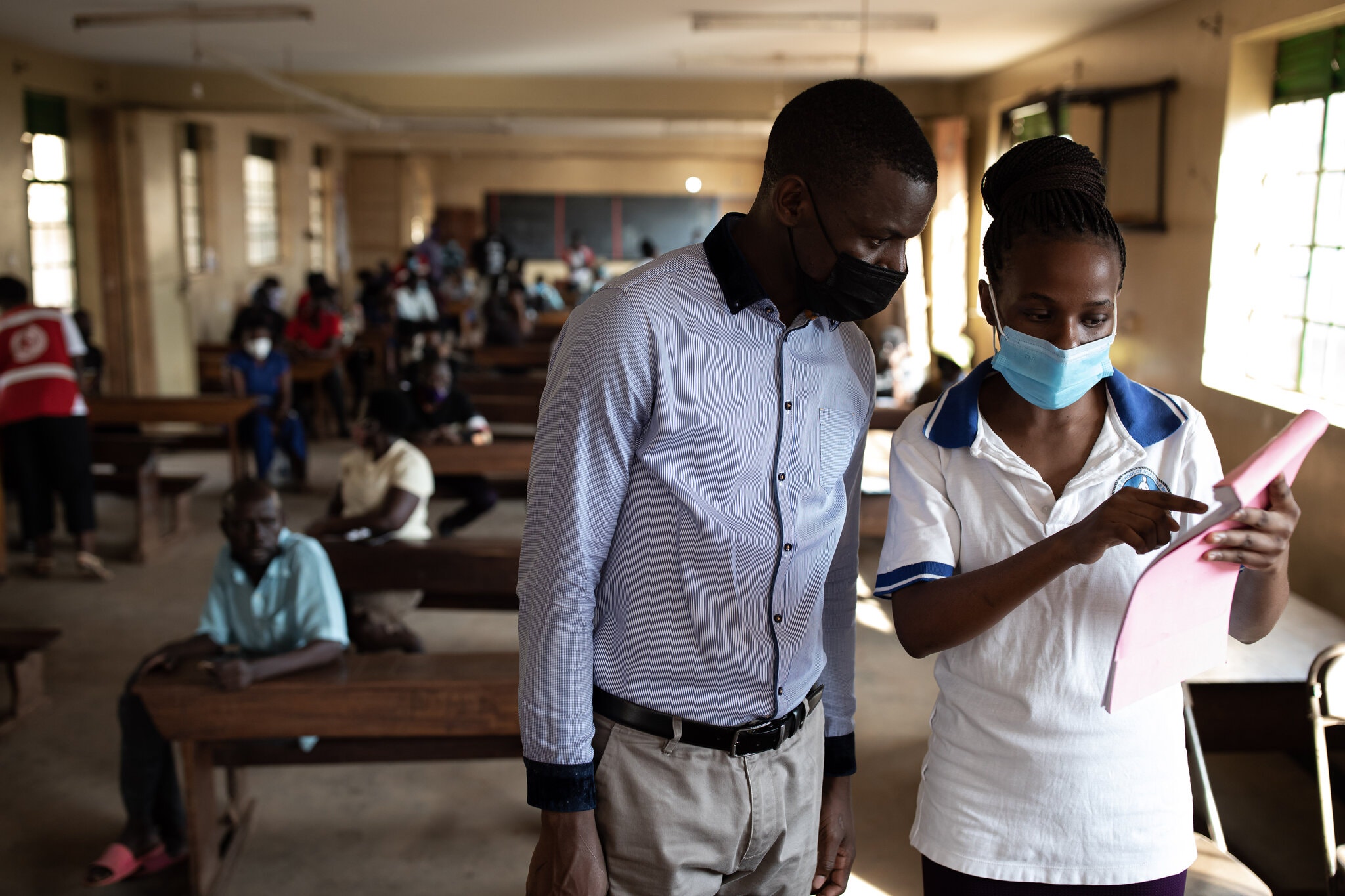
People wait to be vaccinated in Kampala, Uganda, on Wednesday.Credit...Luke Dray/Getty Images
JOHANNESBURG — Only nine African countries have met a target of vaccinating 10 percent of their populations against Covid-19 by the end of September, the World Health Organization said on Thursday — a statistic that illustrates how far the continent is lagging behind global vaccination rates.
The W.H.O. set the benchmark this year, as part of a push for every country to vaccinate at least 40 percent of its people by the end of 2021.
Just 4 percent of Africa’s population is fully vaccinated, with “still a long way to go” to reach the end-of-year target, Dr. Richard Mihigo, the W.H.O.’s program coordinator for vaccine development in Africa, told a news conference on Thursday.
Of the nine countries that met the goal, several have relatively small populations, including the island nations of Mauritius and the Seychelles, which have fully vaccinated two-thirds of their residents.
Although the infection rate in Africa has generally remained lower than on other continents, the low levels of inoculation increase the risk that new variants could emerge as the virus continues to circulate, experts said.
The W.H.O. has reliable data for 52 of the 54 African countries — Eritrea has supplied no statistics, and Tanzania only partial figures. About half have vaccinated less than 3 percent of their residents, including many of the most populous, like Nigeria, Congo, Kenya and Uganda.
The continent has suffered from vaccine shortages, made worse by a shortfall in deliveries from the global vaccine-sharing initiative, Covax. Wealthy countries that pledged to support the initiative have given it only a fraction of the promised doses.
Wealthier countries have administered the majority of Covid-19 shots around the world. That pattern has been the same in Africa, where countries with more advanced economies, including South Africa, Morocco and Botswana, have outpaced their poorer neighbors.
“In Africa, the major issue has been a supply issue rather than a demand issue,” Dr. Mihigo said, adding that vaccine hesitancy has been a concern “here and there.” The W.H.O. said it was working to identify bottlenecks in countries where limited technical capacity to deliver vaccines has hampered inoculation campaigns.
The African countries that have had the most success acquired doses through several channels, including initiatives like Covax and the Africa Vaccine Acquisition Trust, direct purchases from manufacturers, and donations.
For Eswatini, a landlocked monarchy in southern Africa, a July donation of more than 300,000 Johnson & Johnson vaccine doses from the U.S. government was “a game-changer,” said Fortunate Bhembe, an official with the country’s ministry of health.
The country has also purchased about 400,000 doses of the Pfizer-BioNTech vaccine. Together with more than 100,000 doses expected from Covax later this year, they are intended for use in children ages 12 to 16, Ms. Bhembe said.
South Africa, which has the highest number of cumulative Covid-19 cases on the continent, is emerging from a third wave of Covid-19 infections driven by the Delta variant, President Cyril Ramaphosa said on Thursday. At the peak of the wave in July, the country recorded an average of roughly 20,000 new cases a day, the most since last January.
The average number of new infections reported in the last week was around 1,800 a day, Mr. Ramaphosa said, a downward trend that has encouraged officials to ease Covid-19 lockdown regulations, including a curfew and size limit for public gatherings, in place since last March.
“We have been living under the shadow of the pandemic for 574 days now, and all of us have taken strain,” Mr. Ramaphosa said.
South African officials hope to vaccinate 70 percent of the country’s population by the end of the year. So far about 15 percent of the population has been fully vaccinated, according to the Our World in Data project at the University of Oxford.
Retrieved from: https://www.nytimes.com/2021/09/30/world/africa/africa-covid-vaccine.html
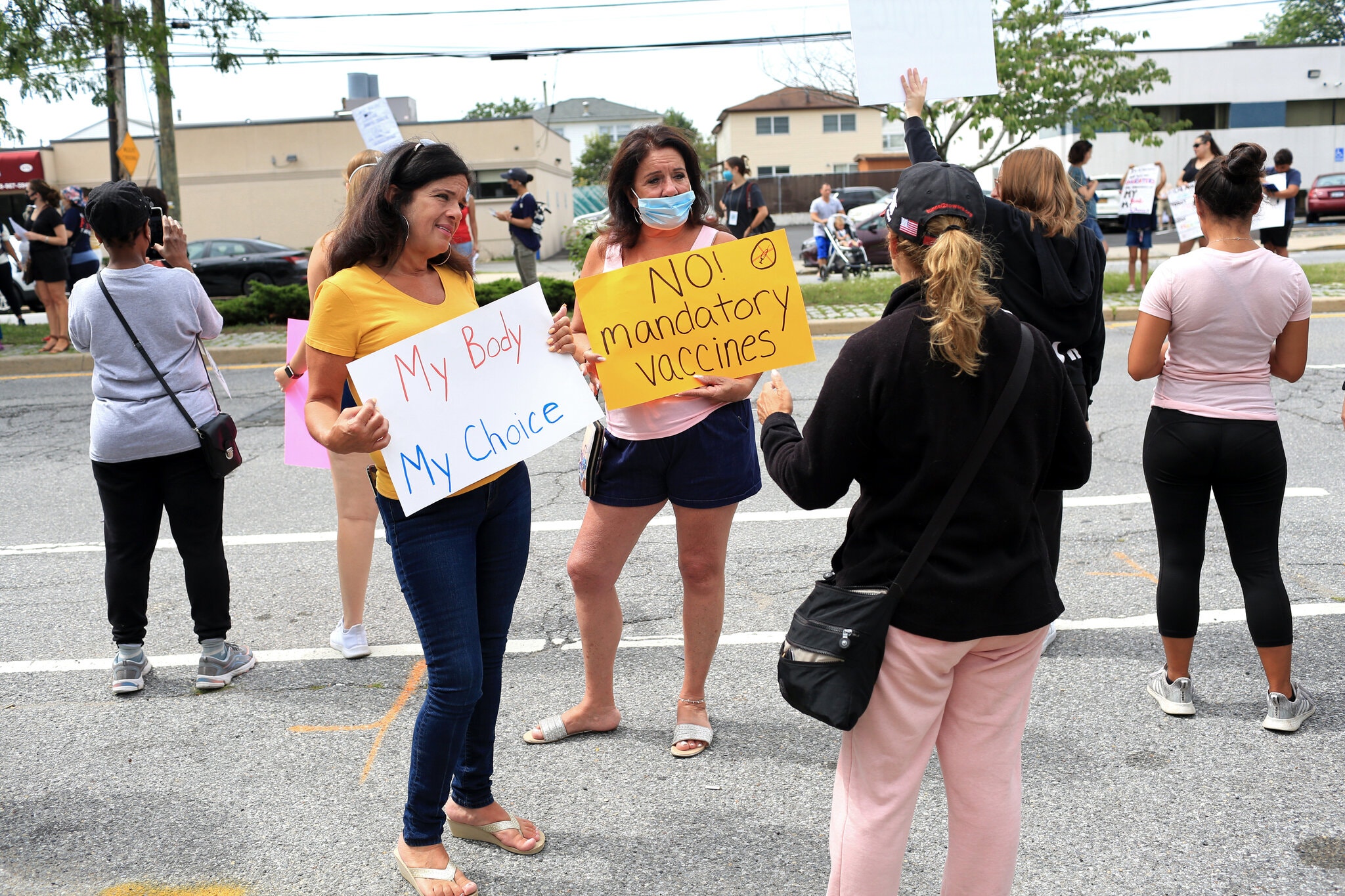
A protest against vaccine mandates in August in front of the Staten Island University Hospital.Credit...Yana Paskova for The New York Times
Northwell Health, New York State’s largest health care provider, announced on Monday that 1,400 employees — less than 2 percent of its staff — refused to get vaccinated against the coronavirus and had to leave their jobs.
New York is requiring that the state’s more than 650,000 hospital and nursing home workers be vaccinated, a mandate that started to take effect last week, prompting tens of thousands of employees to get their shots. Others filed lawsuits, and courtrooms across the state are determining when and how to allow exemptions to the requirement.
New York’s health care mandate is particularly strict: Employees do not have the option for weekly testing or exemptions for religious reasons, though the latter is being challenged in the courts.
The Biden administration has made a vaccine requirement for many health care workers a central part of its effort to vaccinate the country, and many medical workers, particularly those at large hospital systems like Northwell, appear to be complying with vaccine mandates.
In New York state, 87 percent of hospital workers were completely inoculated as of Sept. 29, according to state health data.
The possibility of widespread staff shortages loomed before the mandate took effect, so much so that Gov. Kathy C. Hochuldeclared a state of emergency last week that would allow her to deploy National Guard troops, expedite visas for workers from abroad and recruit newly graduated or recently retired health care professionals to fill staffing shortages.
So far the number of workers in New York who have left their jobs is relatively small, and does not appear likely to result in the kind of staff shortages that could compromise patient care. Still, the governor’s contingency plans reflect the fears that New York hospitals could be imperiled in the same way that hospitals were in parts of the country that the Delta variant has devastated.
Northwell, which employs more than 76,000 people said in a statement that vaccinating all of its employees would allow the provider to “provide exceptional care at all of our hospitals, without interruption and enable all our facilities to remain open and fully operational.”
“Northwell has taken a rapid, aggressive approach to move successfully toward full vaccination compliance while maintaining continuity of care and ensuring that our high standard of patient safety is not compromised in any way,” the statement continued.
Some Northwell workers protested the vaccine mandates when they were first announced in August.
John Trinchino, a registered nurse, said he was fired last week from his job at Staten Island University Hospital, a Northwell facility. Mr. Trinchino said that he had Covid-19 earlier in the pandemic, and that he thought the antibodies from his infection would protect against further illness.
Mr. Trinchino added that requiring vaccination violated his civil liberties, and he did not plan on getting vaccinated.
“All this is going to lead to is worse care for the patients, and I’m just disgusted by it,” he said.
Joe Kemp, a spokesman for Northwell, said the company regretted losing any workers over vaccinations. He said a few thousand employees had gotten vaccinated as the deadline neared, and that some who initially lost their jobs had gotten shots and returned to work.
Terminated workers have the opportunity to interview for reinstatement for 30 days, Mr. Kemp said, but Northwell was “openly recruiting” for the newly vacant jobs.
“The goal was to get people vaccinated, not to get people terminated,” he said.
Retrieved from: https://www.nytimes.com/2021/10/04/nyregion/northwell-employees-fired.html
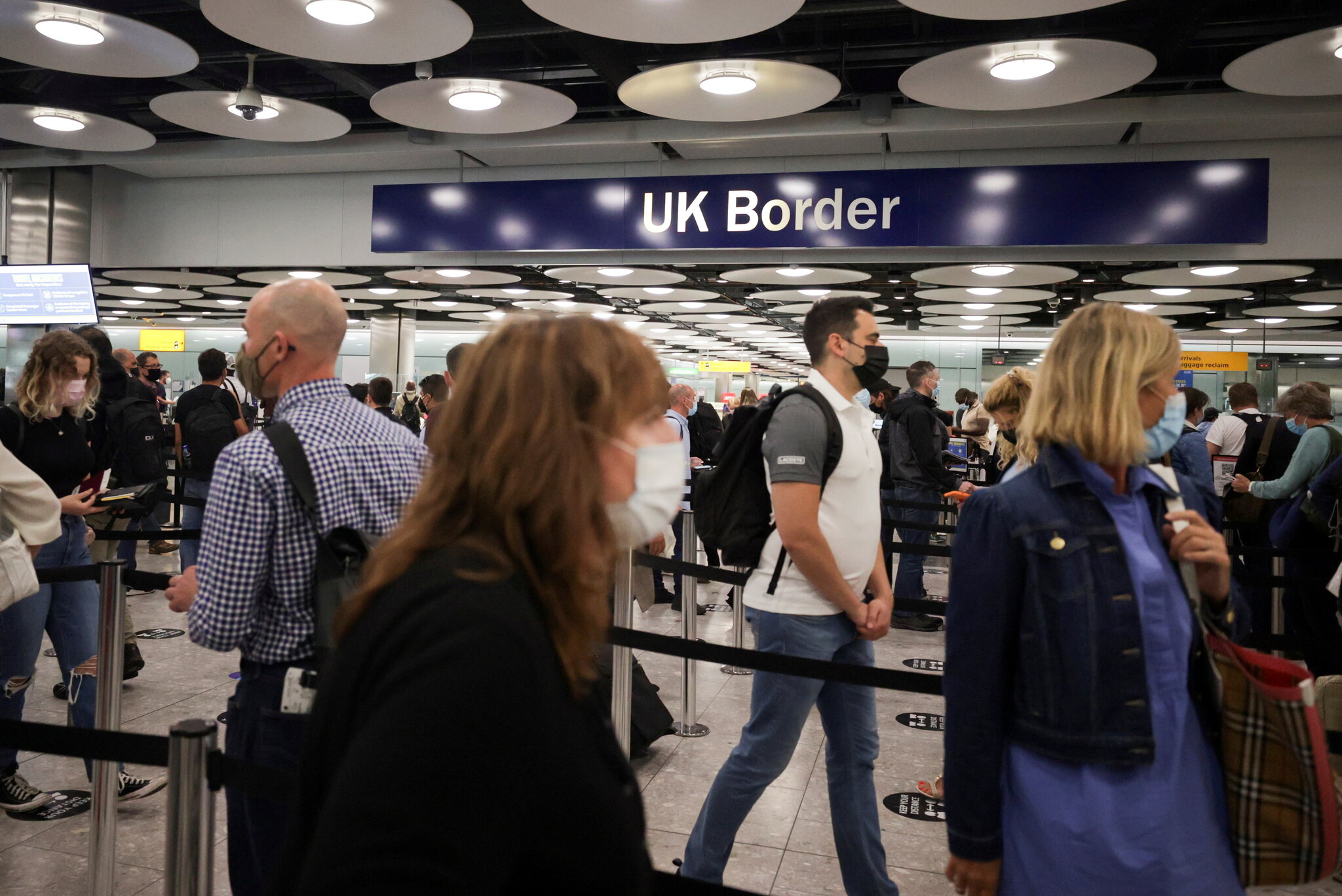
Passengers arriving at London’s Heathrow Airport in June.Credit...Hannah Mckay/Reuters
LONDON — Britain on Monday streamlined England’s coronavirus restrictions on international travel in and out of the country and eased testing and quarantine requirements for fully vaccinated arrivals, citing the success of its vaccination campaign.
The change, which went into effect at 4 a.m. local time, replaced a three-tier traffic light-inspired system with a single “red” list of countries and territories that present the highest risk.
Critics had complained that the old system — which periodically involved the government altering the risk status of countries and which left Britons scrambling to figure out the latest rules during vacations — had caused confusion within the travel industry.
“We are accelerating towards a future where travel continues to reopen safely and remains open for good,” Grant Shapps, Britain’s transportation secretary, said in a statement, “and today’s rule changes are good news for families, businesses and the travel sector.” Mr. Shapps attributed the move to the vaccination rate; 67 percent of the population of the United Kingdom is fully vaccinated.
Under the new rules, fully vaccinated travelers entering England will no longer be required to take a pre-departure coronavirus test when returning from a country that is not on the red list. And though travelers must still pay for a test to take on the second day after their return, beginning later this month, the government said it would accept less expensive rapid tests over polymerase chain reaction, or P.C.R., tests.
Arrivals who tested positive, however, would still need to isolate and take a P.C.R. test, “which would be genomically sequenced to help identify new variants,” the government said.
Testing and quarantine requirements for those who are not fully vaccinated remain the same, as do rules for those entering from “red” list countries.
After the success of a pilot test involving arrivals from United States and Europe, England will also begin a phased approach to recognizing vaccinations that have been administered in other countries and territories, expanding that list on Monday to over 50 countries including the United Arab Emirates, Japan and Canada.
In the past week, Britain reported an average of 33,779 daily cases and 112 daily deaths, according to a New York Times database.Cases have increased by 16 percent from the average two weeks ago.
Retrieved from: https://www.nytimes.com/2021/10/04/world/europe/england-travel-restrictions.html
· A Covid vaccination mandate for teachers and other staff members took effect in New York City’s sprawling public school system on Monday.
· The Kremlin has implored people to get vaccinated against Covid as daily cases rise to their highest levels since January.
· There is anger and fear in New Zealand as it prepares to switch to a suppression approach against Covid after holding fast to a Covid-zero strategy for the past 18 months.
· Epidemiologists are hopeful that the Delta wave of the virus has reached its peak in the US after the number of Covid-19 cases and hospitalizations dropped.
· The EU regulator has encouraged people with weakened immune systems to get a third dose of a Covid vaccine from Pfizer/BioNTech or Moderna.
· England’s Covid hospital admissions are in decline for the first time since the start of the pandemic, experts say.




 Medicine