

 i_need_contribute

|
Country, |
Total |
New |
Total |
|
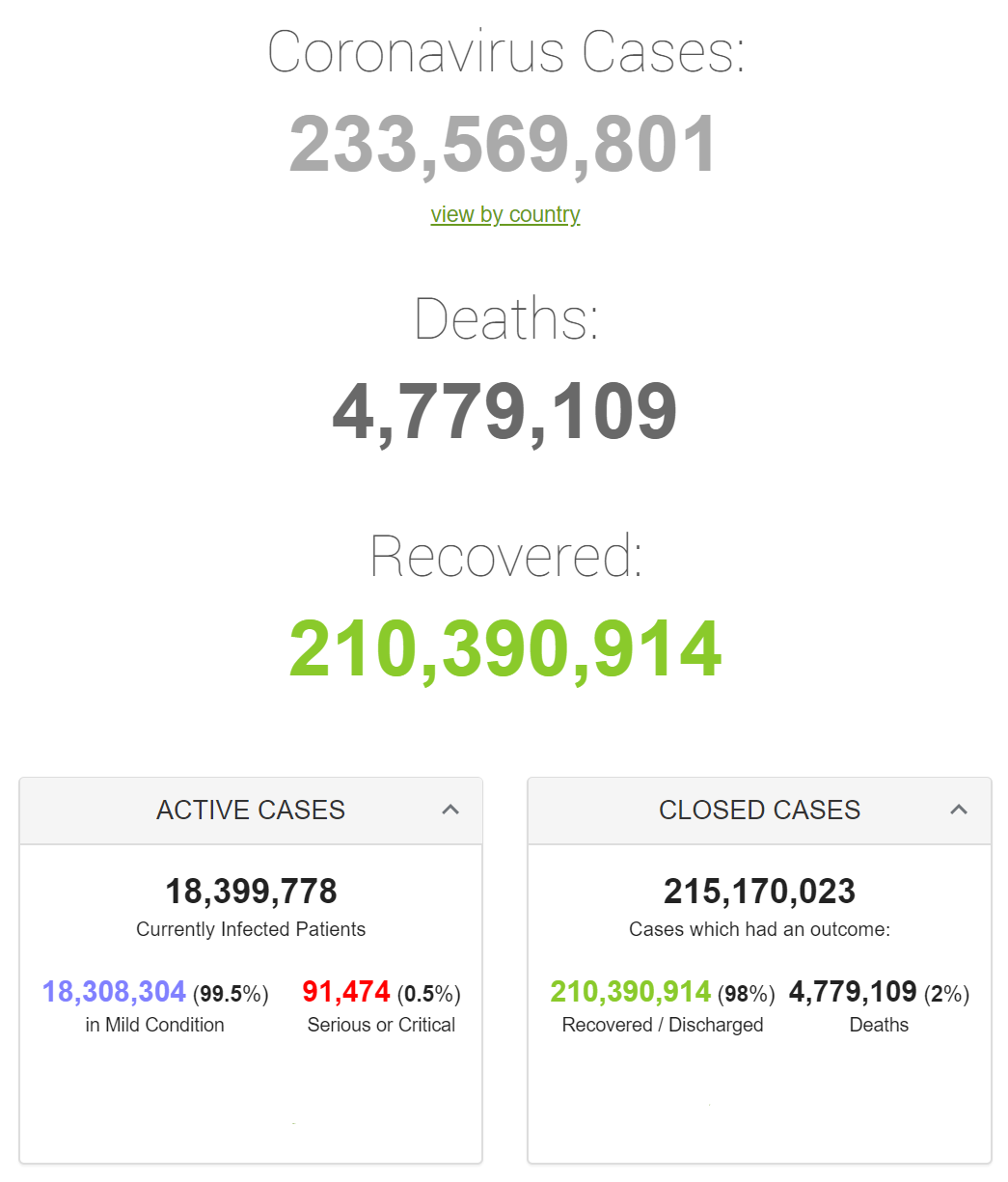
World |
233,523,329 |
+426,584 |
4,777,836 |
|
44,054,825 |
+105,633 |
711,222 |
|
|
33,715,049 |
+21,901 |
447,781 |
|
|
21,381,790 |
+15,395 |
595,520 |
|
|
7,736,235 |
+34,526 |
136,375 |
|
|
7,464,708 |
+21,559 |
205,531 |
|
|
7,095,580 |
+28,892 |
63,611 |
|
|
7,002,393 |
+6,765 |
116,615 |
|
|
5,559,691 |
+11,701 |
119,888 |
|
|
5,253,765 |
+1,825 |
115,038 |
|
|
4,954,376 |
+1,686 |
126,219 |
|
|
4,953,930 |
+2,290 |
86,358 |
|
|
4,665,049 |
+2,985 |
130,807 |
|
|
4,218,482 |
+7,411 |
94,121 |
|
|
4,211,460 |
+2,057 |
141,709 |
|
|
3,635,807 |
+3,007 |
275,676 |
|
|
2,904,631 |
+975 |
75,601 |
|
|
2,898,888 |
+1,367 |
87,417 |
|
|
2,522,965 |
+13,846 |
37,686 |
|
|
2,401,956 |
+6,552 |
55,863 |
|
|
2,220,526 |
+11,332 |
25,935 |
|
|
2,174,219 |
+865 |
199,329 |
|
|
1,999,592 |
+1,707 |
18,162 |
|
|
1,998,615 |
+2,401 |
22,187 |
|
|
1,696,061 |
+1,147 |
17,511 |
|
|
1,690,288 |
+672 |
30,454 |
|
|
1,652,795 |
+431 |
37,449 |
|
|
1,615,859 |
+3,428 |
27,754 |
|
|
1,581,415 |
+9,489 |
16,498 |
|
|
1,553,873 |
+1,310 |
27,470 |
|
|
1,274,395 |
+4,165 |
7,692 |
|
|
1,241,825 |
+1,400 |
27,638 |
|
|
1,238,358 |
+1,804 |
25,568 |
|
|
1,210,810 |
+11,049 |
36,658 |
|
|
1,067,775 |
+600 |
17,962 |
|
|
930,891 |
+1,192 |
14,225 |
|
|
926,269 |
+8,467 |
8,142 |
|
|
880,709 |
+1,719 |
11,100 |
|
|
866,808 |
+6,009 |
7,330 |
|
|
821,840 |
+1,042 |
10,703 |
|
|
821,526 |
+265 |
30,179 |
|
|
793,271 |
+904 |
11,115 |
|
|
770,640 |
+4,589 |
18,936 |
|
|
738,763 |
+1,561 |
10,986 |
|
|
735,457 |
+277 |
2,094 |
|
|
651,378 |
+2,978 |
14,751 |
|
|
622,983 |
+543 |
8,306 |
|
|
609,340 |
+2,185 |
8,884 |
|
|
553,289 |
+2,956 |
13,453 |
|
|
547,035 |
+50 |
8,709 |
|
|
534,104 |
+1,955 |
4,114 |
|
|
528,077 |
+2,078 |
6,316 |
|
|
515,524 |
+932 |
12,786 |
|
|
499,202 |
+307 |
18,707 |
|
|
497,970 |
+2,573 |
20,725 |
|
|
466,589 |
+232 |
7,219 |
|
|
461,066 |
+1,630 |
17,631 |
|
|
459,899 |
+44 |
16,193 |
|
|
411,572 |
+39 |
2,448 |
|
|
409,621 |
+1,012 |
12,606 |
|
|
401,169 |
+1,061 |
8,614 |
|
|
400,649 |
+1,703 |
4,063 |
|
|
388,700 |
+128 |
6,053 |
|
|
387,218 |
+1,497 |
5,209 |
|
|
366,150 |
+1,392 |
4,443 |
|
|
364,605 |
+506 |
9,705 |
|
|
357,827 |
+457 |
2,652 |
|
|
343,104 |
+799 |
5,488 |
|
|
338,576 |
+686 |
4,625 |
|
|
327,896 |
+1,043 |
4,946 |
|
|
305,842 |
+2,289 |
2,464 |
|
|
303,705 |
+32 |
4,095 |
|
|
303,045 |
+718 |
17,263 |
|
|
298,919 |
+2,153 |
1,242 |
|
|
291,252 |
+1,209 |
6,732 |
|
|
290,994 |
+1,037 |
4,553 |
|
|
274,925 |
+48 |
1,389 |
|
|
259,779 |
+772 |
5,277 |
|
|
248,770 |
+255 |
5,116 |
|
|
236,482 |
+94 |
605 |
|
|
208,912 |
+45 |
3,647 |
|
|
205,047 |
+295 |
2,695 |
|
|
203,045 |
+168 |
5,797 |
|
|
188,295 |
+702 |
851 |
|
|
178,375 |
+58 |
2,604 |
|
|
172,899 |
+406 |
1,230 |
|
|
168,782 |
+594 |
2,668 |
|
|
155,880 |
+804 |
2,700 |
|
|
118,298 |
+117 |
553 |
|
|
40,989 |
+513 |
870 |
|
|
15,448 |
+16 |
166 |
Retrieved from: https://www.worldometers.info/coronavirus/
By Kit Gillet
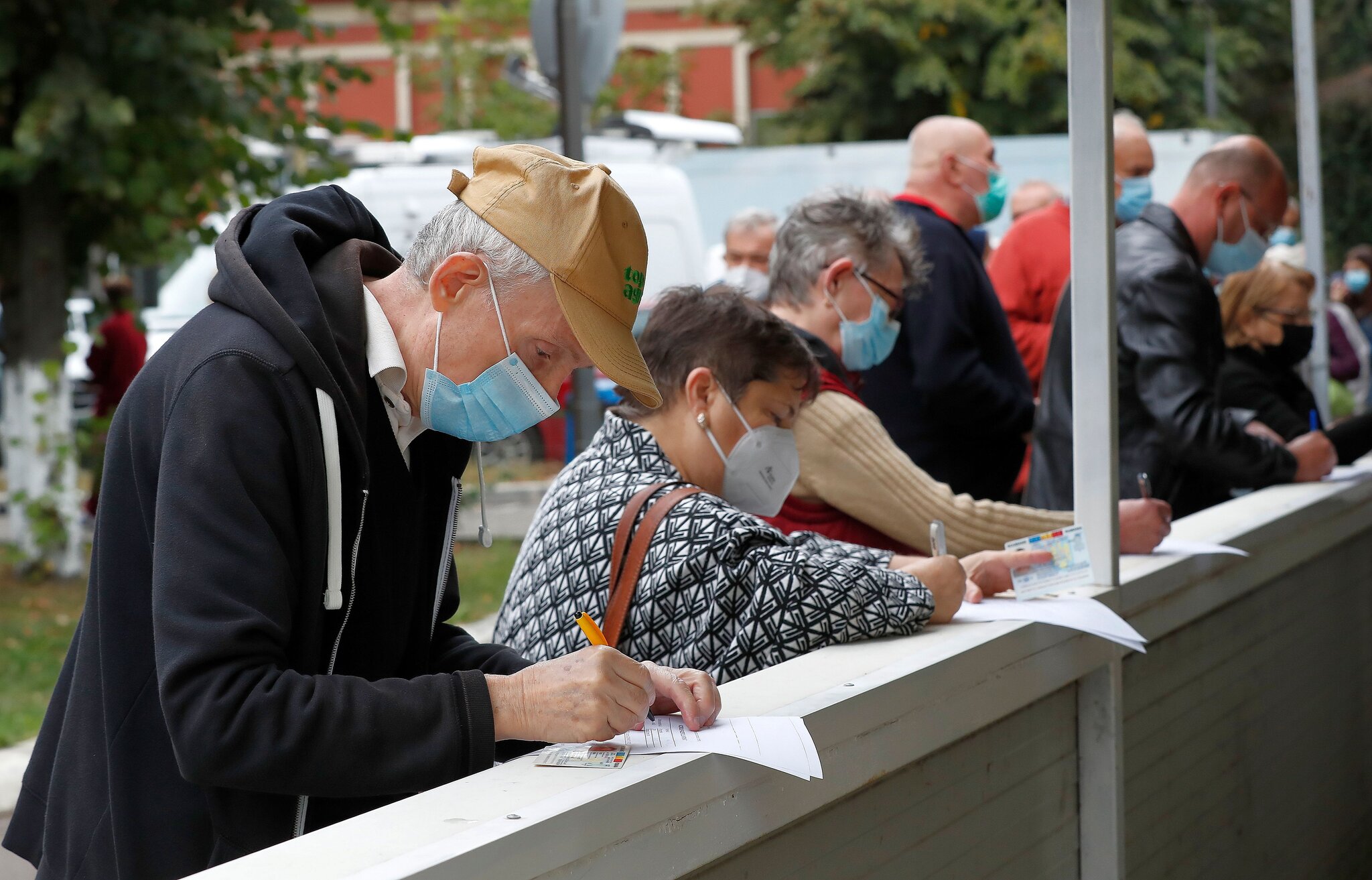
Registering for an extra coronavirus shot outside a hospital in Bucharest, the Romanian capital, on Tuesday.Credit...Robert Ghement/EPA, via Shutterstock
Romania recorded its highest-yet number of daily coronavirus cases on Tuesday — the same day that the country’s government began a campaign to offer vaccine booster shots to a population in which only about 33 percent of adults are fully inoculated.
The record 11,049 confirmed new cases came as areas around the country face a possible return to harsher restrictions. And hospitals are filling up: Of 1,336 intensive care unit beds set aside for Covid-19 patients nationwide, only 26 are currently empty.
Valeriu Gheorghita, the head of Romania’s national coronavirus vaccination campaign, said at a news conference on Tuesday, “We need to be responsible in the next period.”
“We need the involvement of each of us to follow the rules and get vaccinated, given that through vaccination we avoid the risk of severe cases, the risk of hospitalization, the risk of death and the risk of spreading the virus,” he added.
Romania’s caseload has grown sharply in recent weeks, with the country reporting around 1,500 new cases per day at the start of September.
The country is second only to Bulgaria among E.U. member states when it comes to low vaccine uptake: Romania’s rate is less than half the bloc average of 72 percent of adults fully inoculated. In recent months, Romania has sold or given away millions of doses before they expired as the authorities struggle to persuade people to have the shots.
But the uptake of boosters, which as of Tuesday are being offered to anyone who wants one, was relatively high.
As of noon on Tuesday, 13,963 people had received a third vaccine dose — higher than the total number of vaccine shots administered most days in Romania in recent months. A further 25,000 people are already scheduled to receive the extra shots.
Romania has had more than 36,000 Covid-related deaths since the pandemic began, according to the Our World in Data project at the University of Oxford. But although low rates of infection over the summer may have created a false sense of security, that is likely to change fast.
Romania’s capital, Bucharest, is nearing the infection rate at which the government has said that schools will have to return to online learning and that stricter measures will have to be reintroduced, including a nighttime weekend curfew.
Many other cities could follow.
“It is important to understand that the Delta variant is spreading so fast,” Mr. Gheorghita said, “that for people who have no protection, the risk of becoming infected in the next period is very high.”
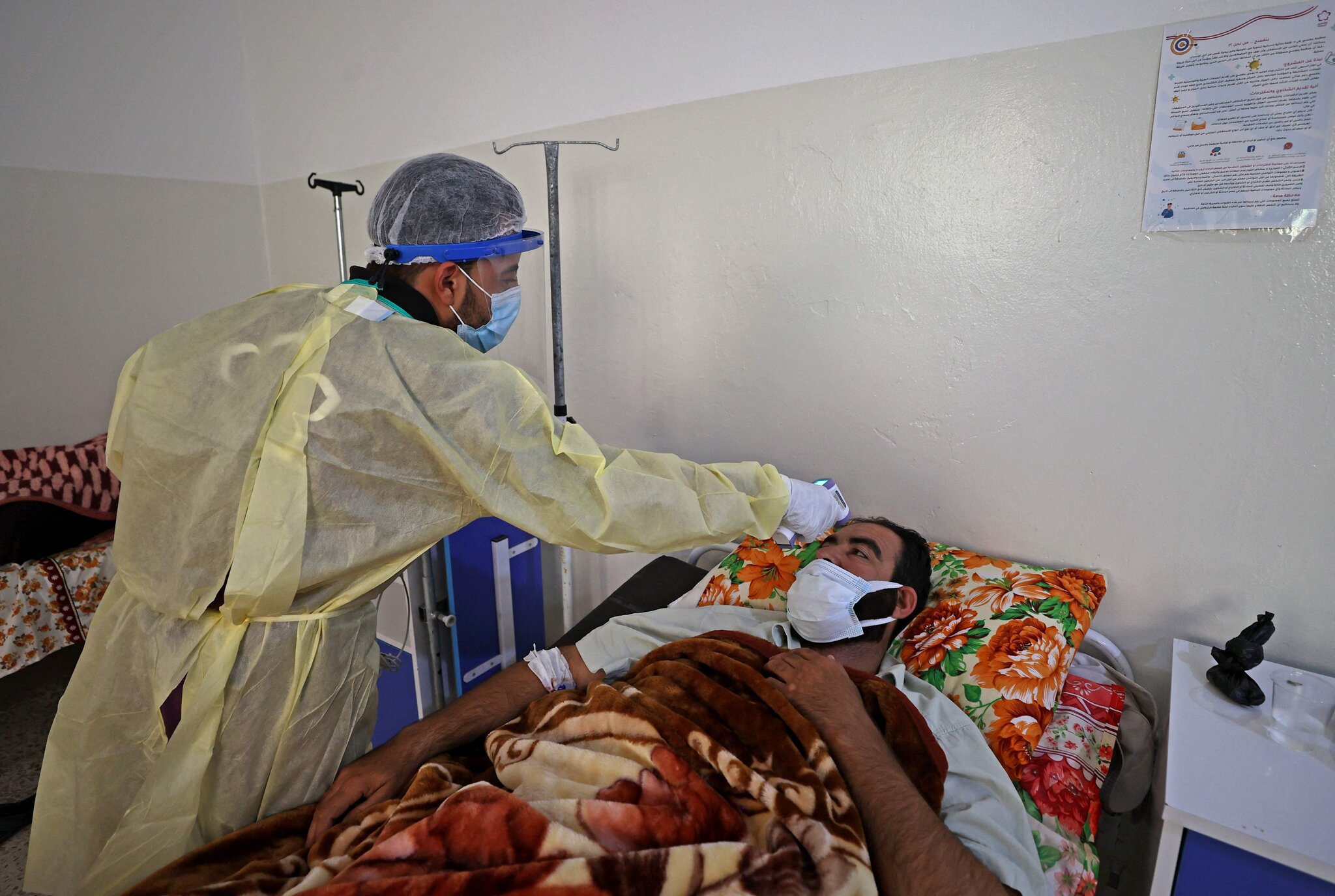

Taking the temperature of a Covid patient at a medical center in Idlib, Syria, this month.Credit...Omar Haj Kadour/Agence France-Presse via Getty Images
Syria is experiencing a major surge of coronavirus infections as depleted hospitals across the country find themselves ill equipped to deal with the worst influx of cases since the pandemic began, Syrian health officials and aid groups say.
Exacerbating the crisis is the toll of a decade of war that has ravaged the economy, heavily damaged the health infrastructure and left the territory divided between competing administrations.
The government of President Bashar al-Assad, which controls only about two-thirds of the country, said that new infections had reached daily levels this week of more than 440, the highest so far in the pandemic.
Hospitals in the capital, Damascus, and in the coastal city of Latakia have reached capacity and are sending patients elsewhere, health officials said.
Syria, a country of about 20 million people, has reported more than 32,000 cases and 2,100 deaths in government-controlled areas since the start of the pandemic, but outside experts say that those numbers fail to reflect the true toll, largely because of the lack of widespread testing.
Areas outside the government’s control have struggled, too.
Around Idlib Province in the northwest — the last pocket held by armed rebels and home to millions of people displaced from elsewhere in the country — new daily Covid cases rose by a factor of 10 from the start of August to early September, reaching more than 1,500 per day, according to the International Rescue Committee, a humanitarian group. The increase left clinics running low on test kits and oxygen, the group said.
Misinformation about vaccines has been rife in Idlib, with voice notes circulated on social media telling people that vaccines cause dangerous blood clots.
The area’s health facilities were on the verge of collapse even before the pandemic hit because of years of battles between rebels and government forces and frequent airstrikes by Syrian and Russian jets.
In Syria’s northeast, the Kurdish-led administration backed by the United States that runs the territory has announced new lockdowns after a rise in coronavirus infections there.
Vaccination campaigns have proceeded slowly in all parts of Syria, with 2 percent of the population having received a single dose and only 1.2 percent having received two doses, according to the World Health Organization.
Syria had been given about 730,000 vaccine doses through the United Nations-backed Covax program and other donations as of Sept. 19, the W.H.O. said.
Retrieved from: https://www.nytimes.com/live/2021/09/28/world/covid-coronavirus-vaccine/syria-covid-surge
By Hikari Hida

Vaccinating at a pachinko parlor in Osaka, Japan, this month. Close to 60 percent of the country’s population is fully inoculated.Credit...Jiji Press, via Agence France-Presse — Getty Images
Japan is ending its state-of-emergency measures on Thursday amid a fall in the number of new daily coronavirus cases and a vaccine rollout that has reached nearly 60 percent of the population, hoping that the move helps to revive the country’s economy.
It will be the first time since April 4 that no part of Japan is under a state of emergency.
The move was announced by Prime Minister Yoshihide Suga on Tuesday, a day before a Liberal Democratic Party vote that will select a leader to succeed him. Mr. Suga said that he would not be extending the emergency measures currently active in 19 prefectures and that they would instead expire at the end of the month, as scheduled.
“Moving forward, we will continue to put the highest priority on the lives and livelihoods of the people,” Mr. Suga said in Parliament on Tuesday afternoon.
He said that the government would “work to continue to achieve both infection control and the recovery of daily life.”
New daily coronavirus cases in Japan have decreased 73 percent over the past two weeks, to an average of 2,378 a day, according to the Our World in Data project at the University of Oxford. And there has been a sharp improvement in Japan’s vaccine rollout, with close to 60 percent of the population fully inoculated, a rate that exceeds that of the United States and of many other countries around the Pacific Rim.
Under the state of emergency, people were urged to refrain from nonessential outings, and restaurants were asked to close by 8 p.m. and to not serve alcohol. The government plans to ease those restrictions in stages.
Yasutoshi Nishimura, a government minister who is leading Japan’s Covid-19 response, said that serving alcohol would be allowed but that “governors will decide on that appropriately, according to the region’s infection situation.”
By Sharon LaFraniere, Shashank Bengali and Noah Weiland
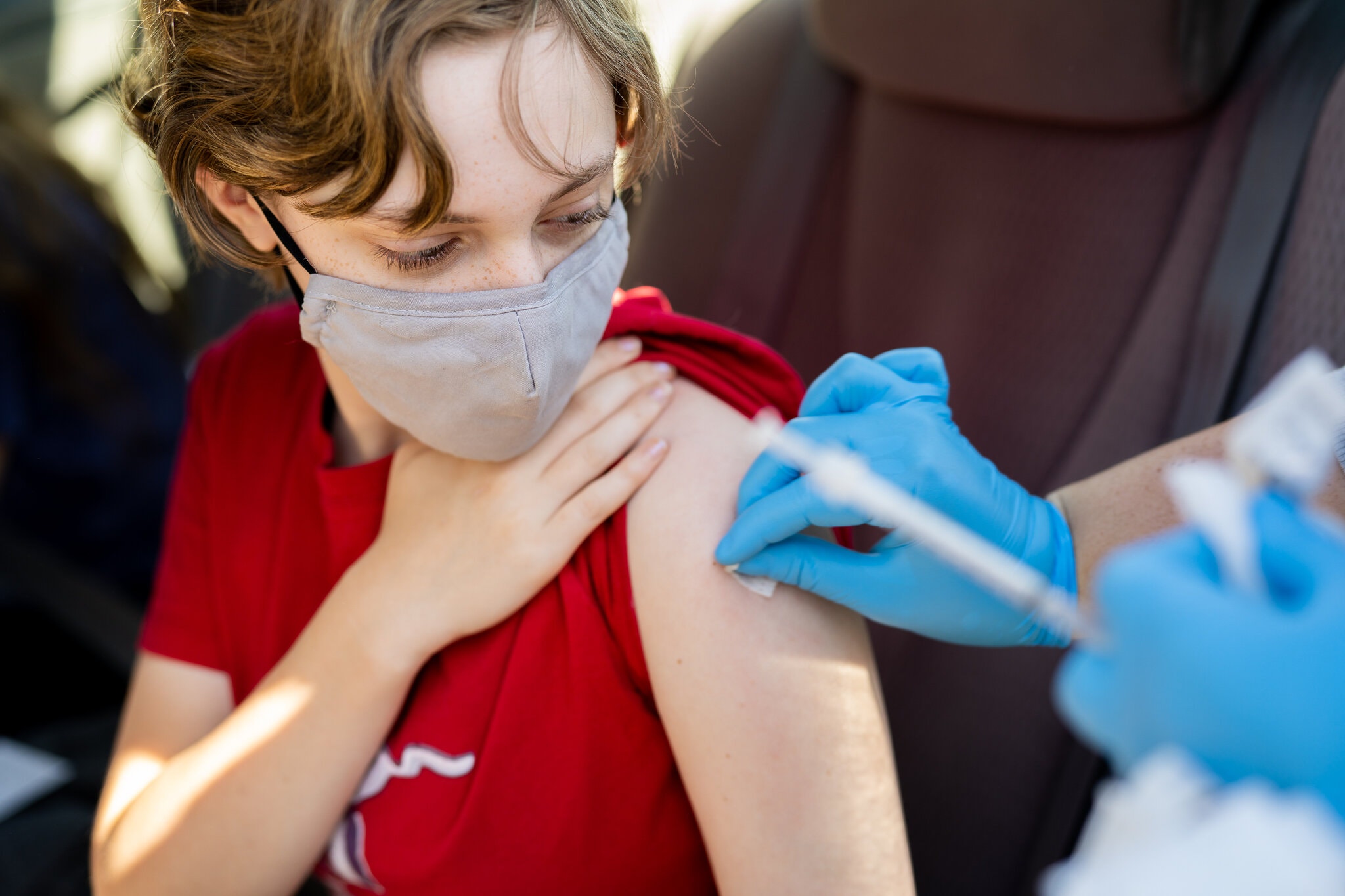
Inoculations among older children have lagged: Only about 42 percent of children ages 12 to 15 have been fully vaccinated in the United States, compared with 66 percent of adults.Credit...Christopher Capozziello for The New York Times
Pfizer and BioNTech announced on Tuesday that they had submitted data to the Food and Drug Administration that the companies said showed their coronavirus vaccine is safe and effective in children ages 5 to 11.
The companies said they would submit a formal request to regulators to allow a pediatric dose of their vaccine to be administered in the United States in the coming weeks. Similar requests will be filed with European regulators and in other countries.
The announcement, coming as U.S. schools have resumed amid a ferocious wave of the highly contagious Delta variant, brings many parents another step closer to the likelihood of a coronavirus vaccine for their children.
Asked on Tuesday when the vaccine might be cleared for children, Pfizer’s chief executive, Dr. Albert Bourla, said he did not want to pre-empt regulators.
“It’s not appropriate for me to comment how long F.D.A. would take to review the data,” Dr. Bourla said in an appearance at the Atlantic Festival, hosted by The Atlantic magazine. “They should take as much time as they think is appropriate for them.” He added that an authorization around Halloween, as some health officials have suggested could be possible, was “one of the options, and it’s up to the F.D.A.”
Just over a week ago, Pfizer and BioNTech announced favorable results from their clinical trial with more than 2,200 participants in that age group. The F.D.A. has said it will analyze the data as soon as possible. Dr. Peter Marks, the agency’s top vaccine regulator, said recently that barring “surprises,” an authorization could come in “a matter of weeks, not months” after the companies submitted data.
The companies said last week that their vaccine had been shown to be safe and effective in low doses in children ages 5 to 11, offering hope to parents in the United States who are worried that a return to in-person schooling has put children at risk of infection.
About 28 million children ages 5 to 11 would be eligible for the vaccine in the United States, far more than the 17 million of ages 12 to 15 who became eligible for the vaccine in May.
But it is not clear how many in the younger cohort will be vaccinated. Inoculations among older children have lagged: Only about 42 percent of children ages 12 to 15 have been fully vaccinated in the United States, compared with 66 percent of adults, according to federal data.
Retrieved from: https://www.nytimes.com/live/2021/09/28/world/covid-coronavirus-vaccine/pfizer-vaccine-kids
· Scotland will delay the enforcement of vaccine passports by introducing a two-week grace period for venues, first minister Nicola Sturgeon has said.
· In England, more than one in 10 secondary school pupils and over a third of school staff who had coronavirus have suffered long Covid symptoms, the latest figures suggest.
· The head of the UN has called on rich countries to step up efforts to protect workers hit by the Covid-19 pandemic with an additional $1tn (£736bn) injection of funds to avoid a twin-track recovery that widens the gap with the world’s poorest nations.
· A chair will be appointed by Christmas to the UK public inquiry into the coronavirus pandemic and sessions should take place around the country, Boris Johnson has told the Covid-19 Bereaved Families for Justice group.
· Turkey will “never” close schools again despite the recent rise in coronavirus infections, its health minister Fahrettin Koca said today.
· New Covid infections in Romania rose by a record high of 11,049 in the past 24 hours, its government said on Tuesday.
· In the US, a federal appeals panel has said New York City can mandate teachers be vaccinated against Covid.
· Pakistan is to start vaccinating children aged 12 and above after a decline in Covid deaths across the country.
· Australians will be able to test themselves for Covid at home from November using rapid antigen test kits bought from chemists or online, health authorities have announced.




 Medicine